Advertisements
Advertisements
Question
Convert 20 m/s into km/hr.
Advertisements
Solution 1
20m/s can be converted into km/hr as
20 m/s = `(20 xx 3600)/1000` = 72 km/hr.
Solution 2
`(1"m")/(1"s") = (10^(-3) "km")/(1/3600 "hr")`
= `(1/(1000))/(1/(3600)) "km"/"hr"`
= `(3600)/(1000)`
= 3.6 km/hr
1 m/s = 3.6 km/hr
20 m/s = 20 × 3.6 km/hr
= 72.0 km/hr
= 72 km/hr
APPEARS IN
RELATED QUESTIONS
Suppose the two photographs, shown in Figure 1 and Figure 2, had been taken at an interval of 10 seconds. If a distance of 100 metres is shown by 1 cm in these photographs, calculate the speed of the fastest car.
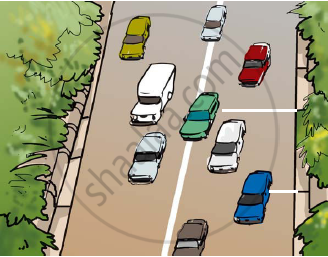
Figure 1 Vehicles moving in the same direction on a road
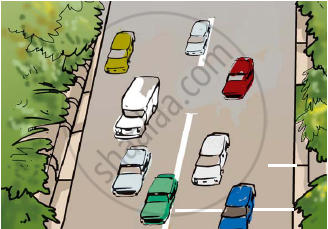
Figure 2 Position of vehicles shown in Figure 1 after some time
A body goes from P to Q with a uniform speed of u and immediately returns back to P at a uniform speed of v. What is the average speed for the whole journey?
Can a body have negative speed?
In figure the position of a body times is shown . Calculate the speed of the body as it moves from 0 to A, A to B, B to C and i ts average speed .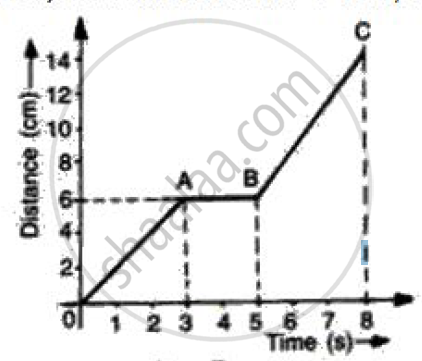
Suppose a boy is enjoying a ride on a merry go round which is moving with a constant speed of 10 m/s. It implies that the boy is
Every object moves with a constant speed.
The speed of a train is expressed in m/h.
The SI unit of speed is a kilometer.
______ is the distance traveled by a body per unit of time.
Assertion: The speed of a body can be Negative.
Reason: If the body is moving in the opposite direction of positive motion, then its speed is Negative.
