Advertisements
Advertisements
Question
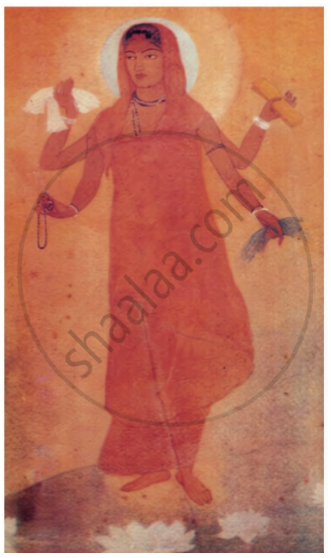
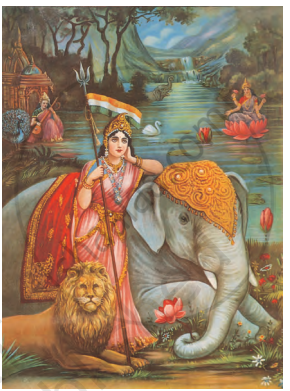
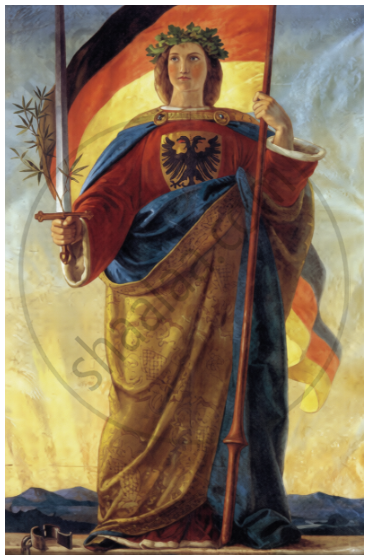
Compare the images of Bharat Mata with the image of Germania.
Advertisements
Solution
- There are two images of Bharat Mata, one by Abanindranath Tagore and the other by another artist. Tagore's art depicts Bharat Mata as an ascetic figure. She has been described as peaceful, composed, divine, and spiritual. She is also depicted dispensing learning food and clothing. Abanindranath Tagore attempted to create a painting style that might be considered uniquely Indian.
- In the second picture, Bharat Mata is depicted with a trishul, standing behind a lion and an elephant, both of which represent power and authority. This figure contrasts with the one painted by Abanindranath Tagore.
- On the other hand, Philip Veet’s portrayal of Germania wears an oak leaf crown, symbolising heroism. Thus, there is one similarity between Bharat Mata and Germania: both have elements of bravery, such as power, authority, and heroism.
APPEARS IN
RELATED QUESTIONS
How did ‘Salt March’ become an effective tool of resistance against colonialism? Explain
Describe the main features of the 'Salt March'.
What is meant by the idea of satyagraha?
Discuss the Salt March to make clear why it was an effective symbol of resistance against colonialism.
What is meant by Satyagraha?
Read the given case and answer the questions that follow:
|
Mahatma Gandhi's thoughts on Satyagraha 'It is said of "passive resistance" that it is the weapon of the weak, but the power which is the subject of this article can be used only by the strong. This power is not passive resistance; indeed it calls for intense activity. The movement in South Africa was not passive but active...' 'Satyagrah is not a physical force. A satyagrah does not inflict pain on the adversary, he does not seek his destruction... In the use of satyagraha, there is no ill-will whatever.' 'Satyagraha is pure soul-force. 'Truth is the very substance of the soul. That's why this force is called satyagraha. The soul is informed with knowledge. In it burns the flame of love ... Non-violence is the supreme dharma.' 'It is certain that India cannot rival Britain or Europe in force of arms. The British worship the war-god and they can all become, bearers of arms. The hundreds of millions in India can never carry arms. They have made the religion of non-violence their own ... ' |
- What type of movement Gandhiji organised in South Africa?
- Why is satyagraha considered as pure soul-force?
- How has Gandhiji described passive resistance?
