English
Tamil Nadu Board of Secondary EducationSSLC (English Medium) Class 5

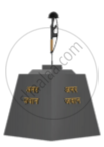
Choose the picture for the passage. Our national emblem is taken from Ashoka’s pillar at Sarnath. It is found on all government documents, coins, currency notes, postcards, and envelopes. - English

Advertisements
Advertisements

Question

Choose the picture for the passage.

Our national emblem is taken from Ashoka’s pillar at Sarnath. It is found on all government documents, coins, currency notes, postcards, and envelopes. It consists of four lions standing back to back but, we can see only three lions at a time. There is a Dharma chakra in the centre of the base plate, with the figure of a bull in the right and that of a horse in the left. The entire structure is sitting on a lotus. The words ‘Sathyameva Jayate’ is written under it in Devanagari script. These words mean, ‘Truth alone Triumphs’.

Options

MCQ
Diagram
Advertisements

Solution

shaalaa.com
Reading Skills
  Is there an error in this question or solution?
Chapter 3.3: The Legend of Jaswantgarh - Let us read aloud [Page 145]

APPEARS IN

Samacheer Kalvi English - Term 1 Class 5 TN Board
Chapter 3.3 The Legend of Jaswantgarh
Let us read aloud | Q B. | Page 145

RELATED QUESTIONS

What does the phrase 'as if he were on needles' mean? Can you think of another phrase with a similar meaning substituting the word 'needless'?


What were the attempts made by the author to get his watch repaired?


Proverbs associated with the word season: for eg: Make hay while the sun shines.

  1. _________________________
  2. _________________________

Write the following:

The sights mentioned in the third stanza.


The poet uses words to create pictures or 'images' in the reader’s mind. For example, 'And sparkle out among the fern.'
Write down other lines that create images or pictures in your mind. (Any 3)


Where is Rangoli usually drawn?


The farmer had _______ daughters.


Why did Meena call the official 'Appa'? Do you think we need to be a family to care for others?


Recite the poem with correct intonation.


Now, read the following passage on “Laughter Therapy” and answer the questions that follow.

  1. Laughing is an excellent way to reduce stress in our lives; it can help you to cope with and survive a stressful life. Laughter provides full-scale support for your muscles and unleashes a rush of stress-busting endorphins. Since our bodies cannot distinguish between real and fake laughter, anything that makes you giggle will have a positive impact.
  2. Laughter Therapy aims to get people laughing, in groups and individual sessions and can help reduce stress, make people and employees happier and more committed, as well as improve their interpersonal skills. This laughter comes from the body and not the mind.
  3. Laughter Yoga (Hasya yoga) is a practice involving prolonged voluntary laughter. It aims to get people laughing in groups. It is practiced in the early mornings in open-parks. It has been made popular as an exercise routine developed by Indian physician Madan Kataria, who writes about the practice in his 2002 book ‘Laugh for no reason'. Laughter Yoga is based on the belief that voluntary laughter provides the same physiological as well as psychological benefits as spontaneous laughter.
  4. Laughter yoga session may start with gentle warm-up techniques which include stretching, chanting, clapping, eye contact and body movements to help break down inhibitions and encourage a sense of playfulness. Moreover, laughter is the best medicine. Breathing exercises are used to prepare the lungs for laughter followed by a series of laughter exercises that combine a method of acting and visualization techniques. Twenty minutes of laughter is sufficient to augment physiological development.
  5. A handful of small-scale scientific studies have indicated that laughter yoga has some medically beneficial effects, including cardiovascular health and mood. This therapy has proved to be good for depressed patients. This laughter therapy also plays a crucial role in social bonding.

Answer the following.

a. How does laughter help one to cope with stress?

b. Which word in the text (para 2) means the same as ‘dedicated'?

c. Why do you think voluntary laughter provides the same physiological as well as psychological benefits as spontaneous laughter?

d. ‘Laughter is the best medicine’. Explain.

e. Given below is a set of activities. Which of these are followed in the ‘Laughter Yoga’ technique?

  • sitting on the ground with legs crossed 
  • body movements
  • clapping
  • closed eyes 
  • breathing exercises 
  • chanting
  • stretching of arms and legs
  • bending backwards 
  • running/jogging
  • eye contact

f. ‘Laughter therapy also plays a crucial role in social bonding’. How?


Share
Notifications

Englishहिंदीमराठी


      Forgot password?
Use app×