Advertisements
Advertisements
Question
Answer the following questions.
(i) If someone doesn’t wear a uniform to school, what do you think the teacher will say?
Advertisements
Solution
The teacher would scold the student who would not be dressed in the school uniform while coming to the School.
RELATED QUESTIONS
Thinking about the Text
Discuss in pairs and answer question below in a short paragraph (30 − 40 words).
How many characters are there in the narrative? Name them. (Don’t forget the dog!).
Thinking about the Poem
What is a legend? Why is this poem called a legend?
In groups of six, work on one of the mysteries given below by surfing the net and through other sources. Create a power point presentation/a photo essay.
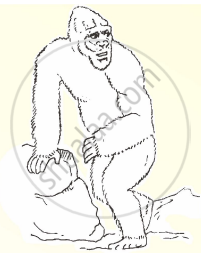
- Yeti, the abominable snowman
- Loch Ness Monster
- UFOs (Unidentified Flying Objects)
- Lost city of Atlantis
- Crop circles
- Nazca lines

Oh yes, we know it keeps them still,
They don't climb out the window sill,
They never fight or kick or punch,
They leave you free to cook the lunch
And wash the dishes in the sink....
But did you ever stop to think,
To wonder just exactly what
This does to your beloved tot?
IT ROTS THE SENSE IN THE HEAD!
IT KILLS IMAGINATION DEAD!
IT CLOGS AND CLUTTERS UP THE MIND!
IT MAKES A CHILD SO DULL AND BLIND
HE CAN NO LONGER UNDERSTAND
A FANTASY, A FAIRYLAND!
HIS BRAIN BECOMES AS SOFT AS CHEESE!
HIS POWERS OF THINKING RUST AND FREEZE!
HE CANNOT THINK - HE ONLY SEES!
Read the lines given above and answer the question given below.
How are televisions helpful to parents?
Easton, with a little laugh, as if amused, was about to speak again when the other forestalled him. The glum-faced man had been watching the girl’s countenance with veiled glances from his keen, shrewd eyes.
“You’ll excuse me for speaking, miss, but, I see you’re acquainted with the marshall here. If you’ll ask him to speak a word for me when we get to the pen he’ll do it, and it’ll make things easier for me there. He’s taking me to Leavenworth prison. It’s seven years for counterfeiting.”
“Oh!” said the girl, with a deep breath and returning color. “So that is what you are doing out here? A marshal!”
“My dear Miss Fairchild,” said Easton, calmly, “I had to do something. Money has a way of taking wings unto itself, and you know it takes money to keep step with our crowd in Washington. I saw this opening in the West, and—well, a marshalship isn’t quite as high a position as that of ambassador, but—”
Read the extract given below and answer the question that follow.
Where was the prisoner being taken.
From the first paragraph
(i) pick out two phrases which describe the desert as most people believe it is;
(ii) pick out two phrases which describe the dessert as specialists see it.
Which do you think is an apt description, and why?
Find out the meaning of the following words by looking them up in the dictionary. Then use them in sentences of your own.
challenge
Why Maya called Nishad Seven?
Before fire brigades were set out, how people tried to put out fire.
Why do ants want alien creatures to live in their nests?
Why did the customer free the imprisoned doves?
Which all houses are characterised by the term ‘meadow houses’?
Give the characteristic features of the elf which helped Patrick.
Answer the following question:
Describe Kalpana Chawla’s first mission in space.
Multiple Choice Question:
What does the phrase “repeat themselves’ mean here?
Who says this to whom and why?
“Victory to the panchayat. This is justice.”
What is the job of a watchman?
What activities are dear to little children? Who does the child envy and why in the poem Vocation?
Read the extract given below and answer the questions that follow:
| Portia: The quality of mercy is not strained; It droppeth as the gentle rain from heaven Upon the place beneath : it is twice blessed : It blesseth him that gives and him that takes. Tis mightiest in the mightiest; it becomes The throned monarch better than his crown: |
- Where does this scene take place? Why Is Portia here? [2]
- To what is mercy compared in these lines? [2]
- Why does Portia call mercy ‘twice blessed’?
Explain the lines:
‘Tis mightiest in the mightiest: it becomes
the throned monarch better than his crown: [3] - Later in her speech Portia mentions a sceptre. What is a sceptre?
How, according to Portia, is mercy above the ‘sceptred sway’? [3]
In the short story, The Story of an Hour, what according to the doctor did Mrs. Mallard die of?
