Advertisements
Advertisements
Question
Answer the following question.
Why do we need to know the center of mass of an object? For which objects, its position may differ from that of the center of gravity?
Advertisements
Solution
- Centre of the mass of an object allows us to apply Newton’s laws of motion to finite objects (objects of measurable size) by considering these objects as point objects.
- For objects in non–uniform gravitational field or whose size is comparable to that of the Earth (size at least few thousand km), the position of the centre of mass will differ than that of the centre of gravity.
APPEARS IN
RELATED QUESTIONS
On what factor does the position of the center of gravity of a body depend?
What is the weight of a body placed at the centre of the earth?
State a factor on which the position of the centre of gravity of a body depend? Explain your answer with an example.
What is the position of the centre of gravity of a rectangular lamina?
At which point is the centre of gravity situated in a triangular lamina?
At which point is the centre of gravity situated in a circular lamina?
'The centre of gravity of a freely suspended body always lies vertically below the point of suspension'.
The figure shows three pieces of cardboard of uniform thickness cut into three different shapes. On each diagram draw two lines to indicate the position of the centre of gravity G.
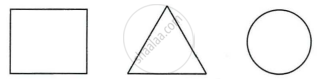
Following Fig shows piece of cardboard of uniform thickness cut into different shapes. Draw two lines to indicate the position of centre of gravity G.
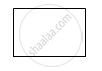
Following Fig shows piece of cardboard of uniform thickness cut into different shapes. Draw two lines to indicate the position of centre of gravity G.
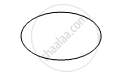
Following Fig shows piece of cardboard of uniform thickness cut into different shapes. Draw two lines to indicate the position of centre of gravity G.
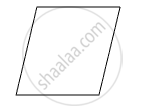
The centre of gravity of a hollow cone of height h is at distance x from its vertex where the value of x is ______.
Explain why One leans forward while climbing up a hill.
Explain why a tight rope-walker, often holds a long pole in his hands when in action.
Explain why a ship loaded with light goods is more liable to be overturned than the one loaded with heavy goods.
Explain the term ‘centre of gravity’ of a body.
What is centre of gravity ?
If mean radius of earth is R, its angular velocity is ro and the acceleration due to gravity at the surface of the earth is g, then the cube of the radius of the orbit of satellite will be ____________.
For regular shapes of the small body, which of the following statement is true?
When this triangular lamina is suspended freely from any one vertex, what is the moment of force produced by its own weight in its rest position?
A hollow ice cream cone has height 6 cm.
- Where is the position of its center of gravity from the broad base?
- Will its position change when it is filled completely with honey? Write Yes or No.
In a uniform gravitational field on Earth, the Centre of Gravity and Centre of Mass are ______.
Why is it beneficial for engineers to design tall structures with a low Centre of Gravity?
In a non-uniform gravitational field, how does the Centre of Gravity relate to the Centre of Mass?
