Advertisements
Advertisements
Question
Answer the following question in one or two words/sentences:
Why did the farman of 1717 become a bone of contention between the nawabs of Bengal and the British Company?
Advertisements
Solution
The Nawabs of Bengal wanted British companies to pay taxes on trade like the Indians. But the Britishers refused to do so. This created conflict between both the parties and resulted in wars between both of them.
APPEARS IN
RELATED QUESTIONS
Fill in the blank:
The French East India Company was established in __________.
Fill in the blanks:
Bengal in the 18th century was the _______ and the most _________ province in India.
Choose the correct answer:
Robert Clive hatched a plot with __________ to replace Siraj-ud-Daulah.
Answer the following question in one or two words/sentences:
State the political significance of the Battle of Buxar.
Answer the following question briefly:
The Battle of Plassey was a major turning point in the history of India. In this context answer the following question:
Why is this battle considered a major turning point in the history of India?
Answer the following question briefly:
Mir Qasim was a competent ruler, determined to free himself from foreign control. In this context answer the following:
Explain the importance of the Battle of Buxar.
This picture portrays a momentous event in 1765, involving a British Governor and a Mughal emperor wherein the Mughal emperor is conveying the grant of the Diwani to the governor.
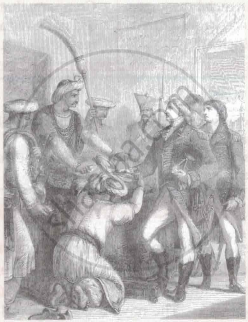
Give a brief account of the battle that preceded this event. When did it take place?
This picture portrays a momentous event in 1765, involving a British Governor and a Mughal emperor wherein the Mughal emperor is conveying the grant of the Diwani to the governor.

What is the importance of this battle?
Why did Siraj-ud-Daulah lose the Battle of Plassey?
Answer the following question:
What were the causes of Conflict between Siraj-ud-daulah and the English?
