Advertisements
Advertisements
Question
The battle of Plassey is a turning point in the history of India. Explain.
Advertisements
Solution
The Battle of Plassey was a major turning point in the history of India.
- It paved the way for the establishment of British rule in Bengal and, eventually, the rest of India.
- It transformed a trading company into political power.
- It provided the British the vast resources of Bengal, which helped them to win the Third Carnatic war and other expeditions in India.
APPEARS IN
RELATED QUESTIONS
Fill in the blank:
The French East India Company was established in __________.
Fill in the blanks:
In __________ Robert Clive recovered Calcutta which had been captured by Siraj-ud-Daulah in ___________.
State whether the following is true or false:
The British army was defeated in the Battle of Buxar.
Answer the following question briefly:
The Battle of Plassey was a major turning point in the history of India. In this context answer the following question:
Why is this battle considered a major turning point in the history of India?
Answer the following question briefly:
Mir Qasim was a competent ruler, determined to free himself from foreign control. In this context answer the following:
Trace the events from the outbreak of war (1763) between Mir Qasim and the British up to the Battle of Buxar in 1764.
This picture portrays a momentous event in 1765, involving a British Governor and a Mughal emperor wherein the Mughal emperor is conveying the grant of the Diwani to the governor.
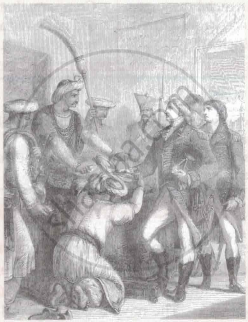
Give a brief account of the battle that preceded this event. When did it take place?
What was the result of the British victory in the Battle of Buxar?
Answer the following question:
What were the causes of Conflict between Siraj-ud-daulah and the English?
Answer the following question:
What were the results and significance of the Battle of Buxar?
Answer the following question:
What were the causes and results of the First Anglo-Maratha War? When was it fought?
