Advertisements
Advertisements
Question
Answer the following question.
Cnidarians and Ctenophorans are both diploblastic. Which other character do they have in common, which is not found in other phyla?
Advertisements
Solution
Cnidarians and ctenophorans show tissue level of body organization. They have blind sac body plan and radially symmetrical body.
APPEARS IN
RELATED QUESTIONS
The circulatory system has evolved from open to closed type in Animal kingdom. Which Phylum can be called first to represents closed circulation?
Answer the following question.
Pinna is part of the external ear and it is found in mammals. Do aves and reptiles show external ear in any form?
Answer the following question.
Fish and frog can respire in water. Can they respire through their skin? If yes, why do they have gills?
Answer the following question.
Lower Phyla like Arthropods and Cnidarians show metamorphosis. Is it also found in any class of Phylum Chordata?
Draw a neat labelled diagram.
Sycon
Draw a neat labelled diagram.
Catla
Draw a neat labelled diagram.
Scolidon
Match the following.
| Phylum | Characters |
| i. Annelida | a. Tube feet |
| ii. Mollusca | b. Ostia |
| iii. Ctenophora | c. Radula |
| iv. Porifera | d. Parapodia |
| v. Echinodermata | e. Comb plates |
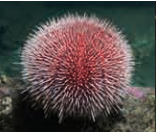
Identify the animal given in the picture and write features of its phylum/class.
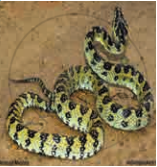
Identify the animal given in the picture and write features of its phylum/class.