Advertisements
Advertisements
Question
Answer the following question briefly:
Discuss the power and position of the emperor in the central administration.
Advertisements
Solution
- The emperor was an extremely powerful figure. His decisions on all matter-military, political, administrative and judicial-were final. His word was law. He was the commander-in-chief of the armed forces and the supreme judge on all matters of justice.
- He was assisted by a team of ministers and officials. The appointment, promotion and dismissal of all officials, including commanders of the army, was the sole right of the emperor. The success of this system depended largely on the personality of the emperor and his wisdom to choose the right person for the right job.
RELATED QUESTIONS
Important Words:
vakil
Important Words:
Diwan-i-khas
Important Words:
Todar Mal’s Bandobast
Give reasons why.
Akbar followed a liberal policy towards the Rajputs.
Give reasons why.
Akbar is referred to as ‘Akbar the Great’.
Picture study: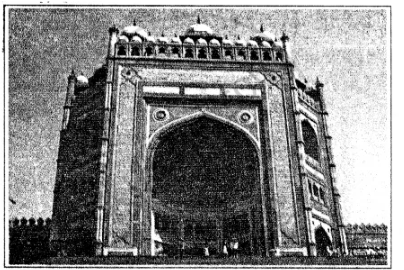
Name this building.
Akbar held regular meetings with his senior officers in the ______ and he met his subjects in the ______.
State whether the following is true or false:
Akbar was illiterate but he had a passion for books.
Answer the following question in one or two words/sentences:
Why is the memory of Rana Pratap Singh still honoured in Rajasthan?
Answer the following question briefly:
Explain any five main features of the mansabdari system introduced by Akbar.
