Advertisements
Advertisements
Question
| Agriculture During Pre-British India |
|
The French traveller, Bernier, described seventeenth-century Bengal in the following way: “The knowledge I have acquired of Bengal in two visits inclines me to believe that it is richer than Egypt. It exports, in abundance, cottons and silks, rice, sugar and butter. It produces amply, for its own consumption, wheat, vegetables, grains, fowls, ducks and geese. It has immense herds of pigs and flocks of sheep and goats. Fish of every kind it has in profusion. From Rajmahal to the sea is an endless number of canals, cut in bygone ages from the Ganges by immense labour for navigation and irrigation.”
|
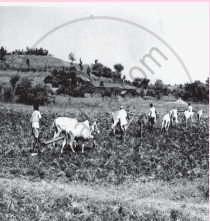
Take note of the agricultural prosperity in our country in the seventeenth century. Contrast it with agricultural stagnation around the time when the British left India, around 200 years later.
Advertisements
Solution
- In the seventeenth century, India had rich and productive agriculture.
- Bengal produced large quantities of cotton, silk, rice, sugar, wheat, vegetables and other crops.
- The countryside also supported many animals, fish, and birds, reflecting its richness.
- Rivers and canals provided water for irrigation and transport.
- By the time the British left India, agriculture had become less productive and more stagnant.
- Farmers depended heavily on old cultivation methods and rainfall.
- Irrigation, technology, and agricultural productivity improved little.
- Colonial policies focused more on revenue collection and commercial crops than on improving farmers' conditions.
Thus, India had prosperous agriculture in the seventeenth century, but by the end of British rule, agriculture suffered from low productivity, poor investment and stagnation.
