Advertisements
Advertisements
Question
Which of the following will show Tyndall effect ? Why ?
- Salt solution
- Starch solution
- Milk
- Copper sulphate solution
Advertisements
Solution
Starch solution and milk will show Tyndall effect.
This is because in a milk solution and starch solution (colloidal solutions) the size of solute particles is big enough to scatter the light passing through it.
APPEARS IN
RELATED QUESTIONS
Intermolecular force of attraction is maximum in ............ less in .......... and the least in .............
What is the scientific name of particles which make up mater?
Out of solids, liquids and gases, which one has :
- maximum movement of particles ?
- maximum interparticle attractions ?
- minimum spaces between particles ?
What is meant by saying that non-metals are brittle ?
What is meant by saying that metals are lustrous ?
There are three substances X, Y and Z. The substance X does not have a fixed melting point or boiling point and it still shows the individual properties of its constituents. The substance Y is a pure substance which occurs in nature as such. The substance Y has a fixed melting point and boiling point but it cannot be broken down into simpler substances by any chemical means. The substance Z is also a pure substance whose properties are entirely different from those of its constituents. The substance Z can, however, be divided by electrolysis into two substances which belong to the same class of substances as Y.
- What type of substance could X be ? Name one substance like X.
- What type of substance could Y be ? Name one substance like Y.
- What type of substance could Z be ? Name one substance like Z.
- Which process involves absorption or release of an appreciable amount of energy : formation of substance X or formation of substance Z ?
- Name the three groups into which all the substances like Y are divided on the basis of their properties.
State whether the following statement is true or false :
Sponge is an example of solid sol.
Choose one term from the following which includes the other three :
aerosol, emulsion, colloid, sol
Define solubility of a substance. How does it vary with temperature ?
What is the difference between colloids and suspensions ?
Name the process which can be used to recover salt from an aqueous salt solution.
Fill in the following blanks with suitable words :
A heterogeneous mixture of liquid and solid is conveniently separated by...............
Describe a method to separate a mixture of common salt and sand.
How will you separate a mixture of common salt, sulphur powder and sand ?
Which of the following cannot be separated from air by the process of fractional distillation ?
Differentiate between the-two characteristics of matter – ‘mass’ & ‘weight’.
Justify your answer.
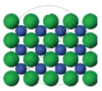
| Figure 1 | Figure 2 | Figure 3 |
 |
 |
 |
The arrangement of particles in three different phases of matter is shown above.
- Which state is represented by Fig. 1?
- In which state will the inter-particle attraction be maximum?
- Which one of them cannot be contained in an open vessel?
- Which one can take the shape of its container?
A standard sheet of paper is about ______ of atoms thick
Give some examples of the Tyndall effect observed in your surroundings?
Evaporation does form bubbles.
