Advertisements
Advertisements
Question
A food chain consists of fish, larvae, phytoplanktons and birds. The level of pesticides in water in which the fish, larvae and phytoplanktons live is quite high.
Write the food chain comprising all the organisms mentioned above.
Advertisements
Solution
Phytoplankton→ Larvae→ Fish→ Birds
APPEARS IN
RELATED QUESTIONS
What name has been given to those organisms which break down the complex organic compounds present in dead animals and plants?
What are planktons?
Give an example of a four step food chain operating in grassland. Name the secondary consumer in this food chain
Draw the food chain with four trophic levels.
At which trophic level a person is feeding when he is eating eggs.
At which trophic level a person is feeding when he is eating apple.
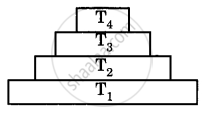
In the figure given alongside, the various trophic levels are shown in the form of a pyramid. At which trophic level the maximum energy is available?
Which of the following is not a producer?
(a) grass
(b) zooplankton
(c) phytoplankton
(d) paddy
The sea water contains water beetles, tadpole, fish and weeds.
Which organisms in the food chain are herbivore, and carnivores?
The sea water contains water beetles, tadpole, fish and weeds.
Which organisms are (i) predators, and (ii) prey?
A food chain occurring in the sea which provides food for many people can be written as :
phytoplankton → zooplankton → X → Y
Name two zooplanktons.
A food chain occurring in the sea which provides food for many people can be written as :
phytoplankton → zooplankton → X → Y
Which organism in the above food chain is a (1) primary consumer, and (2) tertiary consumer?
What would happen to the number of grass plants and foxes if the number of rabbits increased?
A food chain comprises of cat, seed-eating bird, plants, and dog. The organism which will have the maximum concentration of harmful pesticides coming through the food chain is most likely to be :
(a) cat
(b) plants
(c) dog
(d) seed-eating bird
A forest ecosystem having a lot of green plants has some foxes, lions and rabbits in it.
(a) Write a food chain comprising all the four organisms mentioned above.
(b) Name (i) one herbivore, and (ii) two carnivores, in this food chain.
(c) Name the link which is a predator as well as a prey.
(d) Name (i) second trophic level, and (ii) third trophic level.
(e) Which link of this food chain can feed on second trophic level as well as third trophic level, independently?
(f) If the sun provides 1000 J of energy to the plants, then how much energy will be transferred to fox through the food chain.
Arrange the following in a correct sequence and form a food chain
Rabbit → Carrot → Eagle → Snake
A food chain comprising birds, green plants, fish and man. The concentration of harmful chemical entering the food chain will be maximum in ______.
Which group of organisms are not constituents of a food chain?
- Grass, lion, rabbit, wolf
- Plankton, man, fish, grasshopper
- Wolf, grass, snake, tiger
- Frog, snake, eagle, grass, grasshopper
What will happen if deer is missing in the food chain given below?
Grass → Deer → Tiger
Which statement is correct with respect to the food chain?
