Advertisements
Advertisements
Question
A car travels a distance of 225 km in 25 litres of petrol. How many litres of petrol will be required to cover a distance of 540 kilometres by this car?
Advertisements
Solution
A car travels 225 km distance in 25 L petrol.
∵ For 1 km, petrol required = `25/225` L
∴ For 540 km, the petrol required = `25/225 xx 540` = 60 L
APPEARS IN
RELATED QUESTIONS
A loaded truck travels 14 km in 25 minutes. If the speed remains the same, how far can it travel in 5 hours?
In 10 days, the earth picks up 2.6 × 10⁸ pounds of dust from the atmosphere. How much dust will it pick up in 45 days?
If 7 m cloth costs ₹ 294, then the cost of 5 m of cloth is ________
In direct proportion, `a_1/b_1` ______ `a_2/b_2`
The area of cultivated land and the crop harvested is a case of direct proportion.
Write whether the following statement vary directly, vary inversely with each other, or neither of the two.
Distance travelled by an auto-rickshaw and time taken.
In a camp, there is enough flour for 300 persons for 42 days. How long will the flour last if 20 more persons join the camp?
A car covers a distance in 40 minutes with an average speed of 60 km/h. What should be the average speed to cover the same distance in 25 minutes?
From the following table, determine if x and y are in direct proportion or not.
| x | 4 | 7 | 10 | 16 |
| y | 24 | 42 | 60 | 96 |
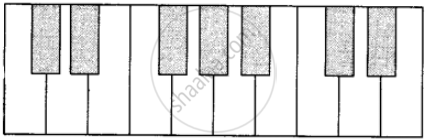
Here is a keyboard of a harmonium: What is the ratio of black keys to all keys on the given keyboard.