Advertisements
Advertisements
Question
A boy weighing 40 kg makes a high jump of 1.5 m.
What is his kinetic energy at the highest point?
Advertisements
Solution
The kinetic energy at the highest point is zero because at the highest point, velocity of the high jumper becomes zero.
APPEARS IN
RELATED QUESTIONS
Does the transfer of energy take place when you push a huge rock with all your might and fail to move it? Where is the energy you spend going?
State whether the object possess kinetic energy, potential energy, or both :
A man climbing a hill _____________.
State whether the object possess kinetic energy, potential energy, or both :
A bird running on the ground ____________.
What type of energy is possessed : by the piece of stone which is thrown away on releasing the stretched rubber strings of catapult?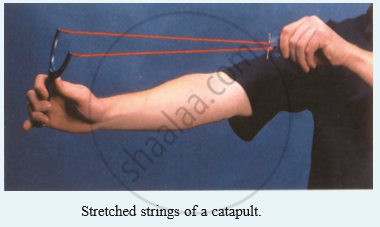
Fill in the blank with suitable word:
The electricity meter installed in our homes measure electrical energy in the units of ___________.
A bulb lights up when connected to a battery. State the energy change which takes place :
What do you understand by the term 'transformation of energy"? Explain with an example.
Which one of the following is not the unit of energy?
Which of the following energy change involves frictional force?
How much energy does a 100 W electric bulb transfer in 1 minute?
