Advertisements
Advertisements
Question
[2–1 + 3–1 + 4–1]0 = ______.
Advertisements
Solution
[2–1 + 3–1 + 4–1]0 = 1.
Explanation:
Using law of exponents,
a0 = 1 ...[∵ a is non-zero integer]
∴ [2–1 + 3–1 + 4–1]0 = 1
Hence, [2–1 + 3–1 + 4–1]0 = 1
APPEARS IN
RELATED QUESTIONS
Find the value of 2–3.
`((-7)/5)^-1` is equal to ______.
`(3/4)^5 ÷ (5/3)^5` is equal to ______.
a3 × a–10 = ______.
(–4)–4 × (4)–1 = (4)5
By what number should `((-3)/2)^-3` be divided so that the quotient may be `(4/27)^-2`?
Find the value of n.
`6^n/6^-2 = 6^3`
An insect is on the 0 point of a number line, hopping towards 1. She covers half the distance from her current location to 1 with each hop. So, she will be at `1/2` after one hop, `3/4` after two hops, and so on.
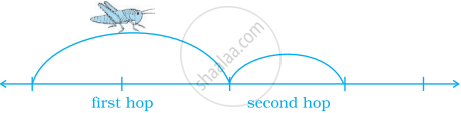
- Make a table showing the insect’s location for the first 10 hops.
- Where will the insect be after n hops?
- Will the insect ever get to 1? Explain.
Fill in the blanks

For hook-up, determine whether there is a single repeater machine that will do the same work. If so, describe or draw it.