Advertisements
Chapters
1: Budgeting and Savings
2: Space Organisation in the Kitchen
3: Home Furnishings
UNIT 2: GROWTH AND DEVELOPMENT DURING MIDDLE CHILDHOOD
4: Milestones of Development
5: Role of Family, Peer Group and School
6: Learning Disabilities in Children
UNIT 3: MEAL PLANNING
7: Balanced Diet
8: Meal Planning for the Family
9: Storage and Preservation of Food
UNIT 4: SELECTION AND CARE OF TEXTILE AND CLOTHING
10: Selection of Fabrics
11: Selection of Readymade Garments
12: Laundering
▶ 13: Laundry Material
UNIT 5: COMMUNICATION AND EXTENSION
14: Social and Economic Issues in India
15: Role of Government Towards A Developed India
16: Communication Aids
![Dr. Alka Agarwal, Urvi Raval solutions for होम सायन्स [इंग्रजी] इयत्ता १० आईसीएसई chapter 13 - Laundry Material - Shaalaa.com](/images/home-science-english-class-10-icse_6:47f2a0e2bbf14b0390712d5a5fb6e473.jpg "Dr. Alka Agarwal, Urvi Raval solutions for होम सायन्स [इंग्रजी] इयत्ता १० आईसीएसई chapter 13 - Laundry Material")
Advertisements
Solutions for Chapter 13: Laundry Material
Below listed, you can find solutions for Chapter 13 of CISCE Dr. Alka Agarwal for होम सायन्स [इंग्रजी] इयत्ता १० आईसीएसई.
Dr. Alka Agarwal, Urvi Raval solutions for होम सायन्स [इंग्रजी] इयत्ता १० आईसीएसई 13 Laundry Material EXERCISES [Pages 201 - 205]
OBJECTIVE QUESTIONS Choose the correct option:
Only ______ soaps are used to wash silk garments.
acidic
neutral
medicated
glycerin
Hardness of water is of two types ______.
Temporary and Permanent
Rural and Urban
Saline and Hard
Salty and Sweet
The ingredients needed in making soap ______.
Alkali
Common salt
Fats and oils
All of these.
Optical brighteners make garments appear ______.
Cleaner
Whiter
Crisper
Smoother
Neutral soaps are applied on ______.
Jute
Cotton
Silk
Linen
State True or False:
Starch is manufactured in plants by the process of photosynthesis.
State True or False:
Detergent does not form scum in hard water so its effectiveness reduces in hard water.
State True or False:
One advantage of applying a stiffening agent is that it makes the fabric easier to iron.
Fill in the blanks:
______ soap contains alkali and fat in equal amounts.
Non-essential soap
Neutral soap
Mild soap
Strong soap
The Soapnut is also known as ______.
Shikakai
Amla
Reetha nut
Arabic gum
______ are cleaning agents made from chemicals.
Soap
Detergents
Blues
OBA
Select the odd one:
A soap is:
Made from natural materials
It is formed by alkali and sulphuric acid
It is eco-friendly and can be easily broken by bacteria
They are the sodium salt of fatty acids.
Select the odd one:
The different kinds of detergents are:
Detergents made from Quaternary ammonium salts.
Detergents made from the permanent hardness of water.
Detergents made from sodium alkyl sulphates.
Detergents made from esterified polyhydroxy compounds.
Select the odd one:
A good quality laundry soap will have:
Natural perfume in them
When broken the soap will appear granular
The colour of the soap should be pale and clear
It should be hard to touch
Select the odd pair:
Optical brighteners - coloured dyes
Aniline blue - water soluble
Indigo blue - insoluble in water
Ultra-marine blue - popular in households
Select the odd pair:
Ozone - Oxidizing bleach
Petrol - Oxidizing bleach
Acetone - Reducing bleach
Ammonia - Reducing bleach
Select the odd pair:
Washing Soda - Acidic laundry reagent
Common Salt - Absorbents
Borax - Alkaline laundry reagent
Carbon tetrachloride - Solvent
Identify the correct statement:
Assertion (A): Detergents are more effective in hard water than soap.
Reason (R): Detergents form soluble complexes with calcium and magnesium ions in hard water, preventing the formation of soap scum.
A is true, but R is false.
A is false, but R is true.
Both A and R are true, and R is the correct explanation of A.
Both A and R are true, and R is not the correct explanation of A.
Assertion (A): Fabric softeners work by coating the fabric fibres with a thin layer of chemicals that makes them feel smoother and reduces static electricity.
Reason (R): Fabric softeners enhance the absorbency of fabrics, allowing them to retain more water during the rinse cycle, which contributes to their softness.
A is true, but R is false.
A is false, but R is true.
Both A and R are true, and R is the correct explanation of A.
Both A and R are true, and R is not the correct explanation of A.
Assertion (A): Oxidising bleaches, like hydrogen peroxide, work by releasing oxygen, which breaks down colour molecules in stains.
Reason (R): The oxygen released by oxidising bleaches oxidises the colour molecules, making them colourless and soluble, thus aiding in stain removal.
A is true, but R is false.
A is false, but R is true.
Both A and R are true, and R is the correct explanation of A.
Both A and R are true, and R is not the correct explanation of A.
Choose the correct pair:
Soft Water - Reduces Fabric Softener Efficiencу
Hard Water - Enhances Fabric Softening
Salty Water - Causes Fabric Softener Staining
Alkaline Water - Ideal for Fabric Softening
Choose the correct pair:
Optical Brighteners - Reduce Yellowing
Blues - Cause Yellowing
Optical Brighteners - Enhance Yellow Stains
Blues - Prevent Fabric Yellowing
Select the incorrect pair:
Starch - Adds Weight to Fabrics
Sizing Agents - Increase Fabric Body
Glues - Improve Fabric Drape
Resins - Enhance Fabric Stiffness
Select the incorrect pair:
Soap - Effective in Hard Water
Detergents - Form Suds Easily
Soap - Biodegradable
Detergents - Suitable for Woollens
Picture-based question:
This product is used for:
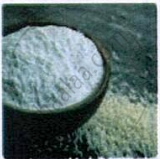
Blueing
Whitening
Starching
Bleaching
The following image is an example of:
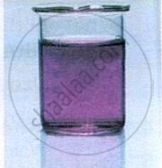
Oxidising agent
Reducing agent
Bleaching agent
Whitening agent
Choose the correct statement:
Statement I: Hard water is ideal for laundering clothes as it enhances the effectiveness of detergents, resulting in better cleaning.
Statement II: Soft water is more efficient for laundering because it allows detergents to lather easily and effectively removes dirt from fabrics.
Statement I is true, and Statement II is false.
Statement I is false, and Statement II is true.
Both Statements I and II are true.
Both Statements I and II are false.
Choose the correct statement:
Statement I: A good laundry soap should produce a rich lather in both hard and soft water, ensuring effective cleaning.
Statement II: A good laundry soap should be harsh on fabrics to ensure that all stains are removed, regardless of the fabric’s delicacy.
Statement I is true, and Statement II is false.
Statement I is false and Statement II is true.
Both Statements I and II are true.
Both Statements I and II are false.
Choose the correct pair:
| A. | Surfactants | 1. | Help to remove dirt and stains |
| B. | Enzymes | 2. | Softens water and enhances cleaning power |
| C. | Fragrance | 3. | Adds scent to the laundry |
| D. | Optical Brighteners | 4. | Essential |
A-1, B-2, C-3, D-4
A-2, B-1, C-4, D-3
A-1, B-2, C-4, D-3
A-3, B-4, C-1, D-2
Choose the correct pair:
| A. | Starch | 1. | Used for creating a crisp finish on fabrics |
| B. | Cornstarch | 2. | Derived from natural sources (plants) |
| C. | Beeswax | 3. | Obtained from natural bees |
| D. | Fusible Interfacing | 4. | Provides support and structure in garment-making |
A-1, B-2, C-3, D-4
A-3, B-4, C-1, D-2
A-2, B-1, C-4, D-3
A-4, B-3, C-2, D-1
SHORT QUESTIONS
Suggest any two precautions to be taken care of during the blueing process.
What are detergents?
How do detergent help in the laundry?
Give one use of optical brighteners in the laundry.
What is soft water?
Why is soft water appropriate for the laundry process?
Give two advantages of starching.
Why are white clothes bleached? Give two reasons.
Name two types of blues.
Enlist the differentiate between oxidising and reducing bleaches.
Give two advantages of using borax.
Name the stiffening agents used for cotton.
Name the stiffening agents used for silk.
LONG QUESTIONS
What are the advantages of using detergents over soaps?
List any five benefits of using starch in laundering of clothes.
Mention any two characteristics of a good soap that is used for washing clothes.
What are additional laundry reagents?
Classify additional laundry reagents and give two examples of each.
State any five precautionary measures to be followed during the bluing process in laundry.
Soaps and detergents are both cleaning agents, but they work in different ways. Soaps are made from fats and oils, while detergents are synthetic chemicals. Soaps are effective in soft water, but they can form scum in hard water.
In this context, answer the following questions:
- What is the main difference between soap and detergent?
- What is a notable environmental characteristic of soaps?
- What is a key advantage of detergents in hard water?
Stiffening agents are substances added to fabrics to make them more rigid or firm. They are commonly used in the textile industry to create a variety of effects, such as shaping collars and cuffs, adding support to garments, and creating a wrinkle-resistant finish.
In this context, answer the following questions:
- What role do stiffening agents play in garment care?
- Name a common stiffening agent used in laundry.
- Mention four benefits of using stiffening agents.
Solutions for 13: Laundry Material
Dr. Alka Agarwal solutions for होम सायन्स [इंग्रजी] इयत्ता १० आईसीएसई chapter 13 - Laundry Material
Shaalaa.com has the CISCE Mathematics होम सायन्स [इंग्रजी] इयत्ता १० आईसीएसई CISCE solutions in a manner that help students grasp basic concepts better and faster. The detailed, step-by-step solutions will help you understand the concepts better and clarify any confusion. Dr. Alka Agarwal solutions for Mathematics होम सायन्स [इंग्रजी] इयत्ता १० आईसीएसई CISCE 13 (Laundry Material) include all questions with answers and detailed explanations. This will clear students' doubts about questions and improve their application skills while preparing for board exams.
Further, we at Shaalaa.com provide such solutions so students can prepare for written exams. Dr. Alka Agarwal textbook solutions can be a core help for self-study and provide excellent self-help guidance for students.
Concepts covered in होम सायन्स [इंग्रजी] इयत्ता १० आईसीएसई chapter 13 Laundry Material are Laundering of Clothes, Methods of Cleaning, Laundry at Home, General Methods for Removing Dirt from Fabrics, Common Steps in Laundering at Home (Wet Method), Laundering Specific Fabrics, Laundering of Fabrics Made from Natural Fibres, Laundering of Fabrics Made from Artificial (Or Manmade) Fibres, Difference Between Wet and Dry Methods of Cleaning, Methods of Finishing, Storage of Clothes, Stains and Their Removal, Common Stains and Their Removal.
Using Dr. Alka Agarwal होम सायन्स [इंग्रजी] इयत्ता १० आईसीएसई solutions Laundry Material exercise by students is an easy way to prepare for the exams, as they involve solutions arranged chapter-wise and also page-wise. The questions involved in Dr. Alka Agarwal Solutions are essential questions that can be asked in the final exam. Maximum CISCE होम सायन्स [इंग्रजी] इयत्ता १० आईसीएसई students prefer Dr. Alka Agarwal Textbook Solutions to score more in exams.
Get the free view of Chapter 13, Laundry Material होम सायन्स [इंग्रजी] इयत्ता १० आईसीएसई additional questions for Mathematics होम सायन्स [इंग्रजी] इयत्ता १० आईसीएसई CISCE, and you can use Shaalaa.com to keep it handy for your exam preparation.
