Advertisements
Chapters
1: Budgeting and Savings
2: Space Organisation in the Kitchen
3: Home Furnishings
UNIT 2: GROWTH AND DEVELOPMENT DURING MIDDLE CHILDHOOD
4: Milestones of Development
5: Role of Family, Peer Group and School
▶ 6: Learning Disabilities in Children
UNIT 3: MEAL PLANNING
7: Balanced Diet
8: Meal Planning for the Family
9: Storage and Preservation of Food
UNIT 4: SELECTION AND CARE OF TEXTILE AND CLOTHING
10: Selection of Fabrics
11: Selection of Readymade Garments
12: Laundering
13: Laundry Material
UNIT 5: COMMUNICATION AND EXTENSION
14: Social and Economic Issues in India
15: Role of Government Towards A Developed India
16: Communication Aids
![Dr. Alka Agarwal, Urvi Raval solutions for होम सायन्स [इंग्रजी] इयत्ता १० आईसीएसई chapter 6 - Learning Disabilities in Children - Shaalaa.com](/images/home-science-english-class-10-icse_6:47f2a0e2bbf14b0390712d5a5fb6e473.jpg "Dr. Alka Agarwal, Urvi Raval solutions for होम सायन्स [इंग्रजी] इयत्ता १० आईसीएसई chapter 6 - Learning Disabilities in Children")
Advertisements
Solutions for Chapter 6: Learning Disabilities in Children
Below listed, you can find solutions for Chapter 6 of CISCE Dr. Alka Agarwal for होम सायन्स [इंग्रजी] इयत्ता १० आईसीएसई.
Dr. Alka Agarwal, Urvi Raval solutions for होम सायन्स [इंग्रजी] इयत्ता १० आईसीएसई 6 Learning Disabilities in Children EXERCISES [Pages 83 - 87]
OBJECTIVE QUESTIONS Fill in the blanks
Learning disorder is a ______ condition that affects the brain's ability to send, receive, and process information.
Physiological
Physical
Psychological
Neurological
The above-average intelligence is also termed as ______.
Hidden disabilities
Normal intelligence
IQ
Higher skills
One can recognize the signs of learning disability for a Preschool-age child by ______.
Pronunciation problem
Difficulty in rhyming words
Avoids writing assignments
Difficulty in following directions
Choose the correct option
Rohit cannot visualize letters, has difficulty with basic sentence structure and poor grammatical awareness. Identify his disability:
Dyscalculia
Dyslexia
ADHD
Dysgraphia
How can a child with learning disabilities help?
Taking awareness programs for teachers and parents
Sensitizing towards the issue
Early identification and treatment
All the above
The ADHD disorder is identified by:
Fidgety behaviour
Non-stop talking
Trouble controlling the temper
All of these
______ is a disorder that causes children to lose focus on a task very easily.
Dyscalculia
Dysgraphia
ADHD
Dyslexia
State True or False:
Dyslexia may be also referred to as a writing disability.
State True or False:
A learning disability can be cured.
State True or False:
Parents have a great influence on their children’s academic and social success.
Identify the picture.
 |
This child is finding the lesson boring. Identify the picture and select the correct learning disability.
Dyslexia
Dysgraphia
ADHD
None of these
Identify the picture.
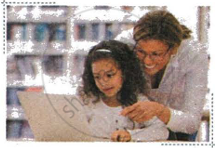 |
The picture below shows the
Role of Parents
Role of school
Role of media
All of these
Identify the picture.
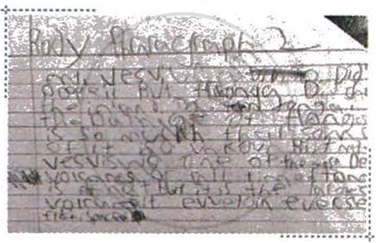 |
Identify the learning disability with this picture.
Dysgraphia
Dyscalculia
Dyspraxia
None of these
Select the odd one:
Dyscalculia is
- Disability to grasp and solve maths concepts
- Difficulty in manipulating numbers in their heads
- Struggling with phonemic awareness
- Difficulty in remembering equations
Select the odd one:
The different signs of learning disabilities in high school students
- Wael memory skill
- Avoids reading and writing tasks
- Unstable pencil grip
- Misreads information
Select the odd one:
Learning disabilities are
- Always genetic
- Interfere with attention
- Connect to processing deficit
- Not curable
Identify the correct statement:
Assertion (A): A learning disability is a disorder that inhibits the ability to process and retain information.
Reason (R): These disorders are called protesting disorders.
A is true but R is false.
A is false but R is true.
Both A and R are true and R is the correct explanation of A.
Both A and R are true and R is not the correct explanation of A.
Assertion (A): Dyslexia is a kind of disorder with difficulty in reading.
Reason (R): Learning disorders are not always inherited genetically.
A is true but R is false.
A is false but R is true.
Both A and R are true and R is the correct explanation of A.
Both A and R are true and R is not the correct explanation of A.
Assertion (A): Parents can have high expectations from those children who suffer from learning disabilities as they grow.
Reason (R): The parents are the first to recognise the traits of learning disabilities.
A is true but R is false.
A is false but R is true.
Both A and R are true and R is the correct explanation of A.
Both A and R are true and R is not the correct explanation of A.
Choose the correct pair:
Pre-school age – difficulty in rhyming words
Grades 5 to 8 – slow development of fine motor skills
Grades 1 to 4 - slow to remember facts
High school students - works slowly
Choose the correct pair:
Dyslexia - Difficulty reading
Dyscalculia - Difficulty with math
Dyspraxia - Difficulty with motor coordination
Dysphasia - Difficulty with language comprehension
Select the incorrect pair:
Advocate for their child’s needs - Communicate with teachers and school administrators to ensure their child receives appropriate support
Deny their child’s disability - Avoid discussing their child’s learning disability with others
Provide a supportive home environment - Create a calm and structured environment that promotes focus
Establish clear expectations and routines - Set consistent routines and expectations
Select the incorrect pair:
Collaborate with parents - Communicate with parents to share progress, and concerns
Focus on traditional teaching methods - Rely solely on traditional teaching methods
Use differentiated instruction - Employ varied teaching aids to meet the diverse learning needs
Create an inclusive classroom environment - Foster a positive atmosphere
Choose the correct statement:
Statement I: High school students with learning disabilities may show difficulty in reading comprehension, writing, or solving math problems, despite having average or above-average intelligence.
Statement II: Learning disabilities are always accompanied by low intelligence, making it easy to identify students with such disabilities based on their overall academic performance.
Statement I is true and Statement II is false.
Statement I is false and Statement II is true.
Both Statements I and II are true.
Both Statements I and II are false.
Statement I: ADHD is characterized by symptoms such as in attention, hyperactivity, and impulsivity that can interfere with a person’s daily functioning and development.
Statement II: Children with ADHD will always outgrow the condition by the time they reach adulthood, so treatment is not necessary beyond childhood.
Statement I is true and Statement II is false.
Statement I is false and Statement II is true.
Both Statements I and II are true.
Both Statements I and II are false.
Choose the correct pair:
| A. | Dyslexia | 1. | Difficulty in reading and spelling |
| B. | Dyscalculia | 2. | Struggles with math concepts |
| C. | Dysgraphia | 3. | Poor handwriting and writing skills |
| D. | Auditory Processing Disorder | 4. | Trouble understanding spoken instructions |
A - 1, B - 2, C - 3, D - 4
A - 3, B - 1, C - 4, D - 2
A - 2, B - 4, C - 1, D - 3
A - 4, B - 3, C - 2, D - 1
Choose the correct pair:
| A. | Providing emotional support | 1. | Boosts self-esteem and confidence |
| B. | Educating themselves about the disability | 2. | Enables better understanding and patience |
| C. | Encouraging strengths and interests | 3. | Fosters a sense of competence and motivation |
| D. | Collaborating with teachers and professionals | 4. | Ensures appropriate interventions and strategies |
A - 1, B - 2, C - 3, D - 4
A - 3, B - 1, C - 2, D - 4
A - 2, B - 4, C - 1, D - 3
A - 4, B - 3, C - 1, D - 2
SHORT QUESTIONS
Why is ‘learning disability’ referred to as a ‘hidden disability’?
Name some higher skills affected by a person with a learning disability.
What are struggle areas for children with ‘Dyscalculia’?
How is the treatment for A.D.H.D. different from the treatment of the other learning disabilities?
What are some negative parental responses when their child is diagnosed with learning difficulties?
What is the major behavioural or emotional issue a child with learning difficulties has?
What are auditory learning disabilities?
What are non-verbal learning disabilities?
What are the signs to look for the preschool-age child to identify the learning disabilities in them?
LONG QUESTIONS
Define Learning Disability.
Describe the main learning disabilities in brief.
Explain in detail how ‘Dyslexia’ differs from ‘Dysgraphia’.
Describe the main learning disabilities in brief.
Early intervention during learning disability helps in better progress. With respect to this discuss the method of testing.
Early intervention during learning disability helps in better progress. With respect to this discuss the method of treatment.
Discuss in detail the role of school in accepting and sensitising towards children with learning disabilities.
What are the signs to be look for the grade 1-4 to identify the learning disabilities in it?
What are the signs to be look for the grade 5-8 to identify the learning disabilities in them?
List any five symptoms of learning disabilities seen in a 10-year-old child.
The family serves as a crucial support system for individuals with learning disabilities, providing emotional encouragement and advocating for educational needs. In school, teachers play a pivotal role by implementing tailored interventions, while peers contribute to a positive learning environment through empathy and inclusion.
In this context, answer the following question:
What is the primary role of the family in supporting individuals with learning disabilities?
The family serves as a crucial support system for individuals with learning disabilities, providing emotional encouragement and advocating for educational needs. In school, teachers play a pivotal role by implementing tailored interventions, while peers contribute to a positive learning environment through empathy and inclusion.
In this context, answer the following question:
How do teachers contribute to addressing learning disabilities within the school environment?
The family serves as a crucial support system for individuals with learning disabilities, providing emotional encouragement and advocating for educational needs. In school, teachers play a pivotal role by implementing tailored interventions, while peers contribute to a positive learning environment through empathy and inclusion.
In this context, answer the following question:
Name two learning disabilities.
Effective learning disability support requires a collaborative approach. Families foster resilience and self-esteem, schools implement specialized teaching methods, and peers promote social inclusion. Together, these elements create an environment where individuals with learning disabilities can thrive academically and socially.
In this context, answer the following question:
What role do families play in building resilience for individuals with learning disabilities?
Effective learning disability support requires a collaborative approach. Families foster resilience and self-esteem, schools implement specialized teaching methods, and peers promote social inclusion. Together, these elements create an environment where individuals with learning disabilities can thrive academically and socially.
In this context, answer the following question:
How do schools contribute to academic success for students with learning disabilities?
Effective learning disability support requires a collaborative approach. Families foster resilience and self-esteem, schools implement specialized teaching methods, and peers promote social inclusion. Together, these elements create an environment where individuals with learning disabilities can thrive academically and socially.
In this context, answer the following question:
Why is peer inclusion important in the context of learning disabilities support?
Amit is in the fifth grade who is easily distracted in class and is unable to pay constant attention.
Name the learning disability Amit may be suffering from.
Amit is in the fifth grade who is easily distracted in class and is unable to pay constant attention.
List any other four signs and symptoms of this learning disability.
Solutions for 6: Learning Disabilities in Children
Dr. Alka Agarwal solutions for होम सायन्स [इंग्रजी] इयत्ता १० आईसीएसई chapter 6 - Learning Disabilities in Children
Shaalaa.com has the CISCE Mathematics होम सायन्स [इंग्रजी] इयत्ता १० आईसीएसई CISCE solutions in a manner that help students grasp basic concepts better and faster. The detailed, step-by-step solutions will help you understand the concepts better and clarify any confusion. Dr. Alka Agarwal solutions for Mathematics होम सायन्स [इंग्रजी] इयत्ता १० आईसीएसई CISCE 6 (Learning Disabilities in Children) include all questions with answers and detailed explanations. This will clear students' doubts about questions and improve their application skills while preparing for board exams.
Further, we at Shaalaa.com provide such solutions so students can prepare for written exams. Dr. Alka Agarwal textbook solutions can be a core help for self-study and provide excellent self-help guidance for students.
Concepts covered in होम सायन्स [इंग्रजी] इयत्ता १० आईसीएसई chapter 6 Learning Disabilities in Children are Learning Disabilities in Children, Recognising Learning Disabilities.
Using Dr. Alka Agarwal होम सायन्स [इंग्रजी] इयत्ता १० आईसीएसई solutions Learning Disabilities in Children exercise by students is an easy way to prepare for the exams, as they involve solutions arranged chapter-wise and also page-wise. The questions involved in Dr. Alka Agarwal Solutions are essential questions that can be asked in the final exam. Maximum CISCE होम सायन्स [इंग्रजी] इयत्ता १० आईसीएसई students prefer Dr. Alka Agarwal Textbook Solutions to score more in exams.
Get the free view of Chapter 6, Learning Disabilities in Children होम सायन्स [इंग्रजी] इयत्ता १० आईसीएसई additional questions for Mathematics होम सायन्स [इंग्रजी] इयत्ता १० आईसीएसई CISCE, and you can use Shaalaa.com to keep it handy for your exam preparation.
