Advertisements
Chapters
1: Budgeting and Savings
2: Space Organisation in the Kitchen
3: Home Furnishings
UNIT 2: GROWTH AND DEVELOPMENT DURING MIDDLE CHILDHOOD
4: Milestones of Development
5: Role of Family, Peer Group and School
6: Learning Disabilities in Children
UNIT 3: MEAL PLANNING
7: Balanced Diet
8: Meal Planning for the Family
9: Storage and Preservation of Food
UNIT 4: SELECTION AND CARE OF TEXTILE AND CLOTHING
10: Selection of Fabrics
11: Selection of Readymade Garments
▶ 12: Laundering
13: Laundry Material
UNIT 5: COMMUNICATION AND EXTENSION
14: Social and Economic Issues in India
15: Role of Government Towards A Developed India
16: Communication Aids
![Dr. Alka Agarwal, Urvi Raval solutions for होम सायन्स [इंग्रजी] इयत्ता १० आईसीएसई chapter 12 - Laundering - Shaalaa.com](/images/home-science-english-class-10-icse_6:47f2a0e2bbf14b0390712d5a5fb6e473.jpg "Dr. Alka Agarwal, Urvi Raval solutions for होम सायन्स [इंग्रजी] इयत्ता १० आईसीएसई chapter 12 - Laundering")
Advertisements
Solutions for Chapter 12: Laundering
Below listed, you can find solutions for Chapter 12 of CISCE Dr. Alka Agarwal for होम सायन्स [इंग्रजी] इयत्ता १० आईसीएसई.
Dr. Alka Agarwal, Urvi Raval solutions for होम सायन्स [इंग्रजी] इयत्ता १० आईसीएसई 12 Laundering EXERCISES [Pages 187 - 190]
OBJECTIVE QUESTIONS
The process of laundering includes these main steps ______.
Storing
Regular washing
Finishing
All of these.
The general methods of removing dirt can be done by ______.
Applying friction
Using washing machines
Application of light pressure
All of these
Sorting the clothes for laundering should be according to ______.
Colour of the clothes
Size of the colours
Degree of dirt in the clothes
All of these.
Rinsing of clothes refers to ______.
Boiling of clothes
Washing in plenty of water
Moistening and spreading clothes on grass
Application of pressure on clothes
Ironing, temperature for woollen fabrics is ______.
200°F
100°F
400°F
150°F
State True or False
State True or False:
Coloured fabrics should be soaked as their colour might bleed.
State True or False:
Loose dirt is dirt that rests loosely on the surface of the fabric.
State True or False:
Gum water is used on silk fabric for stiffening.
Identify the picture:
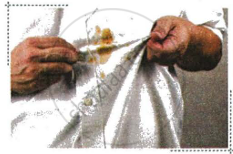 |
Identify the stain in the picture and select the reagents used to remove it
Glycerine
Methylated spirit
Soap
All of these.
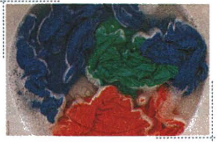 |
Identify the step of laundering
Boiling
Soaking
Rinsing
Sorting
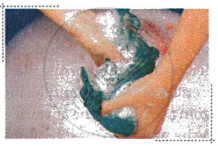 |
Identify the method of removing dirt from the given picture
Application of the principle of suction
Application of friction
Application of light pressure
Washing machine
Fill in the blanks:
Colourless fluorescent dyes which turn pale fabrics white making them look brighter are called ______.
Bleach
Blue
Stiffening agents
Optical brighteners
______ method of cleaning uses absorbents and solvents.
Laundry method
Wet method
Dry method
All of these
The ______ method of removing dirt is suitable for all kinds of clothes.
Suction
Steeping
Soaking
Friction
Drip drying can be used for ______ clothes.
Cotton
Silk
Wool
Synthetic
Select the odd one:
While washing wool one must remember
It is a weak fabric
Harsh soaps can be used
Gets damaged by heat
Sensitive to acids
Select the odd one:
Factor that helps in identifying the stain
Texture of Stain
Smell of Stain
Classification of the stain
Colour of Stain
Select the odd one:
The equipment used at home for laundry
Sink
Boiler
Irons
Pipe
Identify the correct statement:
Assertion (A): Cotton is ironed at 400° F.
Reason (R): Cotton is a natural fibre made of cellulose which possess good heat resistance properties.
A is true, but R is false.
A is false, but R is true.
Both A and R are true, and R is the correct explanation of A.
Both A and R are true, and R is not the correct explanation of A.
Assertion (A): Dry cleaning is preferable for delicate fabrics like silk and wool.
Reason (R): Dry cleaning uses a solvent-based process that is gentler on delicate fabrics and prevents damage caused by water.
A is true but R is false.
A is false, but R is true.
Both A and R are true, and R is the correct explanation of A.
Both A and R are true, and R is not the correct explanation of A.
Assertion (A): Natural fibre fabrics, such as cotton and linen, can shrink when laundered in hot water.
Reason (R): The heat from hot water can cause the natural fibres to contract, leading to shrinkage in the fabric.
A is true, but R is false.
A is false, but R is true.
Both A and R are true, and R is the correct explanation of A.
Both A and R are true, and R is not the correct explanation of A.
Choose the correct pair:
Wet Method - Quick Process
Dry Method - Involves Washing Machines
Wet Method - Uses Liquid Detergent
Dry Method - Suitable for Water-Sensitive Fabrics
Choose the correct pair:
Washing in Hot Water - Air Drying
Spot Cleaning - Sun Drying
Utilizing Liquid Solvents - Pressing
Soaking in Detergent - Tumble Drying
Select the incorrect pair:
Delicate fabrics - Hand wash
Wool - Gentle cycle, cold water
Cotton and Linen - Hot water, tumble dry
Synthetic fabrics - Mild detergent, air dry
Select the incorrect pair:
Coffee - Club Soda
Grass Stains - Lemon Juice
Tomato Sauce - Cold Water Soak
Grease - Dish Soap
Choose the correct statement:
Statement I: Dry cleaning uses water and detergent to clean delicate fabrics, ensuring that they are thoroughly washed without causing damage.
Statement II: Dry cleaning employs chemical solvents instead of water, making it suitable for fabrics that might shrink, distort, or get damaged with traditional washing methods.
Statement I is true, and Statement II is false.
Statement I is false, and Statement II is true.
Both Statements I and II are true.
Both Statements I and II are false.
Choose the correct statement:
Statement I: Rubbing a fabric together or using a brush applies friction, which helps in loosening and removing dirt particles from the fabric’s surface.
Statement II: Using excessive friction while cleaning delicate fabrics is beneficial, as it ensures all dirt is thoroughly removed without causing any damage.
Statement I is true, and Statement II is false.
Statement I is false, and Statement II is true.
Both Statements I and II are true.
Both Statements I and II are false.
Choose the correct pair:
| A. | Sorting | 1. | Grouping clothes by colour and fabric type |
| B. | Pre-treating stains | 2. | Applying a stain remover before washing |
| C. | Washing | 3. | Using the appropriate cycle and temperature |
| D. | Drying | 4. | Choosing the right drying method for the fabric |
A-1, B-2, C-3, D-4
A-2, B-1, C-4, D-3
A-3, B-4, C-1, D-2
A-4, B-3, C-2, D-1
Choose the correct pair:
| A. | Wool | 1. | Hand wash in cold water with mild detergent |
| B. | Silk | 2. | Machine wash on a delicate cycle with cold water |
| C. | Cotton | 3. | Wash in warm water and tumble dry |
| D. | Polyester | 4. | Wash in cold water and air dry |
A-1, B-2, C-3, D-4
A-2, B-1, C-4, D-3
A-3, B-4, C-1, D-2
A-4, B-3, C-2, D-1
SHORT QUESTIONS
Why is the sorting of clothes an important step in the laundering process?
Give two precautions to be followed while drying of woollen garments.
List any two advantages of soaking clothes prior to washing.
What is spot cleaning?
What is the method employed to wash cotton garments?
Name two dry cleaning agents with suitable examples.
What is the method used to wash woollens?
What is the method used to wash woollens?
Differentiate between wet cleaning and dry cleaning.
LONG QUESTIONS
Explain the household method of laundering a white cotton shirt.
Write a short note on storage of clothes.
Write a short note on the household method of laundering a silk garment.
Write a short note on the different methods of laundering clothes.
Mention the principle of dry deaning.
What are the advantages of dry cleaning method over wet cleaning?
What is the difference between the methods used to launder cotton and woollen garments?
Give the list of laundry equipment used at home.
Explain the household method of laundering a white cotton shirt.
The wet method of laundering involves washing fabrics with water and detergent. It’s a versatile approach suitable for most fabrics, promoting cleanliness and stain removal through soaking, agitation, and rinsing.
In this context, answer the following questions:
- What are the different water temperatures used?
- What agitation methods are there?
- How does the wet method contribute to stain removal?
Proper storage of clothes is essential. Keep garments in a cool, dark, and dry place, hung or folded appropriately. Protect from dust and pests. Rotate seasonal items and avoid overcrowding for longevity.
In this context, answer the following questions:
- Is sunlight a storage friend or foe?
- Why is it essential to avoid overcrowding when storing clothes?
- What is the significance of protecting clothes from dust and pests during storage?
Solutions for 12: Laundering
Dr. Alka Agarwal solutions for होम सायन्स [इंग्रजी] इयत्ता १० आईसीएसई chapter 12 - Laundering
Shaalaa.com has the CISCE Mathematics होम सायन्स [इंग्रजी] इयत्ता १० आईसीएसई CISCE solutions in a manner that help students grasp basic concepts better and faster. The detailed, step-by-step solutions will help you understand the concepts better and clarify any confusion. Dr. Alka Agarwal solutions for Mathematics होम सायन्स [इंग्रजी] इयत्ता १० आईसीएसई CISCE 12 (Laundering) include all questions with answers and detailed explanations. This will clear students' doubts about questions and improve their application skills while preparing for board exams.
Further, we at Shaalaa.com provide such solutions so students can prepare for written exams. Dr. Alka Agarwal textbook solutions can be a core help for self-study and provide excellent self-help guidance for students.
Concepts covered in होम सायन्स [इंग्रजी] इयत्ता १० आईसीएसई chapter 12 Laundering are Laundering of Clothes, Methods of Cleaning, Laundry at Home, General Methods for Removing Dirt from Fabrics, Common Steps in Laundering at Home (Wet Method), Laundering Specific Fabrics, Laundering of Fabrics Made from Natural Fibres, Laundering of Fabrics Made from Artificial (Or Manmade) Fibres, Difference Between Wet and Dry Methods of Cleaning, Methods of Finishing, Storage of Clothes, Stains and Their Removal, Common Stains and Their Removal.
Using Dr. Alka Agarwal होम सायन्स [इंग्रजी] इयत्ता १० आईसीएसई solutions Laundering exercise by students is an easy way to prepare for the exams, as they involve solutions arranged chapter-wise and also page-wise. The questions involved in Dr. Alka Agarwal Solutions are essential questions that can be asked in the final exam. Maximum CISCE होम सायन्स [इंग्रजी] इयत्ता १० आईसीएसई students prefer Dr. Alka Agarwal Textbook Solutions to score more in exams.
Get the free view of Chapter 12, Laundering होम सायन्स [इंग्रजी] इयत्ता १० आईसीएसई additional questions for Mathematics होम सायन्स [इंग्रजी] इयत्ता १० आईसीएसई CISCE, and you can use Shaalaa.com to keep it handy for your exam preparation.
