Advertisements
Chapters
▶ 2: Ownership Structures - Sole Proprietorship and Joint Hindu Family Business
3: Ownership Structures - Partnership
4: Ownership Structures - Joint Stock Company
5: Ownership Structures - Cooperative Society
6: Public Sector Enterprises
7: Functioning of a Commercial Organisation
8: Communication in a Commercial Organisation
9: Ways of Communicating
10: Tools of Communication
11: Nature and Terminology of Accounting
12: Accounting Records
13: Natural Resources
14: Depletion of Resources
15: Practices for Conservation of Resources
16: Industrial Pollution and Degradation of Environment
![C. B. Gupta solutions for कमर्शियल ॲप्लीकेशन [इंग्रजी] इयत्ता ९ आयसीएसई chapter 2 - Ownership Structures - Sole Proprietorship and Joint Hindu Family Business - Shaalaa.com](/images/commercial-applications-english-class-9-icse_6:e921a1ab181646959c8f7253711b2e9f.jpg "C. B. Gupta solutions for कमर्शियल ॲप्लीकेशन [इंग्रजी] इयत्ता ९ आयसीएसई chapter 2 - Ownership Structures - Sole Proprietorship and Joint Hindu Family Business")
Advertisements
Solutions for Chapter 2: Ownership Structures - Sole Proprietorship and Joint Hindu Family Business
Below listed, you can find solutions for Chapter 2 of CISCE C. B. Gupta for कमर्शियल ॲप्लीकेशन [इंग्रजी] इयत्ता ९ आयसीएसई.
C. B. Gupta solutions for कमर्शियल ॲप्लीकेशन [इंग्रजी] इयत्ता ९ आयसीएसई 2 Ownership Structures - Sole Proprietorship and Joint Hindu Family Business EXERCISES [Pages 28 - 31]
Objective Type Questions:
The ownership where an individual supplies the total capital from his own wealth or from borrowed funds is ______.
Sole Proprietorship
Joint Hindu Family Business
General Partnership
None of these
Statement I: The sole proprietorship is completely free to take decisions and to implement them.
Statement II: Sole proprietor doesn’t enjoy complete freedom of action.
Only I is correct.
Only II is correct.
Both I and II are correct.
Both I and II are wrong.
Statement I: The proprietor is personally liable for all the debts of the firm.
Statement II: The life of sole proprietorship is uncertain.
Only I is correct.
Only II is correct.
Both I and II are correct.
Both I and II are wrong.
In a joint Hindu family business, the karta passes away unexpectedly. However, the business operations continue without interruption as the eldest son takes over the role of karta. Which feature of joint Hindu family business does this demonstrate?
Perpetual succession
Limited liability
Hasty decisions
Ease of formation
Statement I: All the male members of a Joint Hindu family business are known as coparceners.
Statement II: The oldest member is known as Karta.
Only I is correct.
Both I and II are correct.
Only II is correct.
Both I and II are wrong.
The disadvantages suffered by Joint Hindu Family business are:
Hasty Decisions
Unlimited Liability
Limited Capital
All of these
Statement I: Expenses of management are high in Joint Hindu Family Business.
Statement II: The Karta alone is authorised to take all important decisions of the family business.
Both I and II are correct.
Only I is correct.
Only II is correct.
Both I and II are wrong.
How profit is distributed in Joint Hindu Family Business?
Men have more share than women.
The older members of family receives more profit than younger members.
Equal shares for all of them.
Only the Karta has all the profit.
Statement I: The secrets of business are known to the Karta only.
Statement II: The Karta is the head of the family.
Both I and II are correct.
Only II is correct.
Only I is correct.
Both I and II are wrong.
Statement I: The existence of a joint Hindu family business is not threatened by the death or incapacity of any member or the Karta.
Statement II: The Joint Hindu family comes to an end only after the total breakdown of the Joint family.
Both I and II are wrong.
Both I and II are correct.
Only I is correct.
Only II is correct.
Which of the following options regarding proprietorship is wrong?
Basis of formation : No agreement
Number of members : No maximum limit
Management : By the Sole Proprietor
Application of Law : The Contract Act
Which of the following options regarding Joint Hindu Business Family is wrong?
Basis of formation : By Birth
Division of profit : Unequal share
Management : Only by Karta
Application of law : Hindu Succession Act
Statement I: The capital of joint Hindu family business is limited to the ancestral property.
Statement II: The Karta of joint Hindu family business may not be competent to manage the business.
Both I and II are correct.
Both I and II are wrong.
Only I is correct.
Only II is correct.
Assertion (A): Sole proprietors have unlimited personal liability for the business debts.
Reasoning (R): Personal assets of the owner may be used to settle business obligations in case of financial difficulties.
A is true, but R is false.
A is false, but R is true.
Both A and R are true, and R explains A.
Both A and R are true, but R does not explain A.
In a sole proprietorship, the business and the owner are considered ______.
two separate legal entities
a single legal entity
governed by different laws
managed under a partnership deed
In a joint Hindu family business, all members have equal liability, including the karta.
True
False
In a sole proprietorship, decisions can be made ______, whereas in a joint Hindu family business, decisions are made by ______.
by consensus; family members jointly
independently; the karta
by majority vote; external consultants
by board meetings; coparceners
The Sharma family runs a successful spice business that has been operating for generations. Customers trust their products because of the business’s long-standing reputation. Which advantage of joint Hindu family business is illustrated in this case?
Incentive to work hard
Ancestral goodwill
Ease of formation
Quick decisions
Which form of business ownership is represented in the image?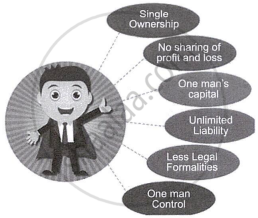
Joint Hindu Family Business
Partnership
Sole Proprietorship
Public Limited Company
A sole proprietor’s business is experiencing rapid growth, but they are unable to meet financial demands. This reflects a limitation of the sole proprietorship structure.
True
False
Statement I: The Joint Hindu family business refers to a business which is owned by members of a Joint Hindu family.
Statement II: The Joint Hindu family form of business is one in which the family possesses some inherited property.
Only I is correct.
Both I and II are correct.
Only II is correct.
Both I and II are wrong.
Meera runs a bakery. Due to a drop in demand for cakes, she starts focusing on cookies and bread. She quickly adapts her business to market trends without needing approvals. Which merit of sole proprietorship does this demonstrate?
Unlimited liability
Secrecy of operations
Flexibility of operations
Lack of continuity
The liability of a sole proprietor is limited to the assets of the business.
True
False
Short Answer Questions:
Write any three characteristics of Sole Proprietorship.
Mention two limitations of sole proprietorship.
Mention two limitations of joint Hindu family business.
In a joint Hindu family business, the karta takes an important decision to invest in a new venture without consulting the other members. How does this reflect the karta’s role and authority in this type of business?
“Sole proprietorship is a one-man show.” Justify this statement in favour and give a reason.
“Sole proprietorship is a one-man show.” Justify this statement against it and give a reason.
Arjun has been successfully managing his small bookstore. However, he falls sick and is unable to continue the business. How does this situation highlight the limitations of sole proprietorship?
Define ‘Joint Hindu family business/firm’.
Jay is a sole proprietor who wants to make quick decisions to adapt to market trends. Why is decision-making faster in a sole proprietorship compared to other business types?
Long Answer Questions:
What is a sole proprietorship?
State the features of proprietorship.
Explain the merits of a sole proprietorship firm?
Explain the limitations of a sole proprietorship firm.
“The one-man control is the best in the world if that man is big enough to manage everything.” Discuss.
“The individual proprietor is the supreme judge of all matters pertaining to his business, subject only to the general laws of the land and to such special legislation as may affect his particular business.” Comment.
Explain the characteristics of a Joint Hindu family business.
Distinguish between Proprietorship and Joint Hindu Family Firm.
Explain the merits of the Joint Hindu family business.
Explain the demerits of a Joint Hindu family business.
How Joint Hindu Family business overcome the shortcomings of the sole proprietorship?
Ravi runs a small grocery store where he is responsible for all the decisions, profits, and losses. What are the advantages he might face as a sole proprietor?
Ravi runs a small grocery store where he is responsible for all the decisions, profits, and losses. What are the challenges he might face as a sole proprietor?
In a Joint Hindu family business, the karta faces conflicts among family members regarding the allocation of profits. How can the karta manage such disputes while maintaining harmony in the family?
Project Work:
Visit any business firm which is owned and controlled by one person. Meet its owner and find out the problems faced by him.
C. B. Gupta solutions for कमर्शियल ॲप्लीकेशन [इंग्रजी] इयत्ता ९ आयसीएसई 2 Ownership Structures - Sole Proprietorship and Joint Hindu Family Business QUESTION BANK [Pages 31 - 32]
Describe the legal position of a sole proprietor.
Give ten examples of business in which sole proprietorship is popular.
A small-scale sole proprietorship bakery has gained local popularity for its freshly baked goods. However, the owner is struggling to meet growing customer demands due to limited capital and lack of professional staff. To expand operations, the owner plans to seek a bank loan and hire experienced bakers.
- Identity one major limitation of sole proprietorship highlighted in the case.
- Suggest one auxiliary to trade that can help the owner secure funds for expansion.
Explain the social desirability of sole proprietorship.
A joint Hindu family business specializes in producing handcrafted wooden furniture. Due to a lack of online presence, the business is losing customers to competitors who sell through e-commerce platforms. The younger family members suggest creating an online store, but the karta is skeptical about digital platforms.
- What limitation of the joint Hindu family business is highlighted in this case?
- Evaluate the impact of modernization and digital transformation on traditional businesses like the one described in the case. How can the karta ensure the business retains its heritage while adopting modern practices?
In which businesses one-man control is the best?
In a joint Hindu family business, the karta takes a risky decision to invest in a new product line. The investment tails, and creditors demand repayment. The karta uses his personal assets to clear the debts. What does this situation indicate about the role and responsibilities of the karta in a joint Hindu family business?
Solutions for 2: Ownership Structures - Sole Proprietorship and Joint Hindu Family Business
C. B. Gupta solutions for कमर्शियल ॲप्लीकेशन [इंग्रजी] इयत्ता ९ आयसीएसई chapter 2 - Ownership Structures - Sole Proprietorship and Joint Hindu Family Business
Shaalaa.com has the CISCE Mathematics कमर्शियल ॲप्लीकेशन [इंग्रजी] इयत्ता ९ आयसीएसई CISCE solutions in a manner that help students grasp basic concepts better and faster. The detailed, step-by-step solutions will help you understand the concepts better and clarify any confusion. C. B. Gupta solutions for Mathematics कमर्शियल ॲप्लीकेशन [इंग्रजी] इयत्ता ९ आयसीएसई CISCE 2 (Ownership Structures - Sole Proprietorship and Joint Hindu Family Business) include all questions with answers and detailed explanations. This will clear students' doubts about questions and improve their application skills while preparing for board exams.
Further, we at Shaalaa.com provide such solutions so students can prepare for written exams. C. B. Gupta textbook solutions can be a core help for self-study and provide excellent self-help guidance for students.
Concepts covered in कमर्शियल ॲप्लीकेशन [इंग्रजी] इयत्ता ९ आयसीएसई chapter 2 Ownership Structures - Sole Proprietorship and Joint Hindu Family Business are .
Using C. B. Gupta कमर्शियल ॲप्लीकेशन [इंग्रजी] इयत्ता ९ आयसीएसई solutions Ownership Structures - Sole Proprietorship and Joint Hindu Family Business exercise by students is an easy way to prepare for the exams, as they involve solutions arranged chapter-wise and also page-wise. The questions involved in C. B. Gupta Solutions are essential questions that can be asked in the final exam. Maximum CISCE कमर्शियल ॲप्लीकेशन [इंग्रजी] इयत्ता ९ आयसीएसई students prefer C. B. Gupta Textbook Solutions to score more in exams.
Get the free view of Chapter 2, Ownership Structures - Sole Proprietorship and Joint Hindu Family Business कमर्शियल ॲप्लीकेशन [इंग्रजी] इयत्ता ९ आयसीएसई additional questions for Mathematics कमर्शियल ॲप्लीकेशन [इंग्रजी] इयत्ता ९ आयसीएसई CISCE, and you can use Shaalaa.com to keep it handy for your exam preparation.
