Advertisements
Chapters
2: Ownership Structures - Sole Proprietorship and Joint Hindu Family Business
3: Ownership Structures - Partnership
4: Ownership Structures - Joint Stock Company
5: Ownership Structures - Cooperative Society
6: Public Sector Enterprises
7: Functioning of a Commercial Organisation
8: Communication in a Commercial Organisation
9: Ways of Communicating
10: Tools of Communication
11: Nature and Terminology of Accounting
12: Accounting Records
13: Natural Resources
14: Depletion of Resources
▶ 15: Practices for Conservation of Resources
16: Industrial Pollution and Degradation of Environment
![C. B. Gupta solutions for कमर्शियल ॲप्लीकेशन [इंग्रजी] इयत्ता ९ आयसीएसई chapter 15 - Practices for Conservation of Resources - Shaalaa.com](/images/commercial-applications-english-class-9-icse_6:e921a1ab181646959c8f7253711b2e9f.jpg "C. B. Gupta solutions for कमर्शियल ॲप्लीकेशन [इंग्रजी] इयत्ता ९ आयसीएसई chapter 15 - Practices for Conservation of Resources")
Advertisements
Solutions for Chapter 15: Practices for Conservation of Resources
Below listed, you can find solutions for Chapter 15 of CISCE C. B. Gupta for कमर्शियल ॲप्लीकेशन [इंग्रजी] इयत्ता ९ आयसीएसई.
C. B. Gupta solutions for कमर्शियल ॲप्लीकेशन [इंग्रजी] इयत्ता ९ आयसीएसई 15 Practices for Conservation of Resources EXERCISES [Pages 173 - 175]
Objective Type Questions:
Conservation of natural resources includes ______.
preservation
maintenance
sustainable utilisation of natural resources
All of these
Aim of conservation is ______
to preserve the natural resources and to ensure quality of environment.
to ensure continuous yield of resources by establishing a balanced cycle of harvest and renewal.
Both to preserve the natural resources and to ensure quality of environment and to ensure continuous yield of resources by establishing a balanced cycle of harvest and renewal.
None of these
Statement I: Sprinklers are very effective and efficient technique for water conservation.
Statement II: Trickle irrigation technique helps in conserving water through evaporation.
Only I is correct.
Only II is correct.
Both I and II are correct.
Both I and II are wrong.
Contour ploughing is effective only in hilly terrains.
True
False
Which of the following is not an advantage of recycling?
Saving on the natural resources
Obtain the commodity at cheaper price
Increases damage to environment
Saves energy and raw materials
Energy can be conserved by ______.
Reducing wastage and losses
Improvement in efficiency by technological upgradation
Improved operation and maintenance
All of these
Which of the following is not a non-conventional resource of energy?
Hydropower generation
Wind power
Coal energy
Solar energy
What is the main advantage of the plant shown?
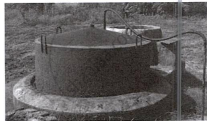
Uses fossil fuels
Produces eco-friendly energy
Increases soil erosion
Promotes deforestation
Solar energy has come up in fulfilling the world’s future energy requirements and pollution free use.
True
False
A school starts a campaign to recycle newspapers. What is the environmental benefit of this initiative?
Saves trees and reduces waste in landfills
Increases carbon footprints
Reduces soil erosion
Promotes chemical farming
A small village relies on rainwater harvesting for its water supply. The villagers use underground storage tanks to collect rainwater during the monsoon season. This water is then used for drinking, irrigation, and household purposes throughout the year. Which practice can supplement rainwater harvesting to ensure water conservation?
Over-irrigation of crops
Use of sprinklers for irrigation
Deforestation of surrounding areas
Increased reliance on fossil fuels
Why is biogas considered a practical fuel source in rural areas of India?
It is a non-renewable resource.
It requires imported technology.
It uses cattle dung and organic waste abundantly available.
It increases deforestation rates.
A city plans to set up solar panels in areas with long sunlight hours. Which feature of solar energy makes it suitable for this?
It is a non-renewable resource.
It produces greenhouse gases.
It is pollution-free and renewable.
It requires extensive land use.
Rainwater harvesting is primarily used to increase the availability of water during the monsoon season.
True
False
A farmer adopts terrace farming in a hilly region to grow crops like maize and wheat. He notices that the soil erosion has significantly reduced, and the crops yield better results. What is the primary reason for reduced soil erosion in terrace farming?
Increased water flow
Controlled water movement across steps
Use of chemical fertilizers
Absence of vegetation cover
What is the primary advantage of the system shown in the picture?

Reduces soil erosion
Conserves water by efficient irrigation
Promotes deforestation
Increases water wastage
Statement I: Biogas is generated from the decomposition of organic wastes like manure.
Statement II: Aerogenerators are being used to generate electricity.
Only I is correct.
Only II is correct.
Both I and II are correct.
Both I and II are wrong.
A farmer uses drip irrigation to water his crops. What is the primary advantage of this method?
Reduces soil erosion
Prevents water wastage through evaporation
Improves soil fertility
Prevents overgrazing
Assertion (A): Overgrazing can lead to desertification.
Reasoning (R): Overgrazing removes vegetation cover, leaving soil exposed to erosion.
Both A and R are true, and R is the correct explanation of A.
Both A and R are true, but R is not the correct explanation of A.
A is true, but R is false.
A is false, but R is true.
A city invests in public transport to reduce private vehicle usage. What is the primary environmental benefit?
Reduced renewable energy usage
Decreased air pollution
Increased dependence on fossil fuels
Higher deforestation rates
The energy source used in the picture is ______.

Non-renewable
Renewable and pollution-free
Fossil fuel-based
Dependent on wind speed
A coastal community installs a tidal energy power plant. This plant uses the rise and fall of ocean tides to generate electricity for households and industries. What is a potential limitation of tidal energy in this scenario?
High installation cost
Excessive land requirement
Dependency on fossil fuels
Greenhouse gas emissions
Short Answer Questions
Why is conservation of resources important?
What are the main aims of conservation of resources?
What do you mean by wind power?
How conservation of soil helps to conserve water resources?
How LPG and CNG are environment-friendly fuels?
Why should we promote the use of renewable resources?
Long Answer Questions
What do you mean by conservation of resources?
How can minerals be conserved?
What is meant by recycle?
Write the advantages of recycling.
What are renewable energy sources?
Give three examples of renewable energy sources.
What is the difference between internal and external recycling? Give examples of each.
Differentiate between conventional and non-conventional energy.
Why conventional energy resources cannot fulfil energy requirements?
Explain the role of technology in the conservation of resources.
Discuss the environmental benefits of replacing traditional fuels like firewood with alternatives such as LPG and CNG.
Project Work
Visit a windmill with your friends and teacher. Ask the person incharge to show you how energy is generated from the windmill and observe the following points:
- How many windmills are working?
- How much electricity is generated per day from the windmill frames installed?
- How windmill depends upon weather conditions?
- Electricity generated from windmill is different in what aspects from electricity generated from power plants?
- How this electricity is distributed in far-flung areas?
- To what end-uses this electricity can be put?
C. B. Gupta solutions for कमर्शियल ॲप्लीकेशन [इंग्रजी] इयत्ता ९ आयसीएसई 15 Practices for Conservation of Resources QUESTION BANK [Pages 175 - 176]
What do you mean by conservation of resources?
Suggest some ways of conserving resources.
State any four ways for conservation of soil.
List any two advantages of renewable energy resources when compared to non-renewable resources.
Briefly explain the functioning of biogas.
How does afforestation contribute to soil conservation, and what other methods can be used to prevent soil erosion?
Analyse how wind and solar energy technologies can meet energy needs while minimizing environmental impact.
Solutions for 15: Practices for Conservation of Resources
C. B. Gupta solutions for कमर्शियल ॲप्लीकेशन [इंग्रजी] इयत्ता ९ आयसीएसई chapter 15 - Practices for Conservation of Resources
Shaalaa.com has the CISCE Mathematics कमर्शियल ॲप्लीकेशन [इंग्रजी] इयत्ता ९ आयसीएसई CISCE solutions in a manner that help students grasp basic concepts better and faster. The detailed, step-by-step solutions will help you understand the concepts better and clarify any confusion. C. B. Gupta solutions for Mathematics कमर्शियल ॲप्लीकेशन [इंग्रजी] इयत्ता ९ आयसीएसई CISCE 15 (Practices for Conservation of Resources) include all questions with answers and detailed explanations. This will clear students' doubts about questions and improve their application skills while preparing for board exams.
Further, we at Shaalaa.com provide such solutions so students can prepare for written exams. C. B. Gupta textbook solutions can be a core help for self-study and provide excellent self-help guidance for students.
Concepts covered in कमर्शियल ॲप्लीकेशन [इंग्रजी] इयत्ता ९ आयसीएसई chapter 15 Practices for Conservation of Resources are .
Using C. B. Gupta कमर्शियल ॲप्लीकेशन [इंग्रजी] इयत्ता ९ आयसीएसई solutions Practices for Conservation of Resources exercise by students is an easy way to prepare for the exams, as they involve solutions arranged chapter-wise and also page-wise. The questions involved in C. B. Gupta Solutions are essential questions that can be asked in the final exam. Maximum CISCE कमर्शियल ॲप्लीकेशन [इंग्रजी] इयत्ता ९ आयसीएसई students prefer C. B. Gupta Textbook Solutions to score more in exams.
Get the free view of Chapter 15, Practices for Conservation of Resources कमर्शियल ॲप्लीकेशन [इंग्रजी] इयत्ता ९ आयसीएसई additional questions for Mathematics कमर्शियल ॲप्लीकेशन [इंग्रजी] इयत्ता ९ आयसीएसई CISCE, and you can use Shaalaa.com to keep it handy for your exam preparation.
