Advertisements
Advertisements
प्रश्न
Write a short paragraph describing the life and work of Mary Kom. Take help of the points given below.
- Early life
- Training
- Achievements
- Future plans
Advertisements
उत्तर
Mary Kom’s life has been all about hard work and determination. From an early age, she had seen difficult times. Inspired by her father and a fellow Manipuri – Dingko Singh, she stepped into field of boxing, which was entirely new to her. Life was never easy for Mary. In an area traditionally reserved for men, she made a name for herself at the local, national and international level. She holds records for being a five-time World Boxing Champion and is the only boxer to win a medal at every one of the 6 world championships. She is the first Indian female boxer to qualify and win an Olympic bronze, in the 51 kg flyweight category of boxing. Mary first started boxing at the age of 18, in the first AIBA Women’s World Boxing Championship and won a silver medal. She now wishes to see many more Indian women with careers in boxing. For this, she plans to later work as a coach for these candidates.
APPEARS IN
संबंधित प्रश्न
Fill in the blank with the suitable word.
To every one’s surprise, he turned _____________ at the party.
What point is the author trying to make?
What brought the six humans together? Where were they?
Name Kaspar’s grandchildren? Why did the boy come home?
What do ‘trade winds’ and ‘fat worms’ symbolise?
Who and what does the free bird symbolize?
Who won the race as described in the end.
Fill in the blank with an appropriate word:
The school playground is out __________ bounds for the pupils of the primary school.
Discuss the following in groups of two pairs, each pair in a group taking opposite points of view.
Scientific intervention is necessary to unearth buried mysteries.
How is the cyclic movement of rain brought out in the poem? Compare it with what you have learned in science.
Distinguish between the following pairs of sentences.
The team played two matches successively.
It is difficult to adjust to a fall from glory.
Given below are some words that are spelt differently in British and American English. Fill in the blanks accordingly.
| British | American |
| 1. colour | ______ |
| 2. ______ | labor |
| 3. ______ | traveler |
| 4. counsellor | ______ |
| 5. centre | ______ |
| 6. ______ | theater |
| 7. ______ | organize |
| 8. realise | ______ |
| 9. ______ | defense |
| 10. offence | ______ |
The word ‘round’ usually means a kind of shape. What is its meaning in the story?
The words in the box are all words that describe movement. Use them to fill in the blanks in the sentence below.
The snake _______________ his head ______________ to strike at the crow.
Find words in the story, which show things striking violently against each other.
The crow and the myna c_ll____in mid-air.
Discuss with your partner and describe the atmosphere in the woods when Peter Crouch didn’t knock before entering Mrs. Adis’s house.
The reason was -
- _________________________
- _________________________
- _________________________
Discuss with your partner on the following topic. Express your views and opinions in favour of and against the topic.
Should the 'Earn and Learn' concept be made mandatory for students?
Discuss the following and write about the following in your own words in 5-6 lines.
Which events in the story (Part I and Part II) changed Mathilde’s life?
Form pairs. List the things on which you have the same opinion and also the ones on which you have different opinions. Prepare a list of ten things in all and see how far you agree or disagree with your friend. Some useful phrases are given alongside. You could talk about:
- Clothes, latest fashion.
- Performance of sportsmen and women.
- Traffic/Transport in your area.
- Cleanliness and hygiene in your area.
- Future occupations/Careers.
- Latest news items.
- TV programs
- Mobile Apps
- Any subject of your choice.
| Agreement | Ask for your friend’s opinion: | Disagreement |
| I totally agree with you. | Do you think ...? | No, I don’t think so. |
| Exactly/Absolutely! | Do you agree ...? | I totally disagree. |
| You are right. | What do you think? | Not necessarily. |
| I don’t know, I need to think about it. (partial agreement) | What is your opinion? | I’m not sure about that. |
| I suppose so. | How do you feel about that? | Let’s agree to disagree! |
Maintain a diary at least for a week. Write about your interactions with other people in your surroundings in 3-4 lines. Also write whether you find the interactions happy unhappy, satisfactory-unsatisfactory, enjoyable-stressful, etc.
Write 3 to 5 sentences about the following character.
Cyril
Answer the following question :
What are the most savage controversies about?
Write a paragraph and give an appropriate title to it. Use the following points.
| Birds and Animals | Love and Affection |
| Loyal | Our Best Friends |
| Serve us | Protection and Security |
| Kindness, honesty, compassion | Do not hurt or destroy us |
| Loneliness Avoided | |
Discuss in pairs and write what your father and mother do for your family.
|
Father |
Mother |
|
|


Look at the image of the familiar advertisement given below. Identify the product and try to frame your own slogan for them.

“I cannot come.” Mala said that ______
Fill in the blank with choosing the preposition from the option.
He noticed the creeper ______ the foot of the tree.
______ is your birthday?
The word in the sentence is jumbled. Write them in order.
I around me looked.
Some word have similar sound, but different meaning. Choose the correct word from the option and fill in the blank.
The King sits on the ______.
What story did the man standing near the hardware store tell the passing cop?
Compare the two crests.
How did the author react on seeing his photograph?
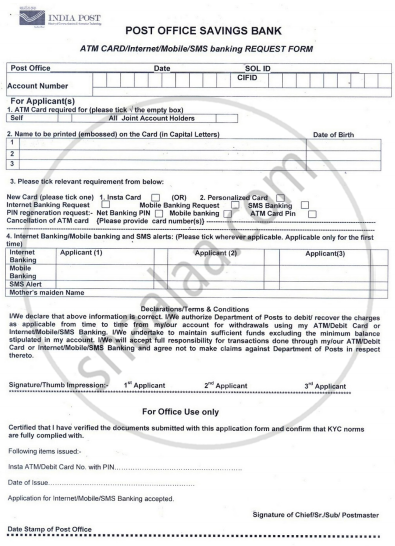
Fill in the following forms with imaginary details.
We may not have money to buy all our wants at the same time. In such a situation, what are the options available?
Aunt Jane seemed to think that there was a mistake in the wedding present she had given Jack. Why?
Can you think of any events in your own or someone else’s life to support the quote-
‘If you tell the truth, you don’t have to remember anything.’
What is likely to happen if you don’t tell the truth?’
Divide the students into groups of five. They sit in a circle. They choose one object of daily use such as a bag, wallet, box, etc. The group leader writes four sentences about it.
- I have found a ______
- It’s (colour)
- It’s (shape)
- It has a ______
- I found it (place where it was found)
Others, too, write four sentences each.
- • I’ve lost a ______
- It’s (colour)
- It’s (shape)
- It has a ______
- • I lost it (place where it was lost)
They all open read their lines, beginning with the group leader. The player whose description matches the group leader’s the most gets the object.
