Advertisements
Advertisements
प्रश्न
Work in groups of four. Discuss how the story would have been different if.
Pongo had pardoned the narrator after scolding him.
Advertisements
उत्तर
The narrator was not a thief. He was in the habit of stealing something whenever he left the docks. He used to hide them under his apron. One day, there was a banana boat on the docks. He picked up the bananas which fell off the boat and quickly hid them under his apron.
But the bananas were not his craze. He loved to eat oranges very much. When he came out from the docks with the oranges hidden in his pockets. Pongo, the policeman caught him. The pockets were bulging as the apron string was broken. There were seventeen oranges. A lot of people were stealing from the docks.
The narrator kept quiet and was frightened. Pongo found him very innocent. He sympathised with the narrator. He did not want any action to be taken against him. He was a kind man. He advised the narrator very politely not to steal anymore. Pongo pardoned the narrator. The narrator thanked the policeman and went home happily.
APPEARS IN
संबंधित प्रश्न
What type of tree fits in your hand?
A ____________ tree.
Read the different verb form where they remain the same in the direct and indirect speech in the following case. Fill in the blank with missing indirect speech.
With would rather, had better,

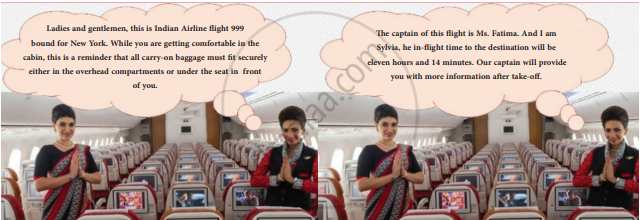
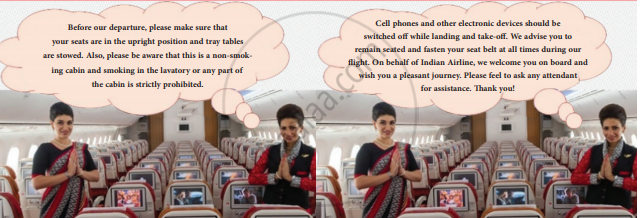
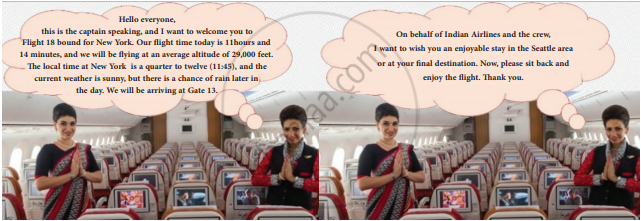
Read the story board and take roles as pilot and flight attendants to enact the scene.
Inflight Passenger Announcements
Change the following into Indirect Speech.
“Go down to the bazaar. Bring me some oil and a lump of ice.” ordered his master.
Identify a sentence and a phrase which tells us that the story took place in summer.
Name the character or speaker.
“Are you alright?”
|
beneath, breeze, meet, fear, each, meadow. |
Do you think that –
Hiawatha liked learning new languages?
Tell the class about your ambition in life and the way you are working towards achieving your goal.
Build a conversation for the following situation with a minimum of five exchange.
A salesman and a customer at an electronic shop.
