Advertisements
Advertisements
प्रश्न
The rate of the chemical reaction doubles for an increase of 10 K in absolute temperature from 298 K. Calculate Ea.
Advertisements
उत्तर
Given: T1 = 298 K
T2 = 308 K
`k_2/k_1` = 2
R = 8.314 JK−1 mol−1
Ea = ?
According to the Arrhenius equation,
`log k_2/k_1 = (E_a)/(2.303 R) [1/T_1 - 1/T_2]`
∴ log 2 = `E_a/(2.303 xx 8.314) [1/298 - 1/308]`
0.3010 = `E_a/(2.303 xx 8.314)^-1 xx 10/(298 xx 308)`
∴ Ea = `(0.3010 xx 2.303 xx 8.314 xx 298 xx 308)/10`
= `528977.78/10`
= 52897.7 J mol−1
= 52.897 kJ mol−1
APPEARS IN
संबंधित प्रश्न
Explain a graphical method to determine activation energy of a reaction.
(b) Rate constant ‘k’ of a reaction varies with temperature ‘T’ according to the equation:
`logk=logA-E_a/2.303R(1/T)`
Where Ea is the activation energy. When a graph is plotted for `logk Vs. 1/T` a straight line with a slope of −4250 K is obtained. Calculate ‘Ea’ for the reaction.(R = 8.314 JK−1 mol−1)
The rate constant for the decomposition of hydrocarbons is 2.418 × 10⁻⁵ s−1 at 546 K. If the energy of activation is 179.9 kJ/mol, what will be the value of pre-exponential factor?
The rate of a reaction quadruples when the temperature changes from 293 K to 313 K. Calculate the energy of activation of the reaction assuming that it does not change with temperature.
In the Arrhenius equation for a first order reaction, the values of ‘A’ of ‘Ea’ are 4 × 10¹³ sec−1 and 98.6 kJ mol−1 respectively. At what temperature will its half life period be 10 minutes?
[R = 8.314 J K−1 mol−1]
The rate constant of a first order reaction are 0.58 S-1 at 313 K and 0.045 S-1 at 293 K. What is the energy of activation for the reaction?
Define activation energy.
Write a condition under which a bimolecular reaction is kinetically first order. Give an example of such a reaction. (Given : log2 = 0.3010,log 3 = 0.4771, log5 = 0.6990).
Predict the main product of the following reactions: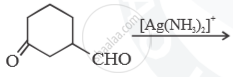
The chemical reaction in which reactants require high amount of activation energy are generally ____________.
During decomposition of an activated complex:
(i) energy is always released
(ii) energy is always absorbed
(iii) energy does not change
(iv) reactants may be formed
Which of the following statements are in accordance with the Arrhenius equation?
(i) Rate of a reaction increases with increase in temperature.
(ii) Rate of a reaction increases with decrease in activation energy.
(iii) Rate constant decreases exponentially with increase in temperature.
(iv) Rate of reaction decreases with decrease in activation energy.
Oxygen is available in plenty in air yet fuels do not burn by themselves at room temperature. Explain.
Total number of vibrational degrees of freedom present in CO2 molecule is
In respect of the eqn k = \[\ce{Ae^{{-E_a}/{RT}}}\] in chemical kinetics, which one of the following statement is correct?
Arrhenius equation can be represented graphically as follows:

The (i) intercept and (ii) slope of the graph are:
Explain how and why will the rate of reaction for a given reaction be affected when the temperature at which the reaction was taking place is decreased.
