Advertisements
Advertisements
प्रश्न
Prove that y = `(4sinθ)/(2 + cosθ) - θ` is an increasing function if `θ ∈[0, pi/2]`
Advertisements
उत्तर
y = `(4sinθ)/(2 + cosθ) - θ`
∴ `dy/"dθ" = d/"dθ"[(4sinθ)/(2 + cosθ) - θ]`
= `d/"dθ"((4sinθ)/(2 + cosθ)) - d/"dθ"(θ)`
= `((2 + cosθ).d/"dθ"(4sinθ) - 4sinθ.d/"dθ"(2 + cos θ))/((2 + cosθ)^2) - 1`
= `((2 + cosθ)"(4cosθ) - (4sinθ)(0 - sinθ))/((2 + cosθ)^2) - 1`
= `(8cosθ + 4cos^2θ + 4sin^2θ)/(2 + cosθ)^2 - 1`
= `(8cosθ + 4(cos^2θ + sin^2θ))/(2 + cosθ)^2 - 1`
= `(8cosθ + 4)/(2 + cosθ)^2 - 1`
= `((8cos θ + 4) - (2 + cosθ)^2)/(2 + cosθ)^2`
= `(8cosθ + 4 - 4 - 4cosθ - cos^2θ)/(2 + cosθ)^2`
= `(4cosθ - cos^2θ)/(2 + cosθ)^2`
= `(cosθ(4 - cosθ))/(2 + cosθ)^2`
Since, `θ ∈ [0, pi/2], cos θ ≥ 0` Also, cos θ < 4
∴ 4 - cos θ > 0
∴ cos θ (4 - cosθ) ≥ 0
∴ `(cosθ(4 - cosθ))/(2 + cosθ^2)≥ 0`
∴ `dy/"dθ" ≥ 0 "for all" θ ∈[0, pi/2]`
Hence, y is an increasing function if `θ ∈[0, pi/2]`.
APPEARS IN
संबंधित प्रश्न
Find the value of c in Rolle's theorem for the function `f(x) = x^3 - 3x " in " (-sqrt3, 0)`
Prove that y = `(4sin theta)/(2 + cos theta) - theta` is an increasing function of θ in `[0, pi/2]`
Find the least value of a such that the function f given by f (x) = x2 + ax + 1 is strictly increasing on [1, 2].
Let I be any interval disjoint from (−1, 1). Prove that the function f given by `f(x) = x + 1/x` is strictly increasing on I.
Prove that the function given by f (x) = x3 – 3x2 + 3x – 100 is increasing in R.
Let f be a function defined on [a, b] such that f '(x) > 0, for all x ∈ (a, b). Then prove that f is an increasing function on (a, b).
Prove that the function f(x) = loge x is increasing on (0, ∞) ?
Prove that f(x) = ax + b, where a, b are constants and a > 0 is an increasing function on R ?
Find the interval in which the following function are increasing or decreasing f(x) = x2 + 2x − 5 ?
Find the interval in which the following function are increasing or decreasing f(x) = 6 − 9x − x2 ?
Find the interval in which the following function are increasing or decreasing f(x) = 2x3 − 12x2 + 18x + 15 ?
Find the interval in which the following function are increasing or decreasing f(x) = (x − 1) (x − 2)2 ?
Find the interval in which the following function are increasing or decreasing f(x) = x3 − 12x2 + 36x + 17 ?
Find the interval in which the following function are increasing or decreasing f(x) = x4 − 4x ?
Find the interval in which the following function are increasing or decreasing f(x) = x4 − 4x3 + 4x2 + 15 ?
Show that f(x) = e2x is increasing on R.
Show that f(x) = loga x, 0 < a < 1 is a decreasing function for all x > 0 ?
Show that f(x) = tan−1 (sin x + cos x) is a decreasing function on the interval (π/4, π/2) ?
Show that f(x) = (x − 1) ex + 1 is an increasing function for all x > 0 ?
Show that f(x) = sin x − cos x is an increasing function on (−π/4, π/4)?
Prove that the function f given by f(x) = x3 − 3x2 + 4x is strictly increasing on R ?
Find the values of 'a' for which the function f(x) = sin x − ax + 4 is increasing function on R ?
The function f(x) = 2 log (x − 2) − x2 + 4x + 1 increases on the interval
In the interval (1, 2), function f(x) = 2 | x − 1 | + 3 | x − 2 | is
The radius r of a right circular cylinder is increasing uniformly at the rate of 0·3 cm/s and its height h is decreasing at the rate of 0·4 cm/s. When r = 3·5 cm and h = 7 cm, find the rate of change of the curved surface area of the cylinder. \[\left[ \text{ Use } \pi = \frac{22}{7} \right]\]
For manufacturing x units, labour cost is 150 – 54x and processing cost is x2. Price of each unit is p = 10800 – 4x2. Find the value of x for which Total cost is decreasing.
The total cost of manufacturing x articles is C = 47x + 300x2 − x4. Find x, for which average cost is increasing.
Choose the correct option from the given alternatives :
Let f(x) = x3 – 6x2 + 9x + 18, then f(x) is strictly decreasing in ______.
Find the value of x, such that f(x) is increasing function.
f(x) = 2x3 - 15x2 - 144x - 7
Choose the correct alternative.
The function f(x) = x3 - 3x2 + 3x - 100, x ∈ R is
Show that f(x) = x – cos x is increasing for all x.
Show that the function f(x) = x3 + 10x + 7 for x ∈ R is strictly increasing
Test whether the following function f(x) = 2 – 3x + 3x2 – x3, x ∈ R is increasing or decreasing
Find the values of x for which f(x) = 2x3 – 15x2 – 144x – 7 is
- Strictly increasing
- strictly decreasing
The total cost function for production of articles is given as C = 100 + 600x – 3x2, then the values of x for which the total cost is decreasing is ______
Find the values of x such that f(x) = 2x3 – 15x2 – 144x – 7 is decreasing function
The function f(x) = 9 - x5 - x7 is decreasing for
The values of k for which the function f(x) = kx3 – 6x2 + 12x + 11 may be increasing on R are ______.
If f(x) = `x^(3/2) (3x - 10)`, x ≥ 0, then f(x) is increasing in ______.
The function f (x) = x2, for all real x, is ____________.
Let `"f (x) = x – cos x, x" in "R"`, then f is ____________.
The function which is neither decreasing nor increasing in `(pi/2,(3pi)/2)` is ____________.
The function `"f"("x") = "log" (1 + "x") - (2"x")/(2 + "x")` is increasing on ____________.
If f(x) = `x - 1/x`, x∈R, x ≠ 0 then f(x) is increasing.
The interval in which the function f(x) = `(4x^2 + 1)/x` is decreasing is ______.
Read the following passage:
|
The use of electric vehicles will curb air pollution in the long run. V(t) = `1/5 t^3 - 5/2 t^2 + 25t - 2` where t represents the time and t = 1, 2, 3, ...... corresponds to years 2001, 2002, 2003, ...... respectively. |
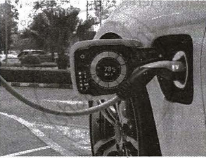
Based on the above information, answer the following questions:
- Can the above function be used to estimate number of vehicles in the year 2000? Justify. (2)
- Prove that the function V(t) is an increasing function. (2)
The function f(x) = x3 + 3x is increasing in interval ______.
As one moves from left to right on a graph, what do constant \[y\]-values indicate?
For \[f(x)=4x^3-6x^2-72x+30\], on which intervals is \[f\] increasing?
