Advertisements
Advertisements
प्रश्न
Diagram shows a velocity – time graph for a car starting from rest. The graph has three sections AB, BC, and CD.
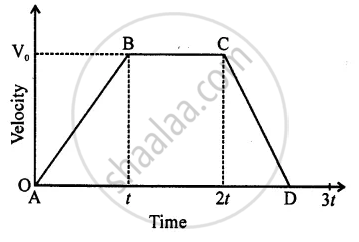
In which section, car has a zero acceleration?
Advertisements
उत्तर
Car has zero acceleration in section BC because there is no change in velocity from B to C.
APPEARS IN
संबंधित प्रश्न
A car of mass 1000 kg is moving with a velocity of 10 m s−1. If the velocity-time graph for this car is a horizontal line parallel to the time axis, then the velocity of car at the end of 25 s will be :
What does the slope of velocity-time graph represent?
A body at rest is thrown downward from the top of the tower. Draw a distance – time graph of its free fall under gravity during the first 3 seconds. Show your table of values starting t = 0 with an interval of 1 second, (g = 10 ms−2).
The graph of one quantity versus another result in a straight line. How are the quantities related to each other?
What can you conclude if the speed-time graph of a body is a straight line sloping upwards and not passing through the origin?
Figure shows displacement- time graph of two objects A and B moving in a stra ight line. Which object is moving fa ster?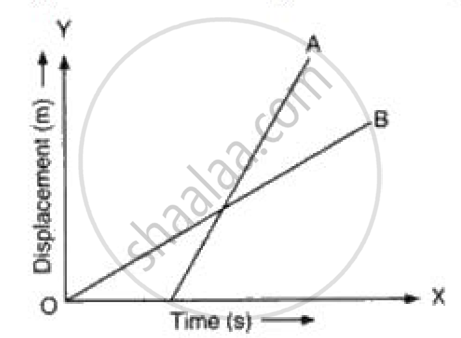
Interpret the following graph: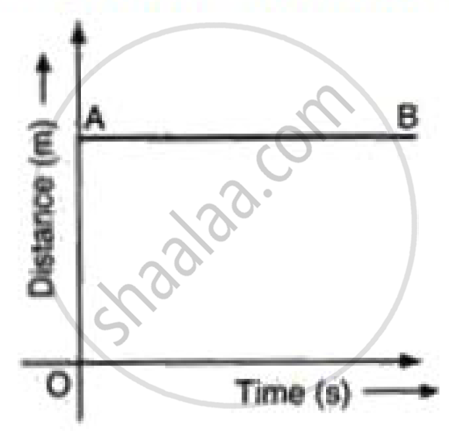
Figure shows the distance-time graph of three students A, B and C. On the basis of the graph, answer the following :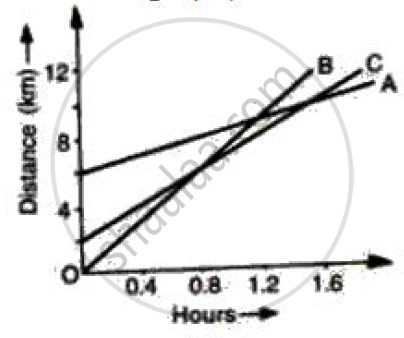
When B meets A, where is C?
Figure shows the distance-time graph of three students A, B and C. On the basis of the graph, answer the following :
How far did B travel between the time he passed C and A?
Mention the uses of the velocity-time graph.
