Advertisements
Advertisements
प्रश्न
Acetone, Acetaldehyde, Benzaldehyde, Acetophenone – reactivity towards addition of HCN.
Advertisements
उत्तर
Acetone, acetaldehyde, benzaldehyde, acetophenone - Reactivity with HCN
\[\begin{array}{c}\ce{CH3-C-CH3}\\\ce{||}\\\ce{O}\end{array}
\begin{array}{c}\ce{CH3-CHO}\\\ce{||}\\\ce{O}\end{array}\ce{C6H5CHO}\begin{array}{c}\ce{CH3-C-C6H5}\\\ce{||}\\\ce{O}\end{array}\]
Nucelophile addition by HCN is strongest for aldehyde than ketones. Also, acetophenone is more sterically hindered than acetone, hence comparatively less nucleophilic similarly C6 H5CHO i -s less reactive towards nucleophilic addition than CH3CHO.
\[\begin{array}{c}\ce{CH3-C-C6H5}\\\ce{||}\\\ce{O}\end{array}
\begin{array}{c}\ce{< CH3-C -CH3}\\\ce{||}\\\ce{O}\end{array}\ce{<C6H5CHO < CH3CHO}\]
APPEARS IN
संबंधित प्रश्न
Acetaldehyde, when treated with which among the following reagents does NOT undergo addition reaction?
(A) Ammonia
(B) Hydroxylamine
(C) Ammoniacal silver nitrate
(D) Semicarbazide
Arrange the following compound in increasing order of its reactivity in nucleophilic addition reactions.
Benzaldehyde, p-Tolualdehyde, p-Nitrobenzaldehyde, Acetophenone.
Hint: Consider steric effect and electronic effect.
What is meant by the following term? Give an example of the reaction in the following case.
Semicarbazone
What is meant by the following term? Give an example of the reaction in the following case.
2, 4-DNP-derivative
How will you convert sodium acetate to methane?
Which of the following is the correct representation for intermediate of nucleophilic addition reaction to the given carbonyl compound (A):
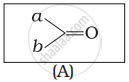
(i) 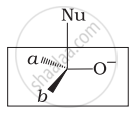
(ii) 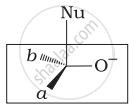
(iii) 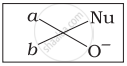
(iv) 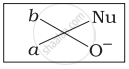
Alkenes  and carbonyl compounds
  , both contain a π bond but alkenes show electrophilic addition reactions whereas carbonyl compounds show nucleophilic addition reactions. Explain.
A Idol condensation will not be observed in
Which will undergo faster nucleophilic addition reaction?
Acetaldehyde or Propanone
Why dissociation of HCN is suppressed by the addition of HCL?
