Advertisements
Online Mock Tests
Chapters
1: Bricks, Beads And Bones: The Harappan Civilisation
▶ 2: Kings, Farmers And Towns: Early States and Economies
3: Kinship, Caste And Class: Early Societies
4: Thinkers, Beliefs And Buildings: Cultural Developments
Part 2
5: Through The Eyes Of Travellers: Perceptions of Society
6: Bhakti –Sufi Traditions: Changes in Religious Beliefs and Devotional Texts
7: An Imperial Capital: Vijayanagara
8: Peasants, Zamindars And The State: Agrarian Society and the Mughal Empire
Part 3
9: Colonialism And The Countryside: Exploring Official Archives
10: Rebels And The Raj: 1857 Revolt and its Representations
11: Mahatma Gandhi And The Nationalist Movement: Civil Disobedience and Beyond
12: Framing The Constitution: The Beginning of a New Era
![NCERT solutions for थीम्स इन इंडियन हिस्ट्री पार्ट I, II, एण्ड III [अंग्रेजी] कक्षा १२ chapter 2 - Kings, Farmers And Towns: Early States and Economies - Shaalaa.com](/images/themes-in-indian-history-part-i-ii-and-iii-english-class-12_6:81c2d22dfccf437dbdcef1d2cd896e40.jpg "NCERT solutions for थीम्स इन इंडियन हिस्ट्री पार्ट I, II, एण्ड III [अंग्रेजी] कक्षा १२ chapter 2 - Kings, Farmers And Towns: Early States and Economies")
Advertisements
Solutions for Chapter 2: Kings, Farmers And Towns: Early States and Economies
Below listed, you can find solutions for Chapter 2 of CBSE NCERT for थीम्स इन इंडियन हिस्ट्री पार्ट I, II, एण्ड III [अंग्रेजी] कक्षा १२.
NCERT solutions for थीम्स इन इंडियन हिस्ट्री पार्ट I, II, एण्ड III [अंग्रेजी] कक्षा १२ 2 Kings, Farmers And Towns: Early States and Economies Intext Question [Pages 30 - 48]
Which were the areas where states and cities were most densely clustered?
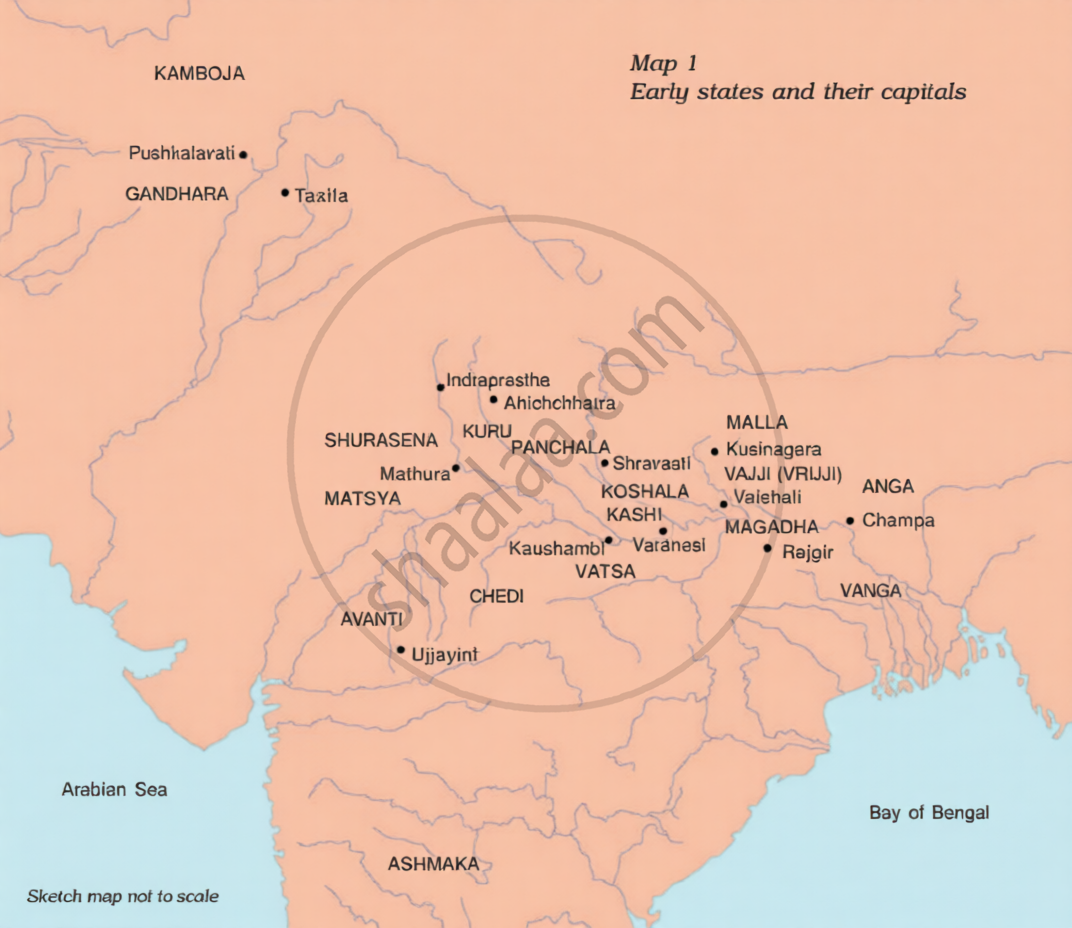
Discuss
What are the different explanations offered by early writers and present-day historians for the growth of Magadhan power?
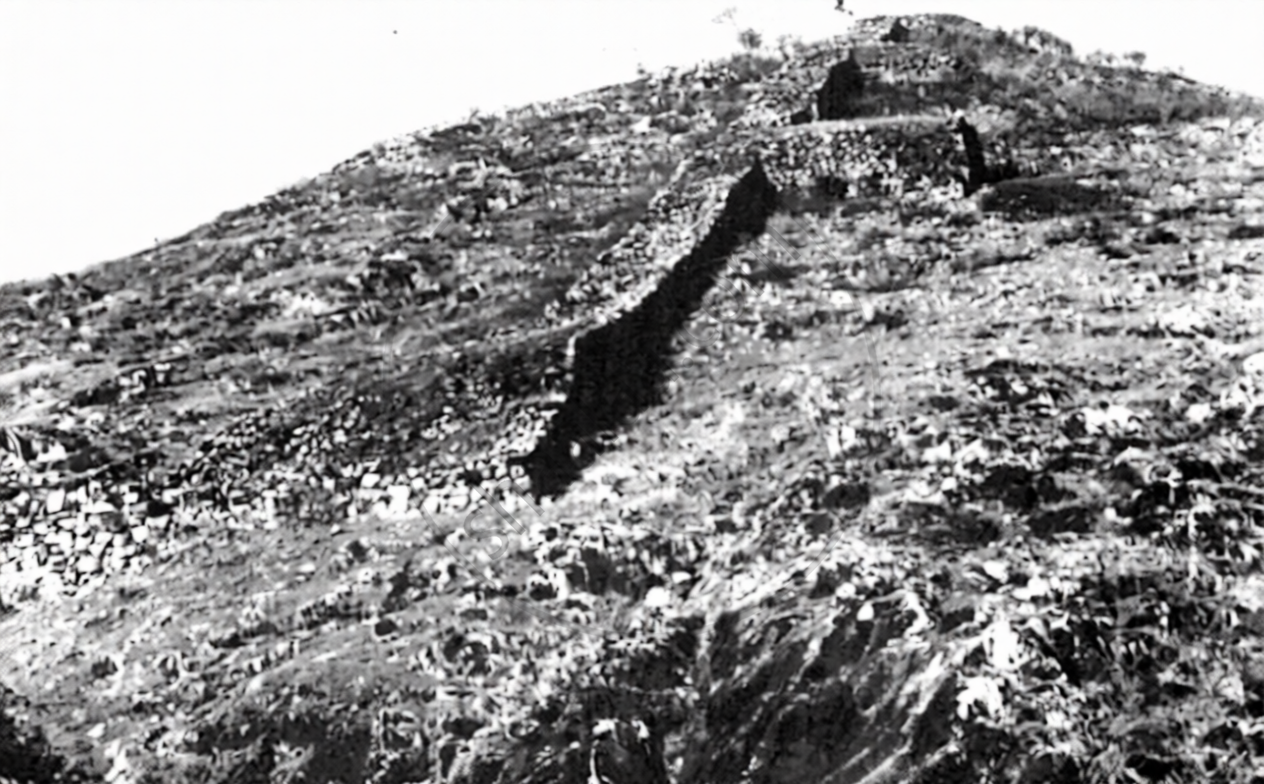
Why were Fortification walls built at Rajgir?
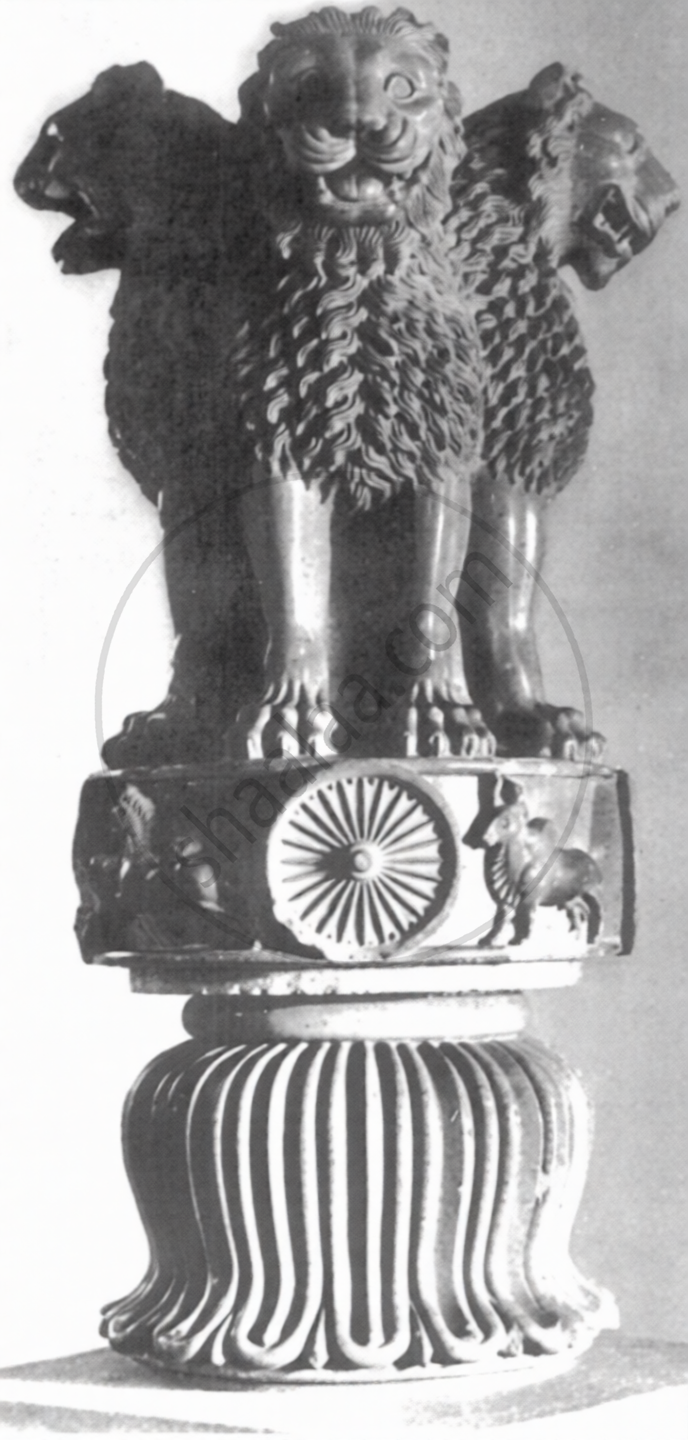
Why is the lion capital considered important today?
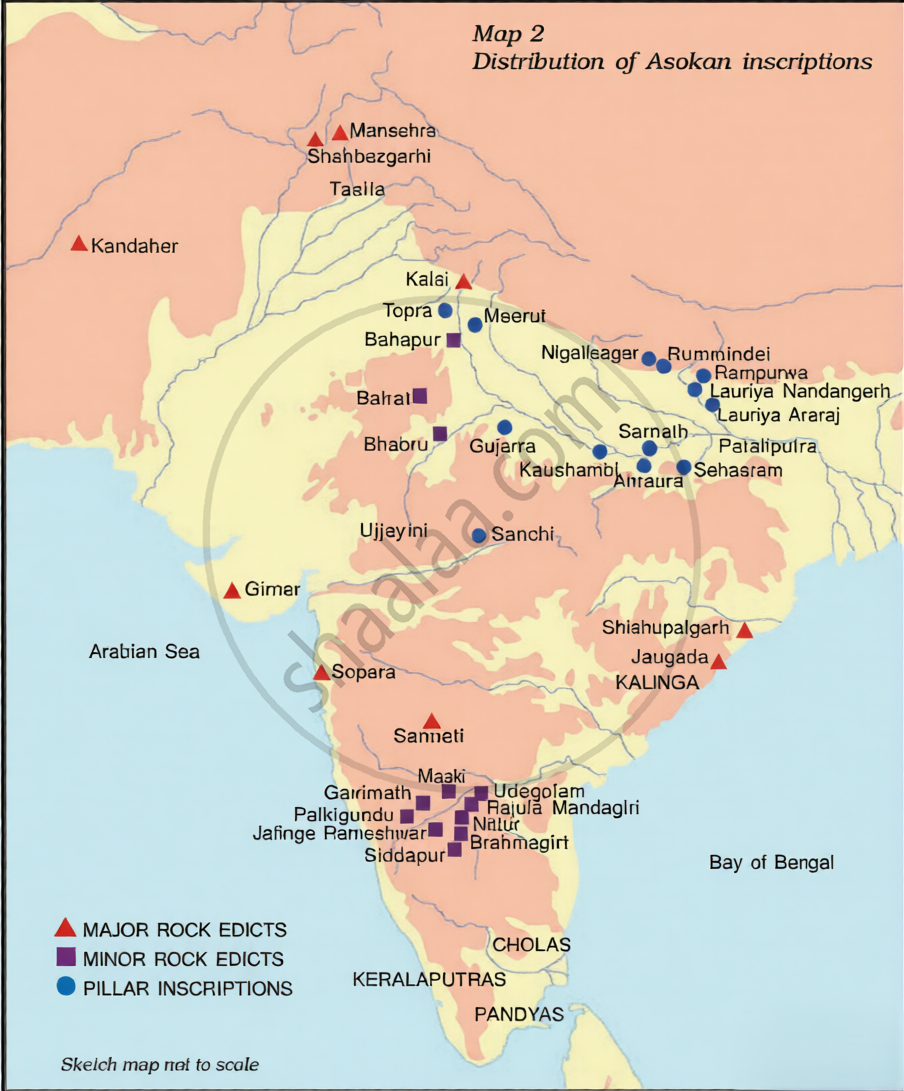
Could rulers have engraved inscriptions in areas that were not included within their empire?
|
Here is an excerpt from the account of Megasthenes: Of the great officers of state, some … superintend the rivers, measure the land, as is done in Egypt, and inspect the sluices by which water is let out from the main canals into their branches, so that every one may have an equal supply of it. The same persons have charge also of the huntsmen, and are entrusted with the power of rewarding or punishing them according to their deserts. They collect the taxes, and superintend the occupations connected with land; as those of the woodcutters, the carpenters, the blacksmiths, and the miners. |
Why were officials appointed to supervise these occupational groups?
Discuss
Read the excerpts from Megasthenes and the Arthashastra (Sources 1 and 2). To what extent do you think these texts are useful in reconstructing a history of Mauryan administration?
|
The Arthashastra lays down minute details of administrative and military organisation. This is what it says about how to capture elephants: Guards of elephant forests, assisted by those who rear elephants, those who enchain the legs of elephants, those who guard the boundaries, those who live in forests, as well as by those who nurse elephants, shall, with the help of five or seven female elephants to help in tethering wild ones, trace the whereabouts of herds of elephants by following the course of urine and dung left by elephants. According to Greek sources, the Mauryan ruler had a standing army of 600,000 foot-soldiers, 30,000 cavalry and 9,000 elephants. Some historians consider these accounts to be exaggerated. |
If the Greek accounts were true, what kinds of resources do you think the Mauryan ruler would have required to maintain such a large army?
|
This is an excerpt from the Silappadikaram, an epic written in Tamil: (When he visited the forest) people came down the mountain, singing and dancing … just as the defeated show respect to the victorious king, so did they bring gifts – ivory, fragrant wood, fans made of the hair of deer, honey, sandalwood, red ochre, antimony, turmeric, cardamom, pepper, etc. ... they brought coconuts, mangoes, medicinal plants, fruits, onions, sugarcane, flowers, areca nut, bananas, baby tigers, lions, elephants, monkeys, bear, deer, musk deer, fox, peacocks, musk cat, wild cocks, speaking parrots, etc. … |
Why did people bring these gifts? What would the chief have used these for?
How has the king been portrayed?
What are the elements in the sculpture that suggest that this is an image of a king?
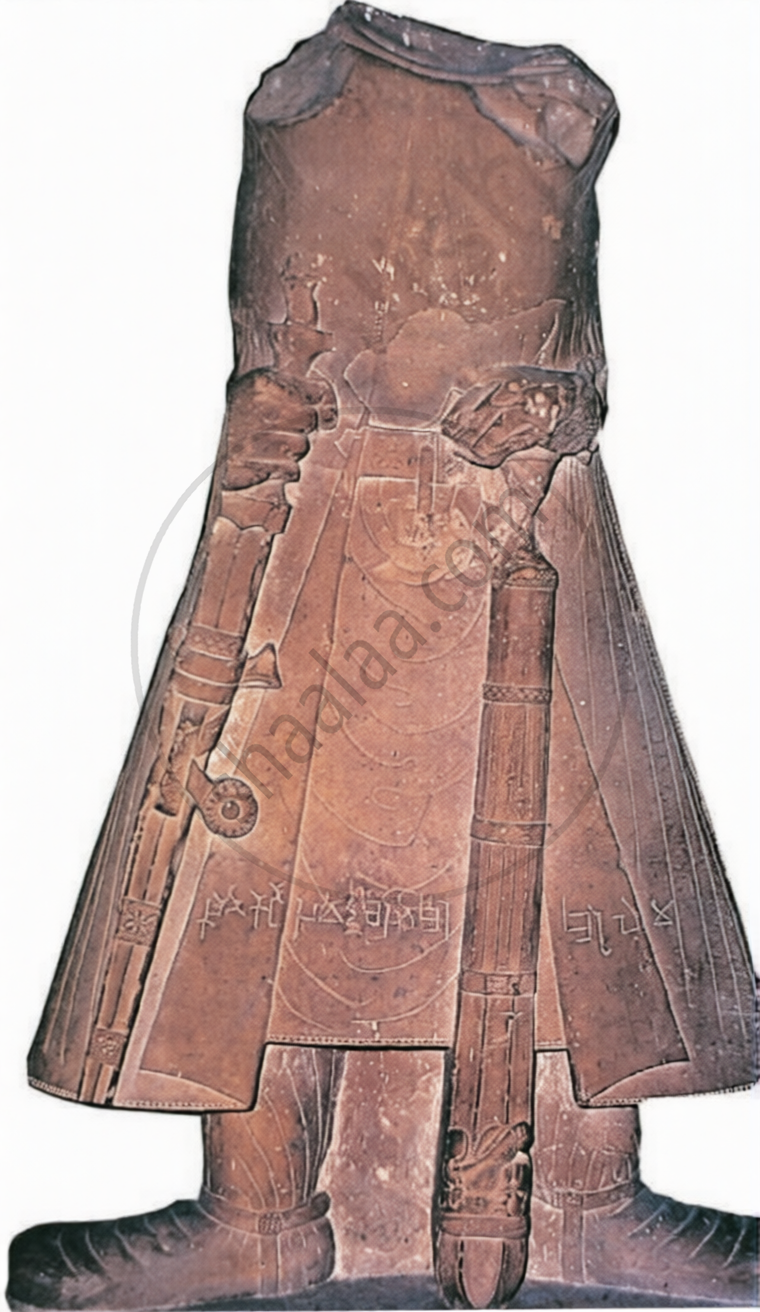
Why do you think kings claimed divine status?
|
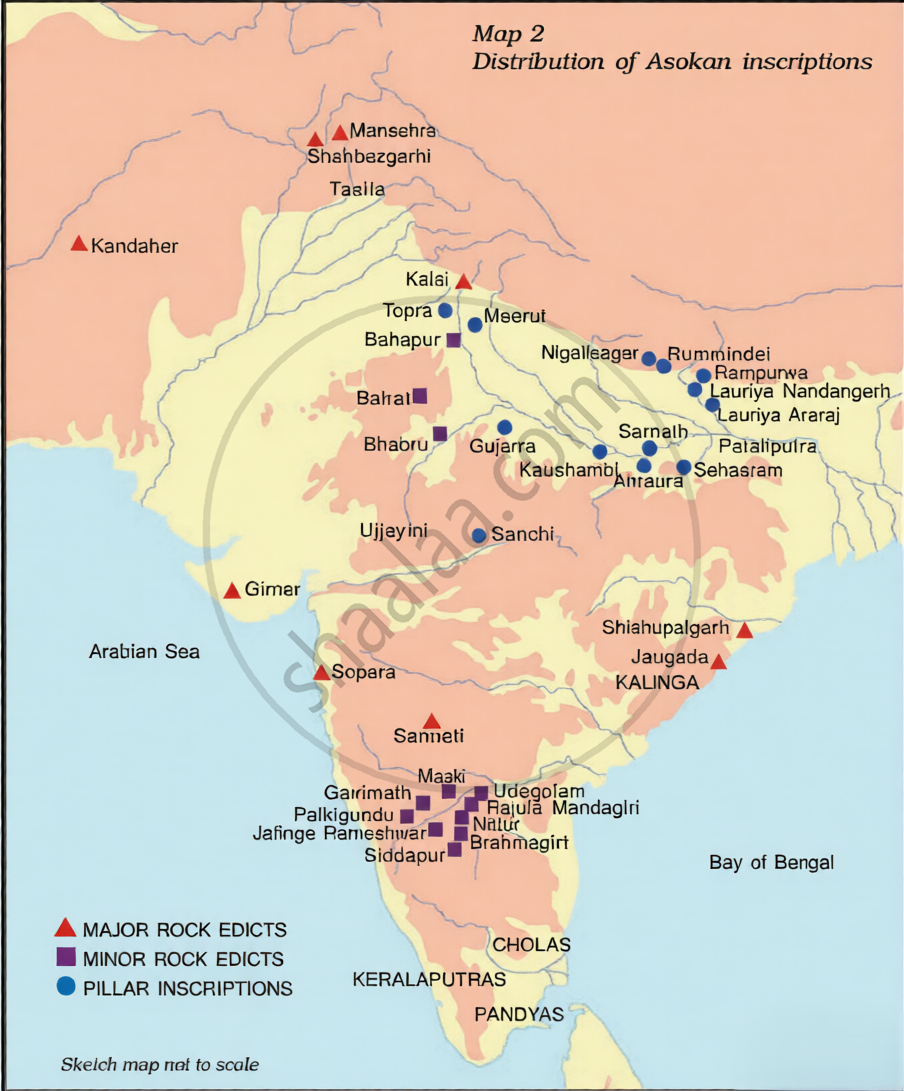
Find Girnar on Map 2. The Sudarshana lake was an artificial reservoir. We know about it from a rock inscription (c. second century CE) in Sanskrit, composed to record the achievements of the Shaka ruler Rudradaman. The inscription mentions that the lake, with embankments and water channels, was built by a local governor during the rule of the Mauryas. However, a terrible storm broke the embankments and water gushed out of the lake. Rudradaman, who was then ruling in the area, claimed to have got the lake repaired using his own resources, without imposing any tax on his subjects. Another inscription on the same rock (c. fifth century) mentions how one of the rulers of the Gupta dynasty got the lake repaired once again. |
Why did rulers make arrangements for irrigation?
|
The Manusmrti is one of the best-known legal texts of early India, written in Sanskrit and compiled between c. second century BCE and c. second century CE. This is what the text advises the king to do: Seeing that in the world controversies constantly arise due to the ignorance of boundaries, he should … have … concealed boundary markers buried – stones, bones, cow’s hair, chaff, ashes, potsherds, dried cow dung, bricks, coal, pebbles and sand. He should also have other similar substances that would not decay in the soil buried as hidden markers at the intersection of boundaries. |
Would these boundary markers have been adequate to resolve disputes?
|
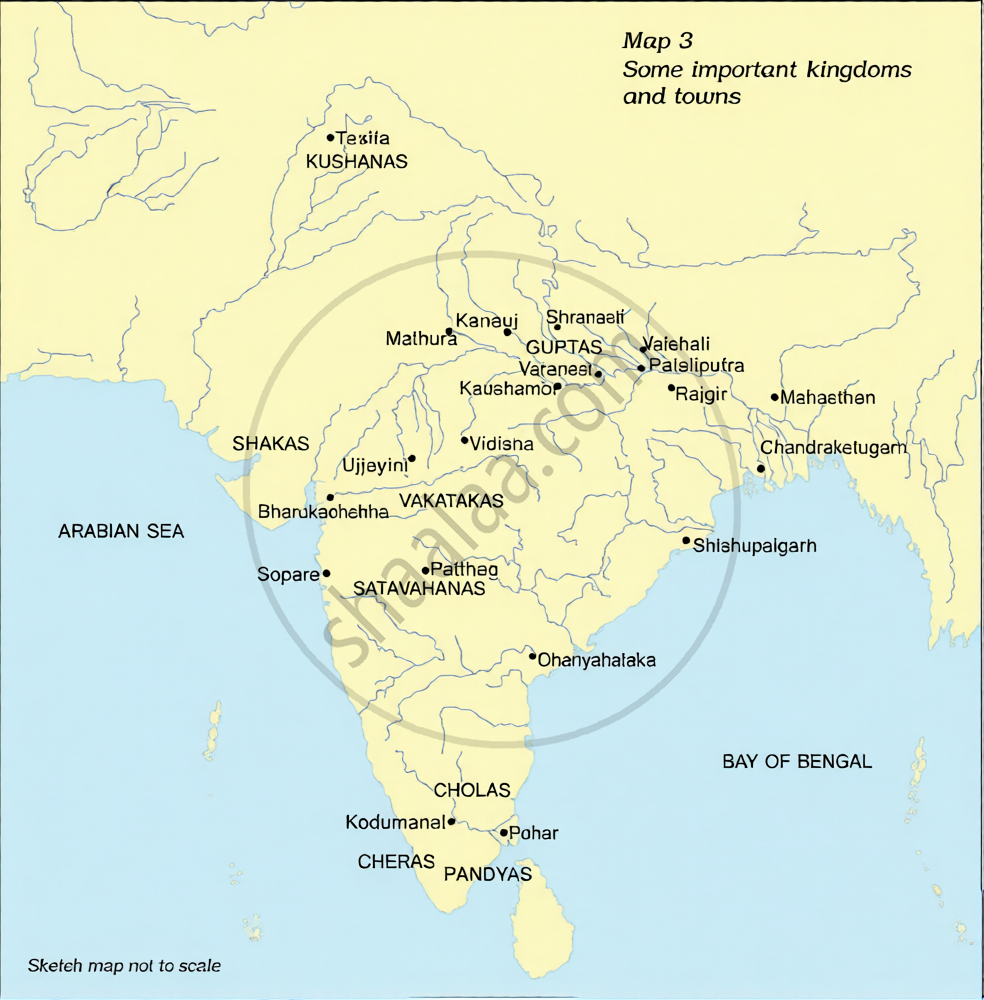
The Harshacharita is a biography of Harshavardhana, the ruler of Kanauj (see Map 3), composed in Sanskrit by his court poet, Banabhatta (c. seventh century CE). This is an excerpt from the text, an extremely rare representation of life in a settlement on the outskirts of a forest in the Vindhyas: The outskirts being for the most part forest, many parcels of rice-land, threshing ground and arable land were being apportioned by small farmers … it was mainly spade culture … owing to the difficulty of ploughing the sparsely scattered fields covered with grass, with their few clear spaces, their black soil stiff as black iron … There were people moving along with bundles of bark … countless sacks of plucked flowers, … loads of flax and hemp bundles, quantities of honey, peacocks’ tail feathers, wreaths of wax, logs, and grass. Village wives hastened en route for neighbouring villages, all intent on thoughts of sale and bearing on their heads baskets filled with various gathered forest fruits. |
How would you classify the people described in the text in terms of their occupations?
|
This is what Prabhavati Gupta states in her inscription: Prabhavati Gupta … commands the gramakutumbinas (householders/peasants living in the village), Brahmanas and others living in the village of Danguna … “Be it known to you that on the twelfth (lunar day) of the bright (fortnight) of Karttika, we have, in order to increase our religious merit, donated this village with the pouring out of water, to the Acharya (teacher) Chanalasvamin … You should obey all (his) commands … We confer on (him) the following exemptions typical of an agrahara …(this village is) not to be entered by soldiers and policemen; (it is) exempt from (the obligation to provide) grass, (animal) hides as seats, and charcoal (to touring royal officers); exempt from (the royal prerogative of) purchasing fermenting liquors and digging (salt); exempt from (the right to) mines and khadira trees; exempt from (the obligation to supply) flowers and milk; (it is donated) together with (the right to) hidden treasures and deposits (and) together with major and minor taxes …” This charter has been written in the thirteenth (regnal) year. (It has been) engraved by Chakradasa. |
What were the things produced in the village?
Discuss
Find out whether plough agriculture, irrigation and transplantation are prevalent in your state. If not, are there any alternative systems in use?
Were there any cities in the region where the Harappan civilisation flourished in the third millennium BCE?
|
Here is an excerpt from Periplus of the Erythraean Sea, composed by an anonymous Greek sailor (c. first century CE): They (i.e. traders from abroad) send large ships to these market-towns on account of the great quantity and bulk of pepper and malabathrum (possibly cinnamon, produced in these regions). There are imported here, in the first place, a great quantity of coin; topaz … antimony (a mineral used as a colouring substance), coral, crude glass, copper, tin, lead … There is exported pepper, which is produced in quantity in only one region near these markets … Besides this, there are exported great quantities of fine pearls, ivory, silk cloth, … transparent stones of all kinds, diamonds and sapphires, and tortoise shell. Archaeological evidence of a bead-making industry, using precious and semi-precious stones, has been found in Kodumanal (Tamil Nadu). It is likely that local traders brought the stones mentioned in the Periplus from sites such as these to the coastal ports. |
Why did the author compile this list?
Discuss
What are the transactions involved in trade? Which of these transactions are apparent from the sources mentioned? Are there any that are not evident from the sources?
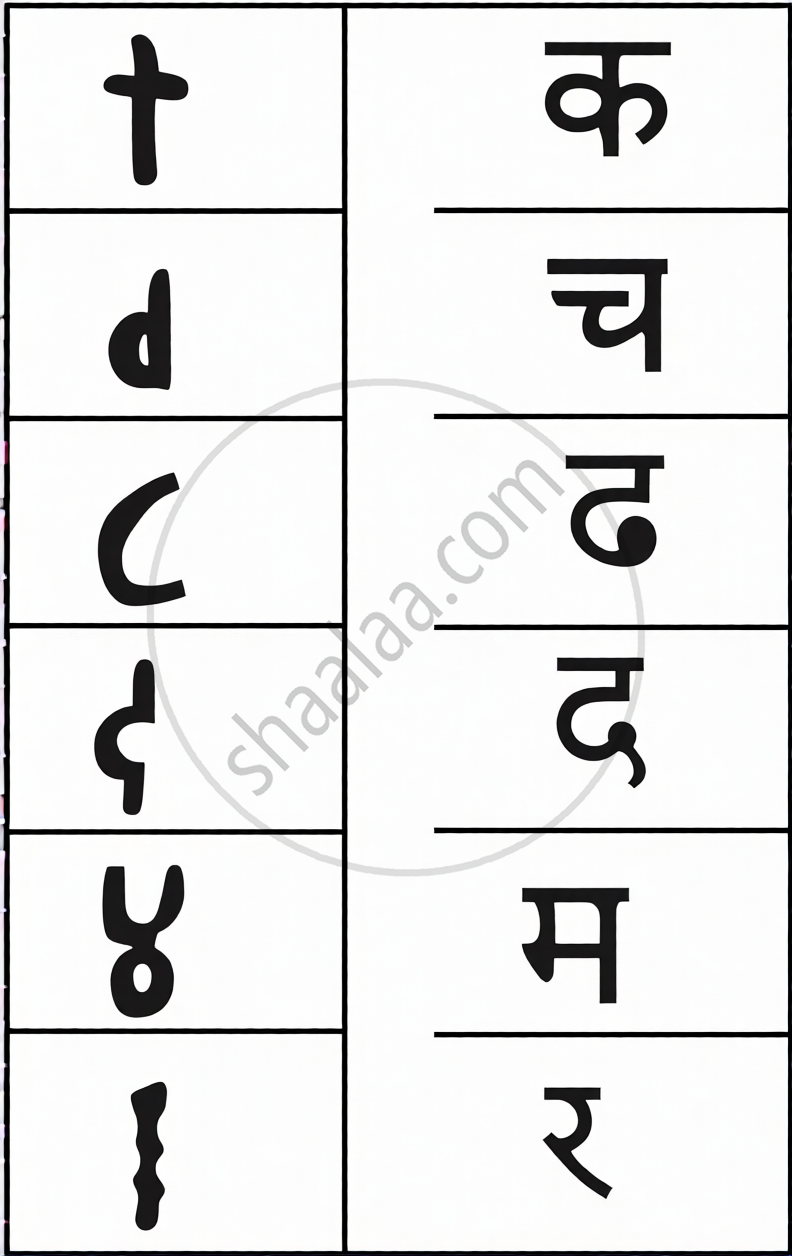
Do some Devanagari letters appear similar to Brahmi? Are there any that seem different?
|
Thus speaks King Devanampiya Piyadassi: In the past, there were no arrangements for disposing affairs, nor for receiving regular reports. But I have made the following (arrangement). Pativedakas should report to me about the affairs of the people at all times, anywhere, whether I am eating, in the inner apartment, in the bedroom, in the cow pen, being carried (possibly in a palanquin), or in the garden. And I will dispose of the affairs of the people everywhere. |
Epigraphists have translated the term pativedaka as reporter. In what ways would the functions of the pativedaka have been different from those we generally associate with reporters today?
Discuss
Look at the map given below and discuss the location of Asokan inscriptions. Do you notice any patterns?
NCERT solutions for थीम्स इन इंडियन हिस्ट्री पार्ट I, II, एण्ड III [अंग्रेजी] कक्षा १२ 2 Kings, Farmers And Towns: Early States and Economies Exercises [Pages 51 - 52]
Answer in 100-150 words
Discuss the evidence of craft production in Early Historic cities. In what ways is this different from the evidence from Harappan cities?
Answer in 100-150 words
Describe the salient features of Mahajanapadas.
Answer in 100-150 words
How do historians reconstruct the lives of ordinary people?
Answer in 100-150 words
Compare and contrast the list of things given to the Pandyan chief (Source 3) with those produced in the village of Danguna (source 8). Do you notice any similarities and differences?
Source 3 :- (The Pandya chief Senguttuvan visits the forest)
This is an excerpt from the Silappadikaram, an epic written in Tamil:-
(When he visited the forest) people came down the mountain, singing and dancing ... just as the defeated show respect to the victorious king, so did they bring gifts – ivory, fragrant wood, fans made of the hair of deer, honey, sandalwood, red ochre,
antimony, turmeric, cardamom, pepper, etc. ... they brought coconuts, mangoes, medicinal plants, fruits, onions, sugarcane, flowers, areca nut, bananas, baby tigers, lions, elephants, monkeys, bear, deer, musk deer, fox, peacocks, musk cat, wild cocks, speaking parrots, etc. ...
Source 8 :- (Prabhavati Gupta and the village of Danguna)
This is what Prabhavati Gupta states in her inscription:- Prabhavati Gupta … commands the gramakutumbinas (householders/peasants living in the village), Brahmanas and others living in the village of Danguna ...
“Be it known to you that on the twelfth (lunar day) of the bright (fortnight) of Karttika, we have, in order to increase our religious merit donated this village with the pouring out of water, to the Acharya (teacher) Chanalasvamin … You should obey all (his) commands ...
We confer on (him) the following exemptions typical of an agrahara …(this village is) not to be entered by soldiers and policemen; (it is) exempt from (the obligation to provide) grass, (animal) hides as seats, and charcoal (to touring royal officers); exempt from (the royal prerogative of) purchasing fermenting liquors and digging (salt); exempt from (the right to) mines and khadira trees; exempt from (the obligation to supply) flowers and milk; (it is donated) together with (the right to) hidden treasures and deposits (and) together with major and minor taxes ...”
This charter has been written in the thirteenth (regnal) year. (It has been) engraved by Chakradasa.
Answer in 100-150 words
List some of the problems faced by the epigraphists.
Write a short essay (about 500 words) on the following:
Discuss the main features of the Mauryan administration. Which of these elements are evident in the Asokan inscriptions that you have studied?
Write a short essay (about 500 words) on the following:
This is a statement made by one of the best-known epigraphists of the twentieth century, D.C. Sircar: “There is no aspect of life, culture, activities of the Indians that is not reflected in inscriptions.” Discuss.
Write a short essay (about 500 words) on the following:
Discuss the notions of kingship that developed in the post-Mauryan period.
Write a short essay (about 500 words) on the following:
To what extent were agricultural practices transformed in the period under consideration?
Map work
Compare the given Maps, and list the mahajanapadas that might have been included in the Mauryan Empire. Are any Asokan inscriptions found in these areas?


Project (any one)
Collect newspapers for one month. Cut and paste all the statements made by government officials about public works. Note what the reports say about the resources required for such projects, how the resources are mobilised and the objective of the project. Who issues these statements, and how and why are they communicated? Compare and contrast these with the evidence from inscriptions discussed in “Kings, Farmers And Towns: Early States and Economies.” What are the similarities and differences that you notice?
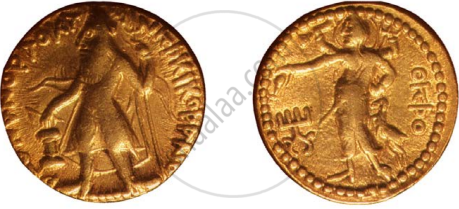
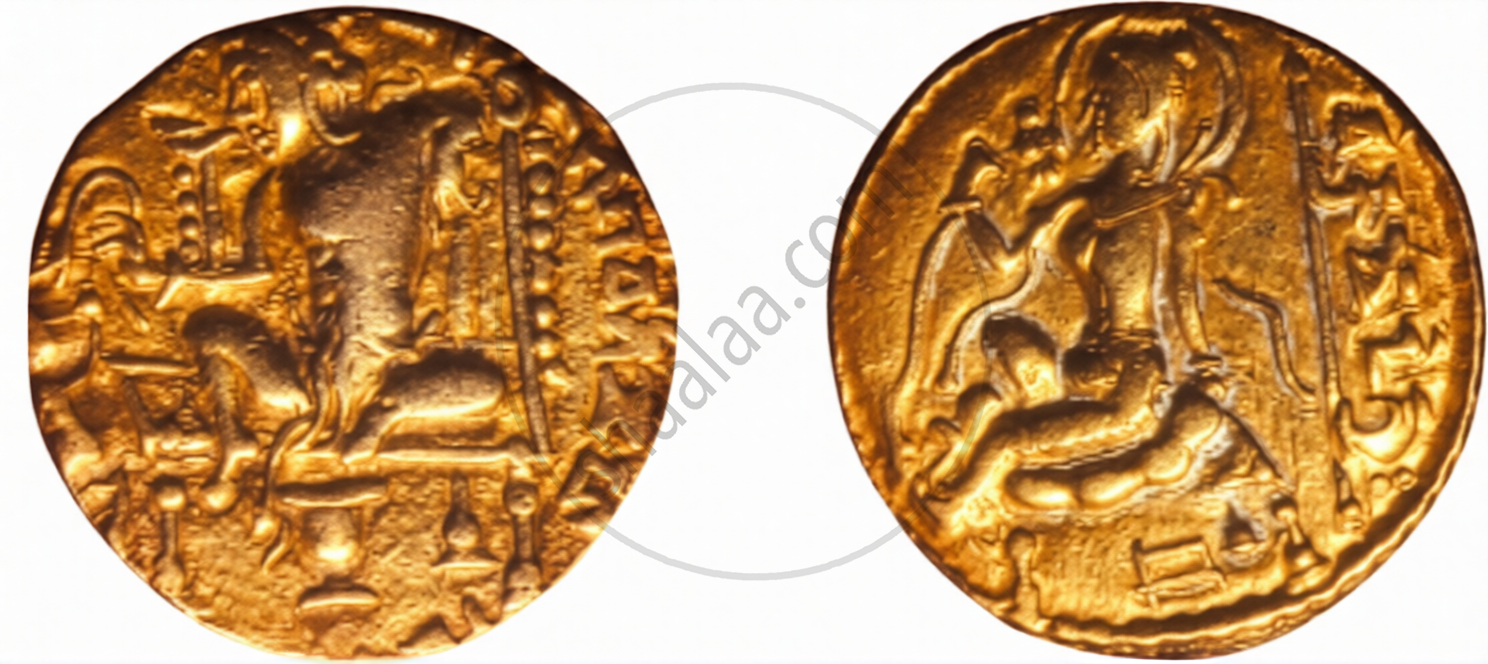
Collect five different kinds of currency notes and coins in circulation today. For each one of these, describe what you see on the obverse and the reverse (the front and the back). Prepare a report on the common features as well as the differences in terms of pictures, scripts and languages, size, shape and any other element that you find significant. Compare these with the coins shown in “Kings, Farmers And Towns: Early States and Economies,” discussing the materials used, the techniques of minting, the visual symbols and their significance and the possible functions that coins may have had.
Solutions for 2: Kings, Farmers And Towns: Early States and Economies
NCERT solutions for थीम्स इन इंडियन हिस्ट्री पार्ट I, II, एण्ड III [अंग्रेजी] कक्षा १२ chapter 2 - Kings, Farmers And Towns: Early States and Economies
Shaalaa.com has the CBSE Mathematics थीम्स इन इंडियन हिस्ट्री पार्ट I, II, एण्ड III [अंग्रेजी] कक्षा १२ CBSE solutions in a manner that help students grasp basic concepts better and faster. The detailed, step-by-step solutions will help you understand the concepts better and clarify any confusion. NCERT solutions for Mathematics थीम्स इन इंडियन हिस्ट्री पार्ट I, II, एण्ड III [अंग्रेजी] कक्षा १२ CBSE 2 (Kings, Farmers And Towns: Early States and Economies) include all questions with answers and detailed explanations. This will clear students' doubts about questions and improve their application skills while preparing for board exams.
Further, we at Shaalaa.com provide such solutions so students can prepare for written exams. NCERT textbook solutions can be a core help for self-study and provide excellent self-help guidance for students.
Concepts covered in थीम्स इन इंडियन हिस्ट्री पार्ट I, II, एण्ड III [अंग्रेजी] कक्षा १२ chapter 2 Kings, Farmers And Towns: Early States and Economies are Prinsep and Piyadassi, The Earliest States, An Early Empire, New Notions of Kingship, A Changing Countryside, Towns and Trade, Back to Basics - How Are Inscriptions Deciphered?, The Limitations of Inscriptional Evidence, Overview of Kings, Farmers and Towns Early States and Economies (c.600 BCE 600 CE), Overview of Kings, Farmers and Towns Early States and Economies (c.600 BCE 600 CE).
Using NCERT थीम्स इन इंडियन हिस्ट्री पार्ट I, II, एण्ड III [अंग्रेजी] कक्षा १२ solutions Kings, Farmers And Towns: Early States and Economies exercise by students is an easy way to prepare for the exams, as they involve solutions arranged chapter-wise and also page-wise. The questions involved in NCERT Solutions are essential questions that can be asked in the final exam. Maximum CBSE थीम्स इन इंडियन हिस्ट्री पार्ट I, II, एण्ड III [अंग्रेजी] कक्षा १२ students prefer NCERT Textbook Solutions to score more in exams.
Get the free view of Chapter 2, Kings, Farmers And Towns: Early States and Economies थीम्स इन इंडियन हिस्ट्री पार्ट I, II, एण्ड III [अंग्रेजी] कक्षा १२ additional questions for Mathematics थीम्स इन इंडियन हिस्ट्री पार्ट I, II, एण्ड III [अंग्रेजी] कक्षा १२ CBSE, and you can use Shaalaa.com to keep it handy for your exam preparation.
