Advertisements
Advertisements
प्रश्न
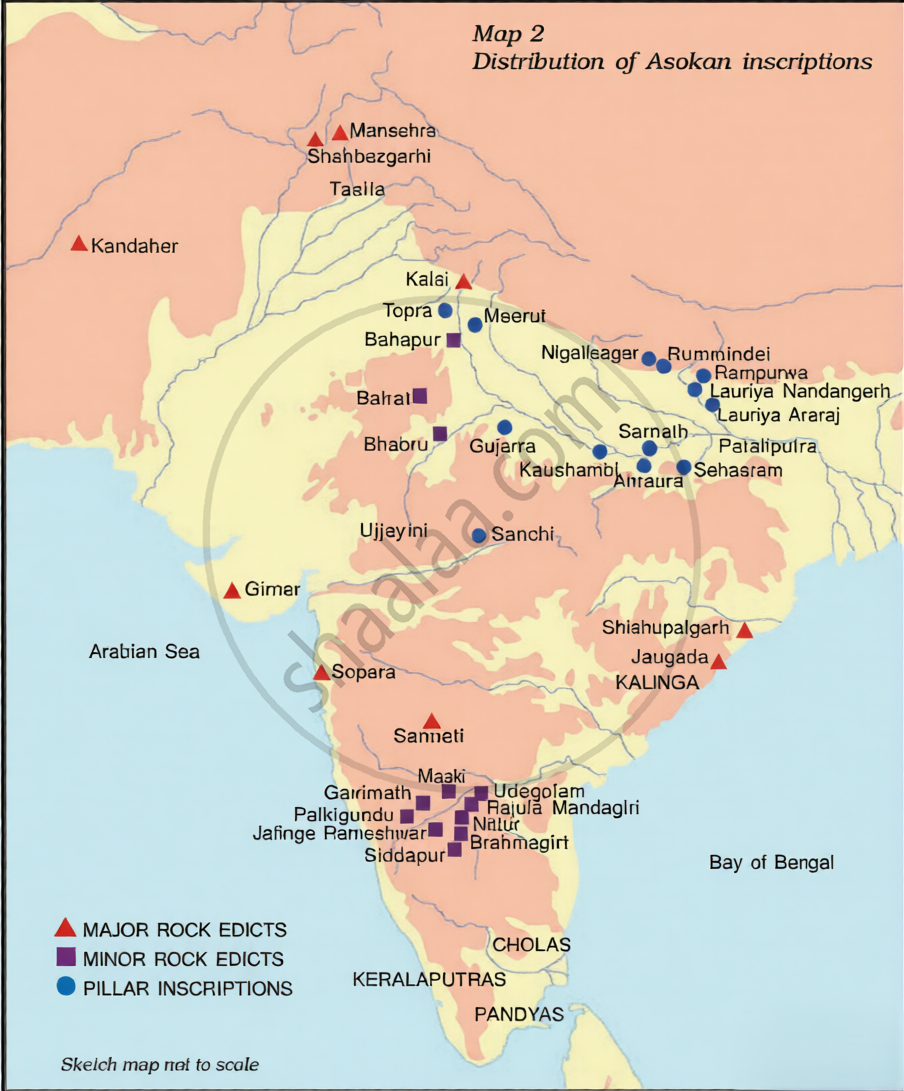
Could rulers have engraved inscriptions in areas that were not included within their empire?
कृति
Advertisements
उत्तर
Generally, no. Rulers could not easily engrave permanent, official inscriptions deep inside territories owned by rival independent kingdoms. However, there are a few important exceptions where inscriptions could be found outside the core empire:
- Borderlands and Frontier Zones: Rulers frequently carved edicts along fluid border regions, buffer zones, or mountain passes to signal their growing authority to incoming travellers and neighbouring states.
- Vital Trade Routes: Inscriptions were sometimes placed along major international highways or ports located just outside the formal political boundary to protect and guide travelling merchant groups.
- Friendly Allied Kingdoms: If a ruler shared deep diplomatic or cultural ties with a neighbouring country, they might be permitted to set up religious or peaceful edicts (like Ashoka spreading Buddhism) inside friendly territories.
- Shifting Political Borders: Borders changed constantly due to wars. An inscription carved when a region was conquered might end up “outside” the empire if that territory was later lost to an enemy.
Therefore, while the majority of Ashokan inscriptions mark the actual geographical boundaries of the Mauryan Empire, a few placed on extreme frontiers or trade routes might simply show the spread of his cultural and diplomatic influence rather than direct military control.
shaalaa.com
क्या इस प्रश्न या उत्तर में कोई त्रुटि है?
