Advertisements
Online Mock Tests
Chapters
1: Bricks, Beads And Bones: The Harappan Civilisation
2: Kings, Farmers And Towns: Early States and Economies
3: Kinship, Caste And Class: Early Societies
▶ 4: Thinkers, Beliefs And Buildings: Cultural Developments
Part 2
5: Through The Eyes Of Travellers: Perceptions of Society
6: Bhakti –Sufi Traditions: Changes in Religious Beliefs and Devotional Texts
7: An Imperial Capital: Vijayanagara
8: Peasants, Zamindars And The State: Agrarian Society and the Mughal Empire
Part 3
9: Colonialism And The Countryside: Exploring Official Archives
10: Rebels And The Raj: 1857 Revolt and its Representations
11: Mahatma Gandhi And The Nationalist Movement: Civil Disobedience and Beyond
12: Framing The Constitution: The Beginning of a New Era
![NCERT solutions for थीम्स इन इंडियन हिस्ट्री पार्ट I, II, एण्ड III [अंग्रेजी] कक्षा १२ chapter 4 - Thinkers, Beliefs And Buildings: Cultural Developments - Shaalaa.com](/images/themes-in-indian-history-part-i-ii-and-iii-english-class-12_6:81c2d22dfccf437dbdcef1d2cd896e40.jpg "NCERT solutions for थीम्स इन इंडियन हिस्ट्री पार्ट I, II, एण्ड III [अंग्रेजी] कक्षा १२ chapter 4 - Thinkers, Beliefs And Buildings: Cultural Developments")
Advertisements
Solutions for Chapter 4: Thinkers, Beliefs And Buildings: Cultural Developments
Below listed, you can find solutions for Chapter 4 of CBSE NCERT for थीम्स इन इंडियन हिस्ट्री पार्ट I, II, एण्ड III [अंग्रेजी] कक्षा १२.
NCERT solutions for थीम्स इन इंडियन हिस्ट्री पार्ट I, II, एण्ड III [अंग्रेजी] कक्षा १२ 4 Thinkers, Beliefs And Buildings: Cultural Developments Intext Question [Pages 84 - 109]
Discuss
Compare what Shahjehan Begum described with what you see in the following figure. What similarities and differences do you notice?
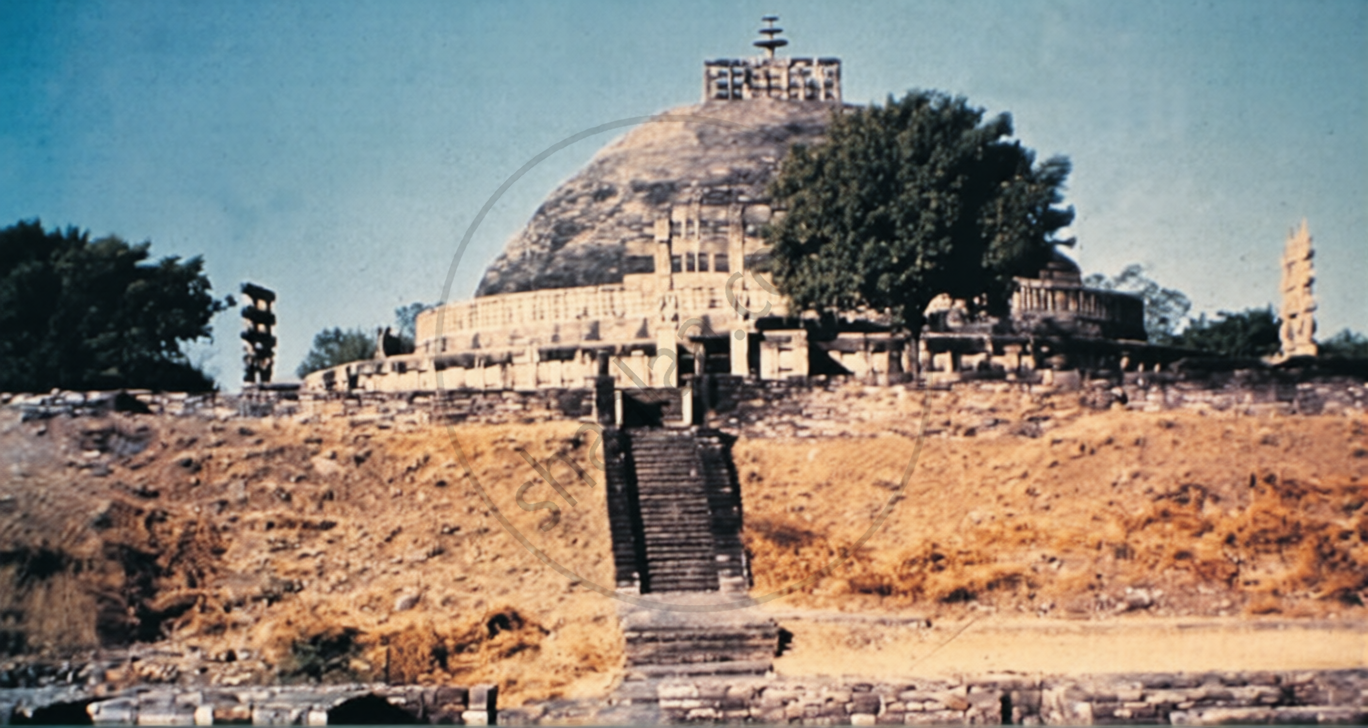
|
Here are two verses from the Rigveda invoking Agni, the god of fire, often identified with the sacrificial fire, into which offerings were made so as to reach the other deities: Bring, O strong one, this sacrifice of ours to the gods, O wise one, as a liberal giver. Bestow on us, O priest, abundant food. Agni, obtain, by sacrificing, mighty wealth for us. Procure, O Agni, for ever to him who prays to you (the gift of) nourishment, the wonderful cow. May a son be ours, offspring that continues our line … Verses such as these were composed in a special kind of Sanskrit, known as Vedic Sanskrit. They were taught orally to men belonging to priestly families. |
List the objectives of the sacrifice.
|
Here is an excerpt from the Sutta Pitaka, describing a conversation between King Ajatasattu, the ruler of Magadha, and the Buddha: On one occasion, King Ajatasattu visited the Buddha and described what another teacher, named Makkhali Gosala, had told him: “Though the wise should hope, by this virtue … by this penance I will gain karma … and the fool should by the same means hope to gradually rid himself of his karma, neither of them can do it. Pleasure and pain, measured out as it were, cannot be altered in the course of samsara (transmigration). It can neither be lessened or increased … just as a ball of string will, when thrown, unwind to its full length, so fool and wise alike will take their course and make an end of sorrow.” And this is what a philosopher named Ajita Kesakambalin taught: “There is no such thing, O king, as alms or sacrifice, or offerings … there is no such thing as this world or the next … A human being is made up of the four elements. When he dies, the earthy in him returns to the earth, the fluid to water, the heat to fire, the windy to air, and his senses pass into space … The talk of gifts is a doctrine of fools, an empty lie … fools and wise alike are cut off and perish. They do not survive after death.” The first teacher belonged to the tradition of the Ajivikas. They have often been described as fatalists: those who believe that everything is predetermined. The second teacher belonged to the tradition of the Lokayatas, usually described as materialists. Texts from these traditions have not survived, so we know about them only from the works of other traditions. |
Do you think it is appropriate to describe these men as fatalists or materialists?
Discuss
What are the problems in reconstructing histories of ideas and beliefs when texts are not available or have not survived?
|
Just as the Buddha’s teachings were compiled by his followers, the teachings of Mahavira were also recorded by his disciples. These were often in the form of stories, which could appeal to ordinary people. Here is one example, from a Prakrit text known as the Uttaradhyayana Sutta, describing how a queen named Kamalavati tried to persuade her husband to renounce the world: If the whole world and all its treasures were yours, you would not be satisfied, nor would all this be able to save you. When you die, O king, and leave all things behind, dhamma alone, and nothing else, will save you. As a bird dislikes the cage, so do I dislike (the world). I shall live as a nun without offspring, without desire, without the love of gain, and without hatred … Those who have enjoyed pleasures and renounced them move about like the wind, and go wherever they please, unchecked like birds in their flight … Leave your large kingdom … abandon what pleases the senses, be without attachment and property, then practise severe penance, being firm of energy … |
Which of the arguments advanced by the queen do you find most convincing?
Discuss
Is ahimsa relevant in the twenty-first century?
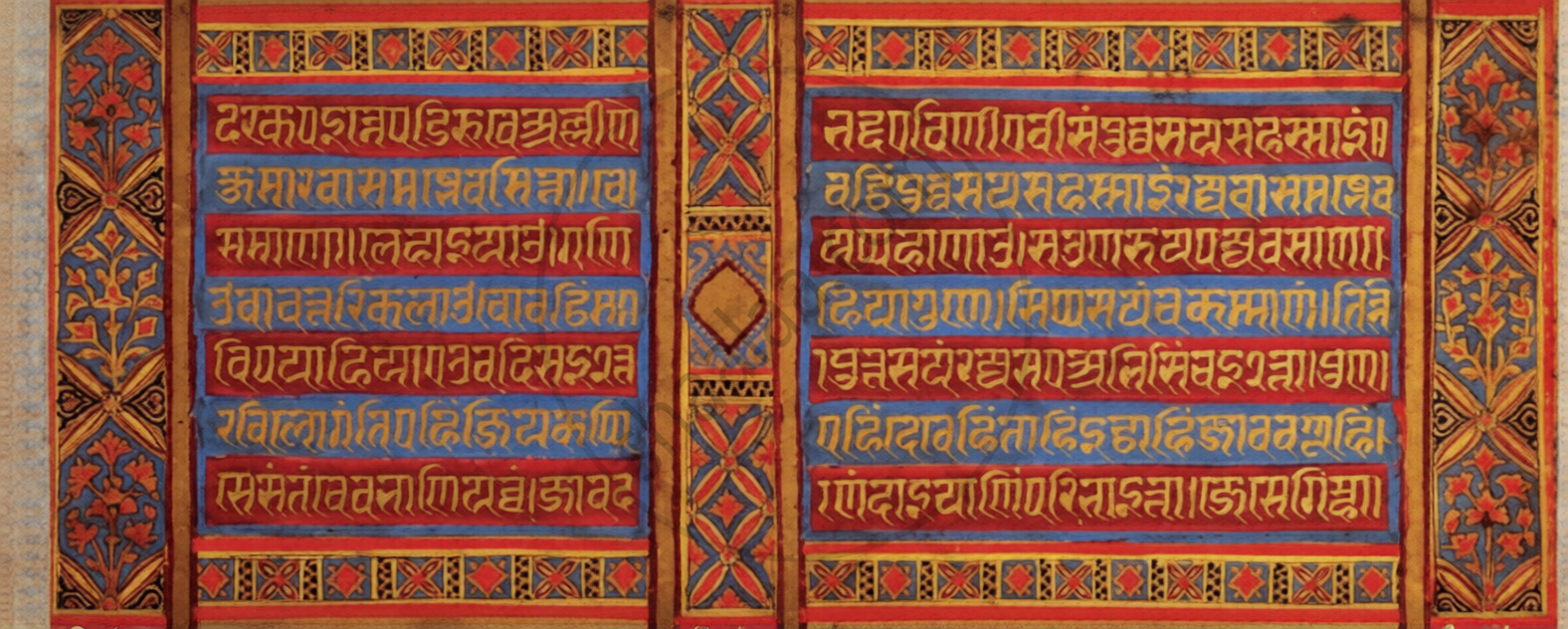
Can you identify the script?
Discuss
If you did not know about the life of the Buddha, would you be able to tell what the sculpture depicts?
|
This is an excerpt from the Sutta Pitaka and contains the advice given by the Buddha to a wealthy householder named Sigala: In five ways should a master look after his servants and employees … by assigning them work according to their strength, by supplying them with food and wages, by tending them in sickness; by sharing delicacies with them and by granting leave at times … In five ways should the clansmen look after the needs of samanas (those who have renounced the world) and Brahmanas: by affection in act and speech and mind, by keeping open house to them and supplying their worldly needs. There are similar instructions to Sigala about how to behave with his parents, teacher and wife. |
Suggest what the instructions regarding parents, teacher and wife may have been.
Discuss
Compare the Buddha’s advice on domestic ethics in the Sutta Pitaka (advice to Sigala) with Emperor Ashoka’s public imperial code of Dhamma inscribed on rock edicts. Do you notice any similarities and differences?
|
This unique Buddhist text, part of the Sutta Pitaka, is a collection of verses composed by bhikkhunis. It provides an insight into women’s social and spiritual experiences. Punna, a dasi or slave woman, went to the river each morning to fetch water for her master’s household. There she would daily see a Brahmana performing bathing rituals. One morning she spoke to him. The following are verses composed by Punna, recording her conversation with the Brahmana: I am a water carrier: The Brahmana replied: Punna said: |
Which of the teachings of the Buddha are evident in this composition?
|
These are some of the rules laid down in the Vinaya Pitaka: When a new felt (blanket/rug) has been made by a bhikkhu, it is to be kept for (at least) six years. If after less than six years he should have another new felt (blanket/rug) made, regardless of whether or not he has disposed of the first, then – unless he has been authorised by the bhikkhus – it is to be forfeited and confessed. In case a bhikkhu arriving at a family residence is presented with cakes or cooked grain-meal, he may accept two or three bowlfuls if he so desires. If he should accept more than that, it is to be confessed. Having accepted the two or three bowlfuls and having taken them from there, he is to share them among the bhikkhus. This is the proper course here. Should any bhikkhu, having set out bedding in a lodging belonging to the sangha – or having had it set out – and then on departing neither put it away nor have it put away, or should he go without taking leave, it is to be confessed. |
Can you explain why these rules were framed?
Discuss
Why do you think a dasi like Punna wanted to join the sangha?
|
This is an excerpt from the Mahaparinibbana Sutta, part of the Sutta Pitaka: As the Buddha lay dying, Ananda asked him: “What are we to do, Lord, with the remains of the Tathagata (another name for the Buddha)?” The Buddha replied: “Hinder not yourselves, Ananda, by honouring the remains of the Tathagata. Be zealous, be intent on your own good.” But when pressed further, the Buddha said: “At the four crossroads they should erect a thupa (Pali for stupa) to the Tathagata. And whosoever shall there place garlands or perfume … or make a salutation there, or become in its presence calm of heart, that shall long be to them for a profit and joy.” |
Look at the figure below and see whether you can identify some of these practices.
What are the similarities and differences between the plan of the Great Stupa, Sanchi (The Architectural Ground Plan) and the photograph (The Aerial/Frontal Photograph)?
What are the features of the building that are clearest in the architectural ground plan? What are the features that are best seen in the physical elevation (photograph)?
Discuss.
Read Section (“A Glimpse of Sanchi”) again. Give your reasons why Sanchi survived.
Bone, terracotta and metal can also be used for sculpture. Find out more about these.
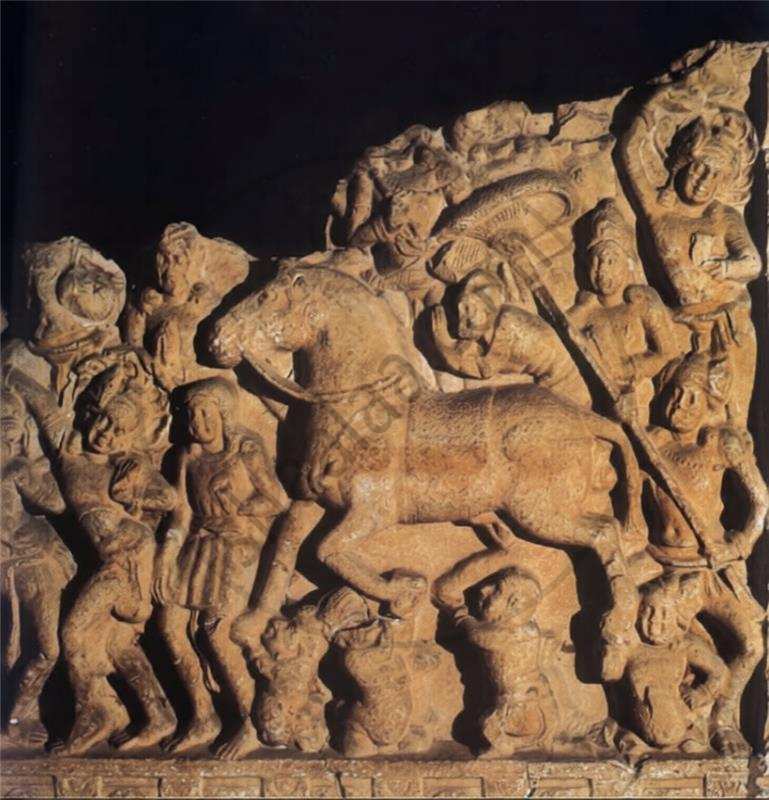
What does the proportion of the figures suggest?
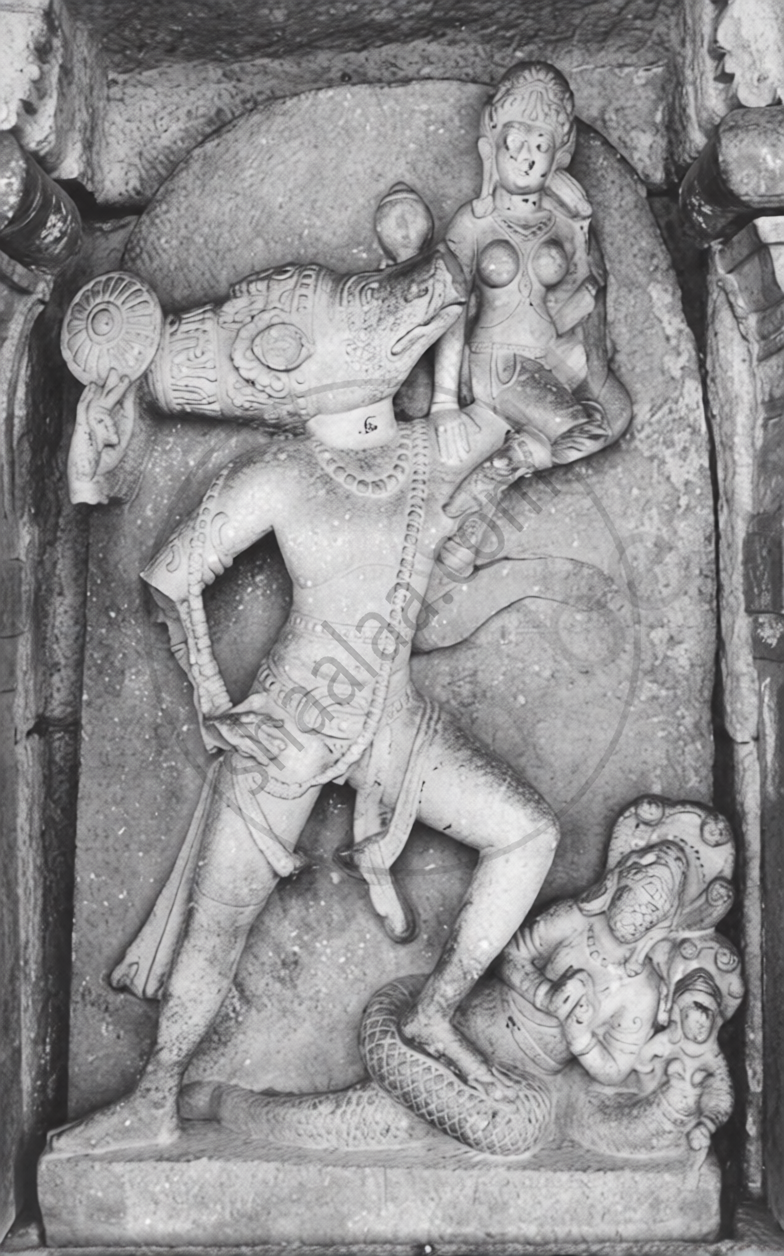
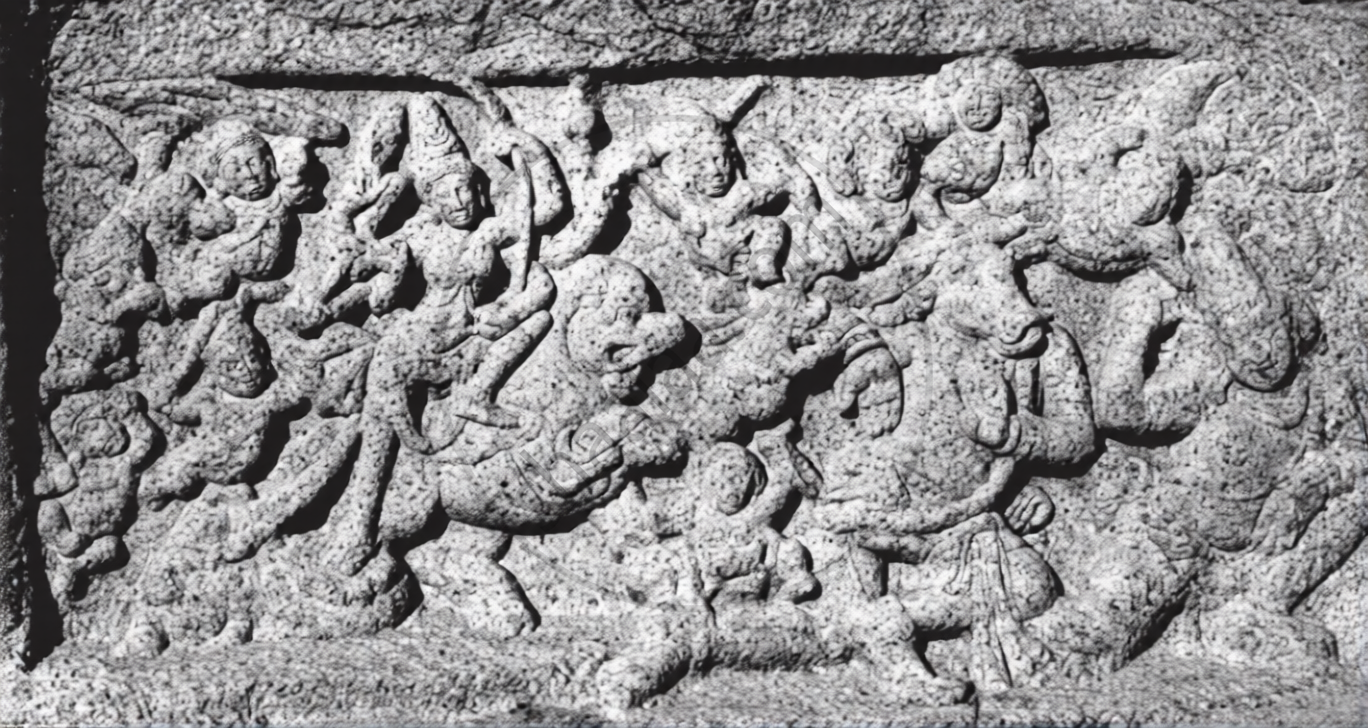
Identify the ways in which the artists have depicted movement. Find out more about the story depicted in this sculpture.
Identify the remains of the shikhara and the entrance to the garbhagriha.
Discuss
Describe any religious activity you have seen. Is it permanently recorded in any form?
NCERT solutions for थीम्स इन इंडियन हिस्ट्री पार्ट I, II, एण्ड III [अंग्रेजी] कक्षा १२ 4 Thinkers, Beliefs And Buildings: Cultural Developments Exercises [Pages 111 - 113]
Answer in 100-150 words
Were the ideas of the Upanishadic thinkers different from those of the fatalists and materialists ? Give reasons for your answers.
Describe the teachings of Jainism.
Answer in 100-150 words
Discuss the role of the begums of Bhopal in preserving the stupa at Sanchi.
Answer in 100-150 words
Read this short inscription and answer:-
In the year 33 of the maharaja Huvishka (a Kushana ruler), in the first month of the hot season on the eighth day, a Bodhisatta was set up at Madhuvanaka by the bhikkhuni Dhanavati, the sister’s daughter of the bhikkhuni Buddhamita, who knows the Tipitaka, the female pupil of the bhikkhu Bala, who knows the Tipitaka, together with her father and mother.
- How did Dhanavati date her inscription?
- Why do you think she installed an image of the Bodhisatta?
- Who were the relatives she mentioned?
- What Buddhist text did she know?
- From whom did she learn this text?
Answer in 100-150 words
Why do you think women and men joined the sangha?
Write a short essay (about 500 words) on the following:
To what extent does knowledge of Buddhist literature help in understanding the sculpture at Sanchi?
Write a short essay (about 500 words) on the following:
Following figures are two scenes from Sanchi. Describe what you see in each of them, focusing on the architecture, plants and animals, and the activities. Identify which one shows a rural scene and which an urban scene, giving reasons for your answer.
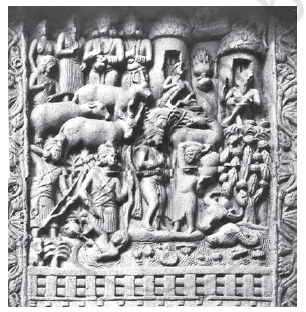
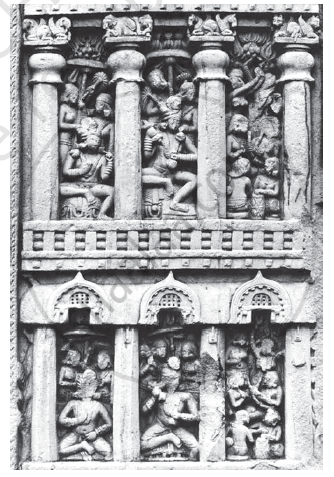
Write a short essay (about 500 words) on the following:
Discuss the development in sculpture and architecture associated with the rise of Vaishnavism and Shaivism.
Write a short essay (about 500 words) on the following:
Discuss how and why stupas were built.
Map work
On an outline world map, mark the areas to which Buddhism spread. Trace the land and sea routes from the subcontinent to these areas.
Project (any one)
Of the religious traditions discussed in “Thinkers, Beliefs and Buildings Cultural Developments”, is there any that is practised in your neighbourhood? What are the religious texts used today, and how are they preserved and transmitted? Are images used in worship? If so, are these similar to or different from those described in this chapter? Describe the buildings used for religious activities today, comparing them with early stupas and temples.
Collect at least five pictures of sculpture or painting, belonging to different periods and regions, on the religious traditions described in “Thinkers, Beliefs and Buildings Cultural Developments.” Remove their captions, and show each one to two people, and ask them to describe what they see. Compare their descriptions and prepare a report on your findings.
Solutions for 4: Thinkers, Beliefs And Buildings: Cultural Developments
NCERT solutions for थीम्स इन इंडियन हिस्ट्री पार्ट I, II, एण्ड III [अंग्रेजी] कक्षा १२ chapter 4 - Thinkers, Beliefs And Buildings: Cultural Developments
Shaalaa.com has the CBSE Mathematics थीम्स इन इंडियन हिस्ट्री पार्ट I, II, एण्ड III [अंग्रेजी] कक्षा १२ CBSE solutions in a manner that help students grasp basic concepts better and faster. The detailed, step-by-step solutions will help you understand the concepts better and clarify any confusion. NCERT solutions for Mathematics थीम्स इन इंडियन हिस्ट्री पार्ट I, II, एण्ड III [अंग्रेजी] कक्षा १२ CBSE 4 (Thinkers, Beliefs And Buildings: Cultural Developments) include all questions with answers and detailed explanations. This will clear students' doubts about questions and improve their application skills while preparing for board exams.
Further, we at Shaalaa.com provide such solutions so students can prepare for written exams. NCERT textbook solutions can be a core help for self-study and provide excellent self-help guidance for students.
Concepts covered in थीम्स इन इंडियन हिस्ट्री पार्ट I, II, एण्ड III [अंग्रेजी] कक्षा १२ chapter 4 Thinkers, Beliefs And Buildings: Cultural Developments are A Glimpse of Sanchi, The Background: Sacrifices and Debates, Beyond Worldly Pleasures: the Message of Mahavira, The Buddha and the Quest for Enlightenment, The Teachings of the Buddha, Followers of the Buddha, Stupas, “Discovering” Stupas the Fate of Amaravati and Sanchi, Sculpture, New Religious Traditions, Can We “See” Everything?, Overview of Thinkers, Beliefs and Buildings Cultural Developments (c. 600 BCE 600 CE), Overview of Thinkers, Beliefs and Buildings Cultural Developments (c. 600 BCE 600 CE).
Using NCERT थीम्स इन इंडियन हिस्ट्री पार्ट I, II, एण्ड III [अंग्रेजी] कक्षा १२ solutions Thinkers, Beliefs And Buildings: Cultural Developments exercise by students is an easy way to prepare for the exams, as they involve solutions arranged chapter-wise and also page-wise. The questions involved in NCERT Solutions are essential questions that can be asked in the final exam. Maximum CBSE थीम्स इन इंडियन हिस्ट्री पार्ट I, II, एण्ड III [अंग्रेजी] कक्षा १२ students prefer NCERT Textbook Solutions to score more in exams.
Get the free view of Chapter 4, Thinkers, Beliefs And Buildings: Cultural Developments थीम्स इन इंडियन हिस्ट्री पार्ट I, II, एण्ड III [अंग्रेजी] कक्षा १२ additional questions for Mathematics थीम्स इन इंडियन हिस्ट्री पार्ट I, II, एण्ड III [अंग्रेजी] कक्षा १२ CBSE, and you can use Shaalaa.com to keep it handy for your exam preparation.
