Advertisements
Online Mock Tests
Chapters
1: The First War of Independence, 1857
▶ 2: Growth of Nationalism
3: First Phase of the Indian National Movement
4: Second Phase of the Indian National Movement
5: The Muslim League
2. MASS PHASE OF THE NATIONAL MOVEMENT (1915-1947)
6: Mahatma Gandhi and the National Movement
7: The Quit India Movement
8: Forward Bloc and The INA
9: Independence and Partition of India
3. THE CONTEMPORARY WORLD
10: The First World War
11: Rise of Dictatorships
12: The Second World War
13: United Nations
14: Major Agencies of the United Nations
15: Non-Aligned Movement
SECTION B - CIVICS : 1. THE UNION LEGISLATURE
1: The Union Parliament-I
2: The Union Parliament-II
2. THE UNION EXECUTIVE
3: The President and The Vice-President
4: Prime Minister and Council of Ministers
3. THE JUDICIARY
5: The Supreme Court
6: The High Courts and Subordinate Courts
![Morning Star solutions for टोटल हिस्ट्री एण्ड सिविक्स [अंग्रेजी] कक्षा १० आईसीएसई chapter 2 - Growth of Nationalism - Shaalaa.com](/images/total-history-and-civics-english-class-10-icse_6:5245755610f545c08dc24e700b430f63.jpg "Morning Star solutions for टोटल हिस्ट्री एण्ड सिविक्स [अंग्रेजी] कक्षा १० आईसीएसई chapter 2 - Growth of Nationalism")
Advertisements
Solutions for Chapter 2: Growth of Nationalism
Below listed, you can find solutions for Chapter 2 of CISCE Morning Star for टोटल हिस्ट्री एण्ड सिविक्स [अंग्रेजी] कक्षा १० आईसीएसई.
Morning Star solutions for टोटल हिस्ट्री एण्ड सिविक्स [अंग्रेजी] कक्षा १० आईसीएसई 2 Growth of Nationalism EXERCISES [Pages 35 - 38]
Multiple-Choice Questions Select the correct option.
Nationalism is defined as feeling of oneness that emerges when people living in a common territory share the same
- historical background;
- political background;
- cultural values;
- religion
(i), (ii) and (iii)
(i), (iii) and (iv)
(i), (ii) and (iv)
(ii), (iii) and (iv)
How did the socio-religious reform movements of the 19th century act as pioneers of Indian Nationalism?
- They proclaimed the superiority of Indian culture and civilisation.
- They believed that British rule in India would lead to a society based on equality and equanimity.
- They created a consciousness of a new society devoid of privileges based on caste, creed or religion.
(i) and (ii)
(ii) and (iii)
(i) and (iii)
All of the above.
Ilbert Bill proposed to be introduced in 1883 during the reign of Lord Ripon advocated which of the following?
Higher power for European Magistrates
Equal power for European and Indian Magistrates
Abolishment of the appointment of Indian Judges in High Courts
None of these
The first meeting/session of the Indian National Congress was held at ______.
Kolkata
Mumbai
Chennai
Prayagraj
Who presided over the first Session of Indian National Congress?
Allen Octavian Hume
Motilal Nehru
W. C. Bonnerjee
None of these
W. C. Bonnerjee : Mumbai : : Dadabhai Naoroji : ______.
Nagpur
Mumbai
Kolkata
Allahabad
Why did Lord Dufferin favour the formation of the Congress?
He wanted to promote the growth of nationalism in India.
He wanted it to act like a safety-valve for popular discontent.
He wanted to mould public opinion in favour of the British.
None of the above.
Choose the options that do not apply to the immediate objectives of the Indian National Congress.
P: To prevent friendly relations between nationalist political workers from different parts of the country.
Q: To incite the masses against the British officials.
R: To formulate popular demands and present them before the government.
S: To promote national unity by encouraging Swadeshi.
P and Q
Q and R
Q and S
R and S
Sakshi was given an assignment to study in detail about the evil practice of ‘Sati’ in India. While doing so, she came to know that this practice was abolished by William Bentinck, the Governor-General of India in 1829. Who was the Indian social reformer whose efforts led to the abolition of this evil practice?
Swami Dayanand Saraswati
Raja Rammohan Roy
Jyotiba Phule
Swami Vivekananda
He considered the caste system prevalent in India an epitome of slavery. In one of his famous books he described the hardships felt by the lower castes. Who was he?
Raja Rammohan Roy
Swami Dayanand Saraswati
Jyotiba Phule
Ramakrishna Paramhansa
He was the first to preach ‘Swadeshi’ and ‘India for the Indians’. Who was he?
Swami Dayanand Saraswati
Swami Vivekananda
Raja Rammohan Roy
Jyotiba Phule
He was a great humanist who believed that service to mankind was service to God. Who was he?
Jyotiba Phule
Swami Dayanand Saraswati
Raja Rammohan Roy
Swami Vivekananda
Select the option that shows the correct relationship between Statements (I) and (II).
(I): Although India had a long history going back many centuries, it was never a single nation and comprised many kingdoms.
(II): The feeling of nationalism emerged during the British rule, mainly as a reaction to the British rule.
(II) contradicts (I).
(II) is the reason for (I).
(I) is true, but (II) is false.
(I) and (II) are independent of each other.
Select the option that shows the correct relationship between Statements (I) and (II).
(I) The British government took a large part of the farmers' produce in the form of land revenue and other taxes.
(II) The farmers were led into the clutches of landlords and moneylenders.
(II) contradicts (I).
(II) is the reason for (I).
(I) is true, but (II) is false.
(I) and (II) are independent of each other.
Select the option that shows the correct relationship between Statements (I) and (II).
(I) All sections of Indian society gradually realised that their economic salvation lay in freeing themselves from the yoke of British rule.
(II) All sections of society came together on one platform to work towards their salvation.
(II) contradicts (I).
(II) is the reason for (I).
(I) is true, but (II) is false.
(I) and (II) are independent of each other.
Select the option that shows the correct relationship between Statements (I) and (II).
(I) The social reformers launched a crusade against socio-religious evils prevalent in Indian society in the 19th century.
(II) Many newspapers and magazines in vernacular languages were launched.
(II) contradicts (I).
(II) is the reason for (I).
(I) is true, but (II) is false.
(I) and (II) are independent of each other.
Select the option that shows the correct relationship between Statements (I) and (II).
(I) Various political associations were formed in India by the second half of the 19th century to protect and promote the general public interests.
(II) The Indian National Congress was the first political association to be established in India.
(II) contradicts (I).
(II) is the reason for (I).
(I) is true, but (II) is false.
(I) and (II) are independent of each other.
Short Answer Questions.
State two reasons for the development of nationalism in the late 19th century.
Give two reasons for industrial stagnation during the British rule in India.
Who passed the Vernacular Act?
Why was the Vernacular Press Act passed?
Who repealed the Vernacular Press Act in 1882?
What impact did the Vernacular Press Act have on Indians?
Name any two prominent newspapers of the 19th century which played a significant role in arousing national sentiment among the Indians.
State any two issues that the socio-religious reform movements worked for.
Name any two socio-religious reformers who prepared the ground for national movement.
Write a short note on Raja Rammohan Roy’s approach to religion.
Name the organisation founded by Raja Rammohan Roy. Why did he establish this organisation?
Write a short note on the Ideals of Arya Samaj founded by Swami Dayanand Saraswati.
Name the organisation founded by Swami Vivekananda and its ideals.
Read the excerpt, from a British newspaper, given below and answer the question that follows:
| What does the Viceroy propose doing? It is, in a few words, to bind, for the first time in history, the European British subjects of Her Majesty in the interior of India to submit to be tried on criminal charges by a native of the country, provided he belong to the covenanted Civil Service and get the power from Government. Europeans criminally accused have hitherto been able to claim a trial by one of their own countrymen. The right of making this claim is to be taken away. |
Which Bill is being proposed by the Viceroy to in the above excerpt? What was its implication on the Indian judicial system?
Mention two main objectives of the Indian Association.
Mention the regional association that the nationalist was associated with:
Surendranath Banerjee
Mention the regional association that the nationalist was associated with:
Dadabhai Naoroji
Structured Questions
Various factors led to the rise and growth of nationalism in India in the 19th century. In this context, explain the role of the following:
- Economic Exploitation.
- Repressive Colonial Policies.
- The Press.

- Identify the person in the given picture. Name the organisation formed by him. State any two beliefs of this organisation with regard to the upliftment of women.
- Mention his contribution to the growth of the Indian National movement.
- How did the socio-religious reform movements of the 19th century act as pioneers of Indian Nationalism?
Read the excerpt given below and answer the question that follows:
|
“From the mid-18th century, it was a European Corporation, the East India Company - run from the City of London by merchants and accountants, with their ledgers and careful accounting - that ran amok and seized and subjugated a fragmented and divided India in what was probably the supreme act of corporate violence in history.” -William Dalrymple |
- What term is used to describe the East India Company’s act of running India’s trade and finance from the city of London? How did it work?
- What was its impact on the artisans and craftsmen?
- The author has described the East India Company’s act as ‘Corporate violence’. What term was used by Dadabhai Naoroji for such an act? Describe how it worked?
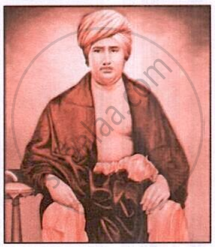
- Identify the person in the given picture. Name the organisation formed by him. State any two beliefs of this organisation with regard to the opposition of social evils.
- Mention his contribution to the spread of education in India.
- State one basic difference between Raja Rammohan Roy and the person in the picture.
With reference to Nationalism and the birth of the Indian National Congress, explain each of the following:
- Role of Swami Vivekananda.
- State any three objectives of the Indian National Congress.
- Role of Dadabhai Naoroji.
The establishment of the Indian National Congress was a significant event in the development of the national movement in India. In this context:
- What was the name of the Indian National Congress before it got this name? Who gave it its present name? Where was it established, and who was its founder?
- Why did Lord Dufferin favour the formation of the Indian National Congress?
- What was the nature of the political associations formed before the Indian National Congress was established? Name any two associations which acted as the forerunners of the Indian National Congress.
Solutions for 2: Growth of Nationalism
Morning Star solutions for टोटल हिस्ट्री एण्ड सिविक्स [अंग्रेजी] कक्षा १० आईसीएसई chapter 2 - Growth of Nationalism
Shaalaa.com has the CISCE Mathematics टोटल हिस्ट्री एण्ड सिविक्स [अंग्रेजी] कक्षा १० आईसीएसई CISCE solutions in a manner that help students grasp basic concepts better and faster. The detailed, step-by-step solutions will help you understand the concepts better and clarify any confusion. Morning Star solutions for Mathematics टोटल हिस्ट्री एण्ड सिविक्स [अंग्रेजी] कक्षा १० आईसीएसई CISCE 2 (Growth of Nationalism) include all questions with answers and detailed explanations. This will clear students' doubts about questions and improve their application skills while preparing for board exams.
Further, we at Shaalaa.com provide such solutions so students can prepare for written exams. Morning Star textbook solutions can be a core help for self-study and provide excellent self-help guidance for students.
Concepts covered in टोटल हिस्ट्री एण्ड सिविक्स [अंग्रेजी] कक्षा १० आईसीएसई chapter 2 Growth of Nationalism are Formation of the Indian National Congress, Aims of the Indian National Congress, Factors Leading to the Growth of Nationalism, Precursors of the Indian National Congress, Growth of Nationalism in India, Economic Exploitation, Repressive Colonial Policies, Socio-Religious Reform Movements, Role of the Press, Effects of Socio-Religious Reform Movements on the Growth of Nationalism, Sessions of the Congress, Formation of the Indian National Congress, Aims of the Indian National Congress, Factors Leading to the Growth of Nationalism, Precursors of the Indian National Congress, Growth of Nationalism in India, Economic Exploitation, Repressive Colonial Policies, Socio-Religious Reform Movements, Role of the Press, Effects of Socio-Religious Reform Movements on the Growth of Nationalism, Sessions of the Congress, Formation of the Indian National Congress, Aims of the Indian National Congress, Factors Leading to the Growth of Nationalism, Precursors of the Indian National Congress, Growth of Nationalism in India, Economic Exploitation, Repressive Colonial Policies, Socio-Religious Reform Movements, Role of the Press, Effects of Socio-Religious Reform Movements on the Growth of Nationalism, Sessions of the Congress.
Using Morning Star टोटल हिस्ट्री एण्ड सिविक्स [अंग्रेजी] कक्षा १० आईसीएसई solutions Growth of Nationalism exercise by students is an easy way to prepare for the exams, as they involve solutions arranged chapter-wise and also page-wise. The questions involved in Morning Star Solutions are essential questions that can be asked in the final exam. Maximum CISCE टोटल हिस्ट्री एण्ड सिविक्स [अंग्रेजी] कक्षा १० आईसीएसई students prefer Morning Star Textbook Solutions to score more in exams.
Get the free view of Chapter 2, Growth of Nationalism टोटल हिस्ट्री एण्ड सिविक्स [अंग्रेजी] कक्षा १० आईसीएसई additional questions for Mathematics टोटल हिस्ट्री एण्ड सिविक्स [अंग्रेजी] कक्षा १० आईसीएसई CISCE, and you can use Shaalaa.com to keep it handy for your exam preparation.
