Advertisements
Advertisements
प्रश्न
Write an autobiography of a hundred-rupee note. (8-10 lines.)
Advertisements
उत्तर
Hello friends! I am a thousand rupee note, an Indian currency. I was born in the year 2000. Pretty and pink, I have a great value. The great leader of India's freedom struggle, Mahatma Gandhi's portrait on me is a matter of great pride for me.
Born at Currency Note Press in Nashik, Maharashtra, my journey has been a long one. From one person to another, poor and rich, young and old, I have been with them all, even though for a short while.
While some took care of me and worshipped me, others mishandled me. But that's life! There will be good and bad experiences.
But my request to you, friends, is handle and spend me carefully. After all such a lot of efforts go into earning me. Hope you have made a 'note' of it.
संबंधित प्रश्न
But a caged BIRD stands on the grave of dreams
His shadow shouts on a nightmare scream
His wings are clipped and his feet are tied
So he opens his throat to sing.
Read the above lines and answer the question that follow.
What is the main conflict in this poem?
The extract deals with the atmosphere of two homes. Collect the words associated with - Library.
Which is your favourite ‘Nature’ poem from your mother tongue? Write the poem and try to translate it into English. Your translation can be in the form of a poem or a paraphrase.
Do you have pet animals? Write an interesting story about your own or your friends' pet.
Think and write in your own words.
If you were in the traveller’s place, which road would you choose? Justify your choice.
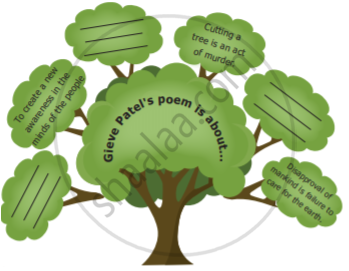
Based on the reading of the poem, complete the web chart given below.
Why was Miss Meadows upset and dejected?
Write a dialogue between a student and teacher on 'Importance of Yoga'.
Write an original short story that begins with the following words:
My mother stopped suddenly at the doorway and stared in amazement at ..........
Suppose a foreigner comes to visit your place and you have to accompany him for sightseeing. Prepare a dialogue between you and the foreigner.
