Advertisements
Advertisements
प्रश्न
CH3CO2H or CH2FCO2H
Advertisements
उत्तर
|
It is difficult for the proton to escape because the +I effect of −CH3 group increases the electron density in the O–H bond. |
The release of the proton is easy because the −I effect of −F reduces the electron density in the O–H bond. |
|
The +I effect due to the concentration of negative charge destabilises the carboxylate ion. |
The spreading of the negative charge causes the –I effect to stabilize the carboxylate ion. |
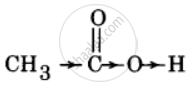
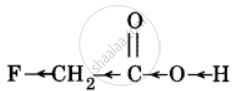
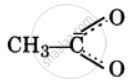
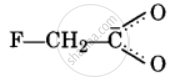
Hence, due to lower electron density in the O–H bond and higher stability of FCH2COO– ion, FCH2COOH is a stronger acid than CH3COOH.
APPEARS IN
संबंधित प्रश्न
How is 1-nitropropane prepared from suitable oxime?
Why pKa of F-CH2-COOH is lower than that of Cl−CH2−COOH?
Which acid of the pair shown here would you expect to be stronger?
CH2FCO2H or CH2ClCO2H
Which acid of the pair shown here would you expect to be stronger?
CH2FCH2CH2CO2H or CH3CHFCH2CO2H
Arrange the following compounds in increasing order of their property as indicated:
CH3CH2CH(Br)COOH, CH3CH(Br)CH2COOH, (CH3)2CHCOOH, CH3CH2CH2COOH (acid strength)
Arrange the following compounds in increasing order of their property as indicated:
Benzoic acid, 4-Nitrobenzoic acid, 3, 4-Dinitrobenzoic acid, 4-Methoxybenzoic acid (acid strength)
Account for the following:
Carboxylic acid is a stronger acid than phenol.
What happens when Salicylic acid is treated with (CH3CO)2 O/H+?
Arrange the following compounds in increasing order of their property as indicated:
F - CH2COOH, O2N - CH2 COOH CH3 COOH,HCOOH - acid character.
Acidity of BF3 can be explained on the basis of which of the following concepts?
A mixture of benzaldehyde and formaldehyde on heating with 50% NaOH solution gives
When propionamide reacts with Br2 in the presence of alkali the product is ______.
Na2CO3 cannot be used in place of (NH4)2CO3 for the precipitation of the V group because ______.
Formic acid and formaldehyde can be distinguished by treating with ______.
Describe the action of alcoholic potassium hydroxide (alc. KOH) on ethyl bromide
Describe the action of alcoholic potassium hydroxide (alc. KOH) on isopropyl bromide.
An ester is boiled with KOH. The product is cooled and acidified with conc. HCL. A white crystalline acid separates. The ester is:
The correct order of decreasing acidity of the following aliphatic acids is:
