Advertisements
Advertisements
प्रश्न
The narrator got angry because
______.
Advertisements
उत्तर
The narrator got angry because the photographer repeatedly said his face was wrong.
APPEARS IN
संबंधित प्रश्न
What was the great victory? Who had won the victory?
How does the hyphen and font help to advance the theme?
Read the extract given below and answer the questions that follow:
But mercy is above this sceptred sway;
It is enthroned in the hearts of kings,
It is an attribute to God himself;
And earthly power doth then show likest God’s
When mercy seasons justice.
(i) Name the speaker. Why did the speaker appeal to the Jew for mercy? Earlier who else in the play appealed for mercy?
(ii) What are the three qualities of mercy which the speaker has stated just before the extract?
(iii) Give the meaning of‘But mercy is above this sceptred sway’. How does Shylock turn down Portia’s plea for mercy? What does he insist on?
(iv) What is Bassanio ready to do for Antonio in the court? Why is Bassanio snubbed immediately by the disguised Portia?
(v) Mention two prominent character traits of Shylock as highlighted through the scene from which the extract has been taken. Substantiate your answer with examples from the text.
Re-write the following sentence according to the instruction given. Make other changes that may be necessary, but do not change the meaning of the sentence.
As soon as Sania sat down to study, the lights went off.
(Begin: No sooner……….)
What does the phrase “strange to tell” mean?
Notice the following sentence patterns.
And who art thou? said I to the soft-falling shower.
Rewrite the above sentences in prose.
Distinguish between the following pairs of sentences.
The team played two matches successively.
Explain the following phrase
Turned to dust
Use it in a sentence of your own.
Use the phrase in a sentence of your own, after finding out its meaning.
lifted off
Discuss with your partner and complete the web of different activities related to climbing.

Would you like to join the Indian Army/Navy/ Air force? If not, suggest other ways in which you could serve your nation.
Is there something that you would like to own more than anything else? Describe your dream possession with the help of the following points. You may add your own points, too.
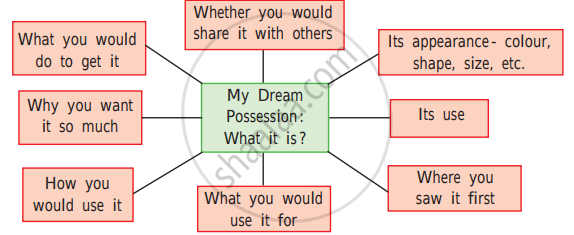
Write what you think about the following thoughts and actions of Mathilde :
Mathilde told her friend about the lost necklace.
Prepare a formal invitation for a function you have arranged at home. It should clearly state the following points:
- Who is inviting people to the function.
- What the program is.
- The date and time.
- The venue. (The place where
- A polite request to attend the function. the function will take place.)
Create a poster for the following.
Say ‘No to Drugs’ – Design a poster for it is not more than 50 words. You may use slogans/ phrases.
Draft Letter for the following.
You are Raja. The street lights of your area do not work properly. As a responsible citizen, write a letter to the newspaper enlightening them about the problem and also suggest ways to brighten the area.
“I cannot come.” Mala said that ______
Do you want to try to write your own paragraph now?
Write a paragraph on Monkey.

- ______
- ______
- ______
- ______
- ______
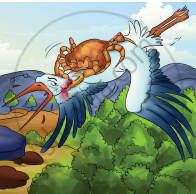
Complete the following picture board.
 |
 |
 |
 |
Use the option to fill in the blank.
My toys ______broken.
Punctuate the following passage.
mother father neelam said i have got a fire engine ive got a fire engine whats this whats this called mother somewhat confused by the noise ive got a fire engine mother come and see it.
Describe Hiawatha, his home and friends in ten lines.
Woman 5 was not aware of what was happening. Why?
Why did Leacock assume that the photographer was praying?
What was the only similarity between Leacock’s face and his photograph?
Write a paragraph of about 150 word, on the following topic.
The value of discipline
Study the picture given below. Write a story or a description or an account of what it suggests to you. Your composition may be about the subject of the picture, or you may take suggestions from it; however, there must be a clear connection between the picture and your composition.

______ was Portia’s; faithful servant.
Write a composition (in approximately 400-450 words) on the following subject:
A person should be judged by the way they treat their subordinates. Present your reflections on this statement.
Write a composition (in approximately 400 – 450 words) on the following subject.
During the lunch break, a surprising sight unfolded as a monkey entered your school campus. Narrate your experience as you took charge and guided junior students to their classrooms ensuring their safety.
