Advertisements
Advertisements
प्रश्न
The largest gland in the human body is ______.
Advertisements
उत्तर
The largest gland in the human body is liver.
APPEARS IN
संबंधित प्रश्न
Match the items of Column I with suitable items in Column II.
| Column I | Column II | ||
| (a) | Salivary gland | (i) | Bile juice secretion |
| (b) | Stomach | (ii) | Storage of undigested food |
| (c) | Liver | (iii) | Saliva secretion |
| (d) | Rectum | (iv) | Acid release |
| (e) | Small intestine | (v) | Digestion is completed |
| (f) | Large intestine | (vi) | Absorption of water |
| (vii) | Release of faeces |
What substances are contained in gastric juice? What are their functions?
Name the substance on which the following enzymes act in the human digestive system:
Trypsin
The process of digestion of food in humans begins in ______.
Which of the following component of our food is digested by an enzyme which is present in saliva as well as in pancreatic juice?
Prepare a possible vegetarian menu for your dinner which would provide all the necessary nutrients.
Write the function of the following in the human alimentary canal:
Saliva
Define the following term:
Digestion
Define with examples: Herbivores
Match items in column A with the appropriate items in Column B:
| Column A | Column B | ||
| 1 | HCl | a | Lactose |
| 2 | Rennin | b | Pellagra |
| 3 | Enteropeptidase | c | Rumen |
| 4 | Cellulose | d | Pepsin |
| 5 | Ptyalin | e | Starch |
| 6 | Vitamin | f | Pernicious anaemia |
| 7 | Intestinal juice | g | Trypsin |
| 8 | Bile salt | h | Casein |
| 9 | Vitamin A | i | Micelle |
| 10 | Goitre | j | Night-blindness |
| k | Iodine | ||
Correct the spellings: Carboxytipepdase
Name the enzymes secreted by the following: Salivary glands
The question has four options. Choose the correct answer:
Teeth present in the upper molar of human beings are
Use your brain power!
Why do we sometimes choke suddenly while eating?
Analogy
Enzymes: Digestive glands:: _______: Endocrine glands.
Write any two functions of digestive system.
Bile helps in the digestion of ______.
Which option represents the CORRECT sequence of digestive organs between the mouth and the anus?
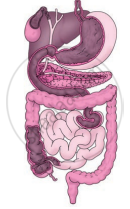
Label the following parts in Figure and name them.
- The largest gland in our body.
- The organ where protein digestion starts.
- The organ that releases digestive juice into the small intestine.
- The organ where bile juice gets stored.
What are the end products of digestion of starch, proteins, and fats respectively?
