Advertisements
Advertisements
प्रश्न
Ethylene chloride and ethylidene chloride are isomers. Identify the correct statements.
(i) Both the compounds form same product on treatment with alcoholic KOH.
(ii) Both the compounds form same product on treatment with aq.NaOH.
(iii) Both the compounds form same product on reduction.
(iv) Both the compounds are optically active.
Advertisements
उत्तर
(i) Both the compounds form same product on treatment with alcoholic KOH.
(iii) Both the compounds form same product on reduction.
Explanation:
\[\ce{\underset{(ethylidence chloride)}{H3C - CHCl2}}\] and \[\begin{array}{cc}
\phantom{}\ce{H2C - CH2}\phantom{}\\
\phantom{}|\phantom{....}|\\
\phantom{.}\ce{\underset{(ethylene dichloride)}{\phantom{}Cl\phantom{...}Cl}}\phantom{}
\end{array}\] are isomers.
(i) They give ethyne on treatment with alcoholic KOH.
\[\ce{CH3CHCl2 ->[alc][KOH] CH ≡ CH + 2KCl + 2H2O}\]
\[\ce{Cl - CH2 - CH2 - Cl ->[alc.KOH] CH ≡ CH + 2KCl + H2O}\]
(ii) On reduction with Zn dust in alcohol they give ethylene.
\[\ce{CH3CHCl2 + Zn ->[CH3OH] CH2 ≡ CH}\]
\[\ce{Cl - CH2 - CH2 - Cl + Zn ->[CH3OH] CH2 = CH2}\]
APPEARS IN
संबंधित प्रश्न
Give reasons for the following:
(CH3)3C–O–CH3 on reaction with HI gives (CH3)3C–I and CH3–OH as the main products and not (CH3)3C–OH and CH3–I.
Which alkyl halide from the following pair would you expect to react more rapidly by an SN2 mechanism? Explain your answer.
CH3CH2CH2CH2Br or \[\begin{array}{cc}
\ce{CH3CH2CHCH3}\\
\phantom{.....}|\\
\phantom{.......}\ce{Br}\
\end{array}\]
Which would undergo SN2 reaction faster in the following pair and why ?
CH3 – CH2 – Br and CH3 – CH2 – I
AgCN reacts with haloalkanes to form isocyanide. Haloalkanes react with KCN to form alkyl cyanides as the main product. Why?
Which of the following pairs is/are correctly matched?
| Reaction | Product | |
| I | RX + AgCN | RNC |
| II | RX + KCN | RCN |
| III | RX + KNO2 | \[\begin{array}{cc} \phantom{.......}\ce{O}\\ \phantom{.....}/\\ \ce{R - N}\phantom{....}\\ \phantom{.....}\backslash\backslash\\ \phantom{.......}\ce{O} \end{array}\] |
| IV | RX + AgNO2 | \[\ce{R-O-N=O}\] |
Which of the following is a primary halide?
Which one of the following halogen compounds is difficult to be hydrolysed by SN1 mechanism?
The order of reactivity of the given haloalkanes towards nucleophile is:
In the SN1 reaction, racemization takes place. It is due to:
Which of the following compounds is optically active?
Assertion: KCN reacts with methyl chloride to give methyl isocyanide.
Reason: CN– is an ambident nucleophile.
Which of the following statements are correct about the kinetics of this reaction?

(i) The rate of reaction depends on the concentration of only (b).
(ii) The rate of reaction depends on concentration of both (a) and (b).
(iii) Molecularity of reaction is one.
(iv) Molecularity of reaction is two.
Which of the following is the definition of chirality?
When CH3CH2CHCl2 is treated NaNH2 product formed is:-
Which one of the following compounds is more reactive towards SN1 reaction?
Identify the product in the following reaction: 
Discuss the mechanism of alkaline hydrolysis of methyl bromide.
Which alkyl halide from the following pair would you expect to react more rapidly by an SN2 mechanism? Explain your answer.
\[\begin{array}{cc}
\ce{CH3CHCH2CH2Br}\\
|\phantom{.............}\\
\ce{CH3}\phantom{..........}\\
\end{array}\] or \[\begin{array}{cc}
\ce{CH3CH2CHCH2Br}\\
|\\
\phantom{...}\ce{CH3}\\
\end{array}\]
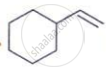 HCI, Major product ______.
Which of the following reactions is an example of nucleophilic substitution reaction?
