Advertisements
Advertisements
प्रश्न
An element X has mass number 40 and contains 21 neutrons in its atom. To which group of the Periodic Table does it belong?
विकल्प
Group 1
Group 4
Group 2
Group 3
Advertisements
उत्तर
Group 1
Explanation:
e = 19 (2, 8, 8,1)
APPEARS IN
संबंधित प्रश्न
What do you understand by atomic size? State its unit?
Write the name and symbol of the element from the description.
The atom having the smallest size.
Study the radius of the element given below and answer the following questions.
| elements | K | Na | Rb | Cs | Li |
| Atomic radius (pm) | 231 | 186 | 244 | 262 | 151 |
a) Which of the above elements have the smallest atom?
b) In which group of the modern periodic table the above element are belongs?
c) What is the periodic trend observed in the variation of atomic radii down a group?
Select the correct answer
Atomic radii of fluorine and neon in angstrom unit are
Supply the missing word from those in the brackets:
If an element has seven electrons in its outermost shell then it is likely to have the ______ (largest/ smallest) atomic size among all the elements in the same period.
The metals of Group 2 from top to bottom are Be, Mg, Ca, Sr and Ba.
- Which one of these elements will form ions most readily and why?
- State the common feature in their electronic configuration.
Which of the following gives the correct increasing order of the atomic radii of O, F, and N?
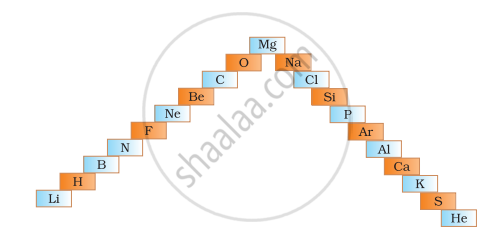
- In below ladder symbols of elements are jumbled up. Rearrange these symbols of elements in the increasing order of their atomic number in the Periodic Table.
- Arrange them in the order of their group also.
Arrange the following as per the instruction given in the bracket:
Carbon, Fluorine, Beryllium (decreasing order of atomic size).
Give reason for the following:
The size of a Cl− ion is greater than the size of a Cl atom.
