Topics
Matter
- Matter (Substance)
- Characteristics of Particles (Molecules) of Matter
- States of Matter
- The Solid State
- The Liquid State
- The Gaseous State
- Kinetic Theory of Matter
- Change of State
- Concept of Melting (Fusion)
- Concept of Evaporation
- Vaporisation or Boiling
- Concept of Condensation (Liquefaction)
- Concept of Freezing (Solidification)
- Sublimation
- Concept of Desublimation (Deposition)
- Laws of Chemical Combination
- Law of Conservation of Mass
Physical and Chemical Changes
Elements, Compounds and Mixtures
- Matter (Substance)
- Natural substances
- Pure Substances
- Impure Substance
- Elements
- Earth and Elements
- Non-Metals
- Type of Element: Metalloid
- Type of Elements: Noble Or Inert Gases
- Difference Between Metals, Non-metals, Metalloids, and Noble Gases
- Compound
- Mixture
- Types of Mixtures
- Formation of Mixtures
- Separation of Mixtures
- Methods of Separation
- Handpicking Method
- Magnetic Separation Method
- Gravitation Method
- Sublimation
- Solvent Extraction (Using a Separating Funnel Method)
- Crystallisation Method
- Sedimentation Method
- Decantation Method
- Filtration Method
- Evaporation Method
- Centrifugation Method
- Fractional Distillation Method
- Chromatography Method
- Diffusion Method
- Liquefaction Method
Atomic Structure
- Atoms: Building Blocks of Matter
- History of Atom
- Dalton's Atomic Theory
- J. J. Thomson’s Atomic Model
- Rutherford’s Atomic Model
- Discovery of Charged Particles in Matter
- Electrons
- Protons
- Nucleus
- Neutrons
- Neils Bohr’s Model of an Atom
- Structure of the Atom and Nucleus
- Atomic Number (Z) and Mass Number (A)
- Atomic Mass
- Isotopes
- Electronic Configuration of Atom
- Electronic Configuration of Atom
- Periodic Trends in the Modern Periodic Table
- Variable Valency
- Ions (Radicals) and Its Types
Language of Chemistry
- Language of Chemistry
- Law of Conservation of Mass
- Symbols Used to Represent Atoms of Different Elements
- Periodic Trends in the Modern Periodic Table
- Variable Valency
- Ions (Radicals) and Its Types
- Chemical Formula or Molecular Formula
- Molecular Formula of Compounds
- Chemical Formula or Molecular Formula
- Significance of Molecular/Chemical Formulae
- Balancing Chemical Equation
Chemical Reactions
Chemical Reaction
- Indicators of a Chemical Change (Chemical Reaction)
- Conditions Necessary for Chemical Reactions
Types of Chemical Reactions
- Types of Chemical Reactions > Combination Reaction
- Types of Chemical Reactions > Decomposition Reaction
- Types of Chemical Reactions > Single Displacement Reaction
- Types of Chemical Reactions > Double Displacement Reaction
- Types of Double Displacement: Precipitation Reaction
- Types of Double Displacement: Neutralization Reaction
- Neutralization Reactions in Our Daily Life
- Reactivity Series of Metals
- Endothermic and Exothermic Processes
- Oxides
Hydrogen
- Hydrogen
- Preparation of Hydrogen
- Recognition and Identification of Gases
- Manufacture of Hydrogen
- Physical Properties of Hydrogen
- Chemical Properties of Hydrogen
- Tests for Hydrogen
- Uses of Hydrogen
- Chemical Properties of Carbon Compounds > Oxidation
Water
- Water: Our Lifeline
- Importance of Water
- Sources of Water
- Water Cycle
- Availability of Water
- Physical Properties of Water
- Anomalous Expansion of Water
- Water - a Universal Solvent
- Capacity of Water to Dissolve Substances - Saturated, Unsaturated, and Supersaturated Solutions
- Introduction to Solutions
- Suspension Solution
- Colloidal Solution
- Difference Between Solution, Colloidal Solution, and Suspension Solution
- Crystals and Crystallisation
- Hydrated and Anhydrous Substances
- Efflorescence, Hygroscopic, and Deliquescence Substances
- Chemical Properties of Water
- Classification of water: Soft and Hard Water
- Advantage and Disadvantage of Hard Water
- Removal of Hardness of Water
- Water Pollution
- Prevention and Control of Water Pollution
- Water Management (Conservation of Water)
- Fresh Water Management
- Waste Water Management
- Water - a Universal Solvent
Carbon and Its Compounds
- Carbon: A Versatile Element
- Classification of Compounds of Carbon
Allotropy in carbon
Amorphous Forms of Carbon
- Non-crystalline/Amorphous Forms: Coal
- Non-crystalline/Amorphous Forms: Coke
- Non-crystalline/Amorphous Forms: Charcoal
- Non-crystalline/Amorphous Forms: Lamp Black (Soot)
- Non-crystalline/Amorphous Forms: Gas Carbon
Carbon Dioxide
- Carbon Dioxide
- Preparation of Carbon Dioxide
- Recognition and Identification of Gases
- Properties of Carbon Dioxide
- Tests for Carbon Dioxide
- Fire Extinguisher
- Carbon Dioxide
- Green House Effect
- Preventive Measures of Green House Effect
- Preventive Measures of Global Warming
- Cause of Increased Percentage of Carbon Dioxide in the Atmosphere
- Steps to Balance Carbon Dioxide in the Atmosphere
Carbon Monoxide - A Compound of Carbon
- Carbon Monoxide
- Formation of Carbon Monoxide and Its Addition to the Atmosphere
- Harmful Effects of Carbon Monoxide
- Precautions and Remedies for Carbon Monoxide Poisoning
- Reducing Action of Carbon Monoxide
- Centrifugation and Its Working
- Principle and Applications of Centrifugation
- Experiment
Centrifugation and Its Working:
Centrifugation is the process of separation of insoluble materials from a liquid where normal filtration does not work well. The method of separating denser particles and lighter particles from a mixture by using a centrifuging machine is called centrifugation.
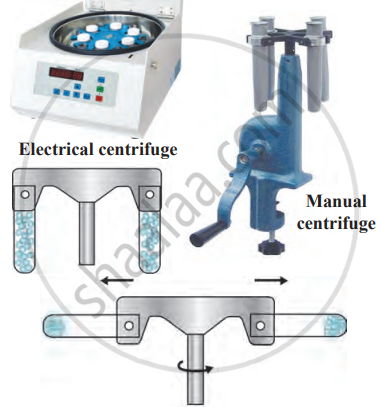
Centrifuge
The centrifugation is based on the size, shape, and density of the particles, the viscosity of the medium, and the speed of rotation. The principle is that the denser particles are forced to the bottom and the lighter particles stay at the top when spun rapidly. The apparatus used for centrifugation is called a centrifuge. This method is useful in case the suspended particles in a liquid are too small to be retained by filter paper.
Working:
- In a centrifuge machine, test tubes containing the mixture are placed at the rim of a rotating disc. When the disc spins at high speed, a force pushes the solid particles towards the bottom of the test tubes.
- This separates the solids from the liquid efficiently. For example, blood plasma can be separated from blood cells, and cream can be separated from milk using centrifugation.
- This method is useful for separating solid-liquid mixtures where regular filtration isn’t effective.
Principle and Applications of Centrifugation:
When a mixture is rotated very fast, the denser particles are forced to go to the bottom of the centrifuge and the lighter particles stay at the top.
Applications:
- Used in diagnostic laboratories for blood and urine tests.
- Used in dairy and home to separate butter from cream.
- Used in washing machines to squeeze out water from wet clothes.
Experiment
1. Aim: To separate cream from milk with the help of centrifugation
2. Requirements: Full-cream milk, test tube, centrifuging machine/milk churner
3. Principle: The components of a mixture may have different densities. When such a mixture is shaken vigorously, lighter particles separate from the rest and float on the surface.


4. Procedure
-
Take some full-cream milk in a test tube.
-
Centrifuge it by using a centrifuging machine for two minutes.
5. Observation: Skimmed milk is separated from cream, which floats at the top.
6. Inference/Result: The cream is lighter than the rest of the mixture. As a result, when we shake milk vigorously, it separates and starts floating on the surface.
Shaalaa.com | Separate cream from milk and oil from water
Related QuestionsVIEW ALL [9]
Related concepts
- Methods of Separation - Filtration Method
- Methods of Separation - Distillation Under Reduced Pressure (Vacuum Distillation)
- Methods of Separation - Gravitation Method
- Methods of Separation - Diffusion Method
- Methods of Separation - Liquefaction Method
- Methods of Separation - Separation of Constituents of the Mixtures with More than Two Constituent
- Methods of Separation - Churning Method
- Methods of Separation - Threshing Method
- Methods of Separation - Winnowing Method
- Methods of Separation - Handpicking Method
- Methods of Separation - Magnetic Separation Method
- Methods of Separation - Sedimentation Method
- Methods of Separation - Decantation Method
- Methods of Separation - Sieving Method
