Advertisements
Chapters
1: Rise of Christianity
▶ 2: Spread of Christianity
3: Birth of Prophet Muhammad and Rise of Islam
4: The Turkish Invasion and the Establishment of the Delhi Sultanate
5: Expansion of the Delhi Sultanate: The Khilji and the Tughlaq Dynasties
6: Life under the Delhi Sultanate
7: Rise of the Vijayanagar and Bahamani Kingdoms
8: Babur, Humayun and Sher Shah
9: Akbar
10: Jahangir, Shah Jahan and Aurangzeb
11: Bhakti and Sufi Movements
CIVICS
1: The Constitution and the Preamble
2: Directive Principles of State Policy
![Nootan solutions for History and Civics [English] Class 7 ICSE chapter 2 - Spread of Christianity - Shaalaa.com](/images/history-and-civics-english-class-7-icse_6:449c0cc50583472ea98264f320995894.jpg "Nootan solutions for History and Civics [English] Class 7 ICSE chapter 2 - Spread of Christianity")
Advertisements
Solutions for Chapter 2: Spread of Christianity
Below listed, you can find solutions for Chapter 2 of CISCE Nootan for History and Civics [English] Class 7 ICSE.
Nootan solutions for History and Civics [English] Class 7 ICSE 2 Spread of Christianity Tasks [Pages 24 - 26]
Fill in the blanks.
The attack by Goths, Balkans and Franks is also referred to as ______ invasion.
The monks lived away from people in ______.
The period between 5th and 8th centuries is also referred to as the ______.
The control of the holy city of Jerusalem went into the hands of ______.
Jerusalem was back in Christian hands in ______.
Choose the correct option.
Justinian I/Justin I stretched the Roman Empire to its greatest extent.
Choose the correct option.
The Church was the only/main source of authority in Medieval Europe.
Choose the correct option.
Monks lived in villages/monasteries.
Choose the correct option.
There were a total of 8/9 crusades.
Choose the correct option.
The first four crusades were called major/minor crusades.
Write true or false.
Collapse of the Roman Empire marked the end of the Middle Ages.
Write true or false.
Barbarians were called crusaders.
Write true or false.
Nuns could only marry monks.
Write true or false.
Monasteries tended to the sick and wounded people.
Write true or false.
Churches were centres for art, learning and science.
Define the following.
Renaissance
Define the following.
Barbarian
Define the following.
Nuns
Define the following.
Monks
Answer the following question in brief (40–50 words).
Write a short note on crusades.
Answer the following question in brief (40–50 words).
What role did monasteries play in politics
Answer the following question in brief (40–50 words).
How did monks spend their day?
Answer the following question in brief (40–50 words).
What do you know about the Eastern Empire?
Answer the following question in brief (40–50 words).
What is the ‘Dark Age’?
Answer the following question in brief (40–50 words).
How did the Church become more powerful?
Write in detail.
What was the impact of crusades on Europe?
Write in detail.
Write a note on monasteries.
Write in detail.
What happened in Europe in the Middle Ages?
Picture-based Questions
Look at the picture given below and answer the following questions.
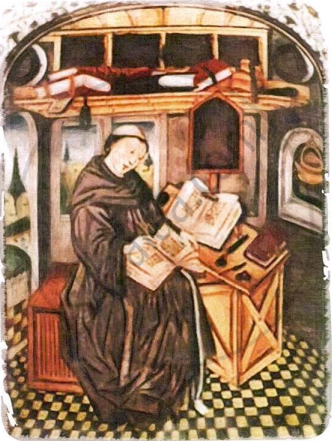
- What is this person doing?
- What is he called?
- Where did this person live?
Identify the image.
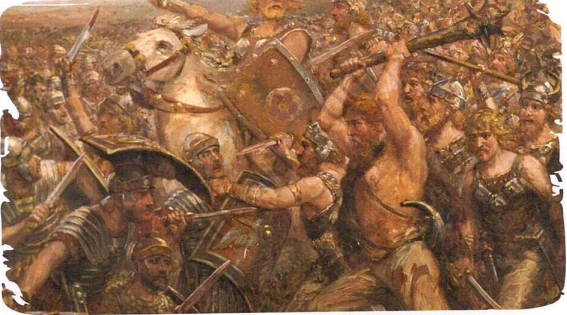
- Who is being depicted here?
- What part of Europe did they overtake?
- Which important European city was completely overtaken by them?
Case study
What did monks do in monasteries?
|
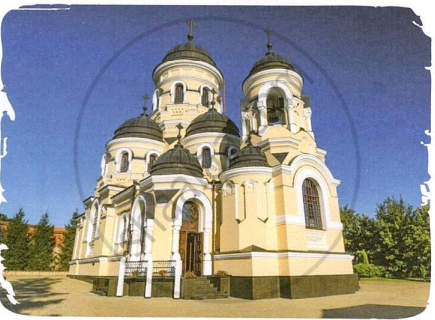
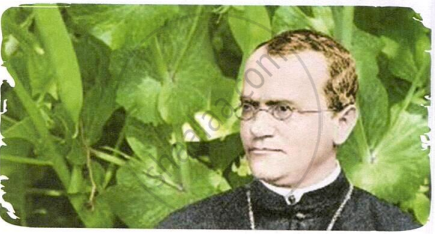
You learned in the chapter that monasteries became centres of science and learning. Here is an example of it. Gregor Mendel (1822-1884) was a monk in Augustinian Abbey of St Thomas in Brno, Moravia region (within the modern Czech Republic) where he worked as a teacher. In his spare time, Mendel experimented on pea plants and noted down the changes. He concluded that genes come in pairs and are inherited as distinct units, one from each parent. He tracked the segregation of parental genes and their appearance in the offspring as dominant or recessive traits. He recognised the mathematical patterns of inheritance from one generation to the next. It took eight years for Mendel to complete the genetic experiments. During this period, he grew more than 10,000 pea plants, keeping track of progeny number and type. Mendel published his results in 1865. He is known as ‘Father of Genetics’. |
Project work
Find out interesting facts about Jerusalem and write them on a chart paper.
Solutions for 2: Spread of Christianity
Nootan solutions for History and Civics [English] Class 7 ICSE chapter 2 - Spread of Christianity
Shaalaa.com has the CISCE Mathematics History and Civics [English] Class 7 ICSE CISCE solutions in a manner that help students grasp basic concepts better and faster. The detailed, step-by-step solutions will help you understand the concepts better and clarify any confusion. Nootan solutions for Mathematics History and Civics [English] Class 7 ICSE CISCE 2 (Spread of Christianity) include all questions with answers and detailed explanations. This will clear students' doubts about questions and improve their application skills while preparing for board exams.
Further, we at Shaalaa.com provide such solutions so students can prepare for written exams. Nootan textbook solutions can be a core help for self-study and provide excellent self-help guidance for students.
Concepts covered in History and Civics [English] Class 7 ICSE chapter 2 Spread of Christianity are .
Using Nootan History and Civics [English] Class 7 ICSE solutions Spread of Christianity exercise by students is an easy way to prepare for the exams, as they involve solutions arranged chapter-wise and also page-wise. The questions involved in Nootan Solutions are essential questions that can be asked in the final exam. Maximum CISCE History and Civics [English] Class 7 ICSE students prefer Nootan Textbook Solutions to score more in exams.
Get the free view of Chapter 2, Spread of Christianity History and Civics [English] Class 7 ICSE additional questions for Mathematics History and Civics [English] Class 7 ICSE CISCE, and you can use Shaalaa.com to keep it handy for your exam preparation.
