Advertisements
Advertisements
Imagine that a 10 × 10 grid has value 300 and that this value is divided evenly among the small squares. In other words, each small square is worth 3. Use a new grid for each part of this problem, and label each grid “Value: 300.”
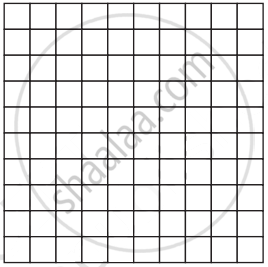
- Shade 25% of the grid. What is 25% of 300? Compare the two answers.
- What is the value of 25 squares?
- Shade 17% of the grid. What is 17% of 300? Compare the two answers
- What is the value of `1/10` of the grid?
- Express `1/6` as a percent.
Concept: undefined >> undefined
Sachin and Sanjana are calculating 23% of 800.
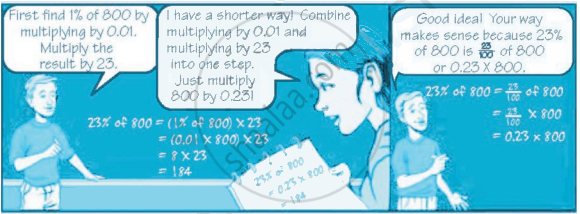
Now calculate 52% of 700 using both the ways described above. Which way do you find easier?
Concept: undefined >> undefined
Advertisements
What per cent of 1 hour is 30 minutes?
Concept: undefined >> undefined
What per cent of 1 day is 1 minute?
Concept: undefined >> undefined
What per cent of 1 km is 1000 metres?
Concept: undefined >> undefined
Find out 8% of 25 kg.
Concept: undefined >> undefined
What percent of ₹ 80 is ₹ 100?
Concept: undefined >> undefined
800 kg of mortar consists of 55% sand, 33% cement and rest lime. What is the mass of lime in mortar?
Concept: undefined >> undefined
A man travelled 60 km by car and 240 km by train. Find what per cent of total journey did he travel by car and what per cent by train?
Concept: undefined >> undefined
In an examination, there are three papers each of 100 marks. A candidate obtained 53 marks in the first and 75 marks in the second paper. How many marks must the candidate obtain in the third paper to get an overall of 70 per cent marks?
Concept: undefined >> undefined
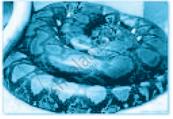
The king cobra can reach a length of 558 cm. This is only about 60 per cent of the length of the largest reticulated python. Find the length of the largest reticulated python.
Concept: undefined >> undefined
Given below is a Mathematical term.
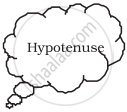
Find the percentage of consonants in the term.
Concept: undefined >> undefined
Nancy obtained 426 marks out of 600 and the marks obtained by Rohit are 560 out of 800. Whose performance is better?
Concept: undefined >> undefined
Ambika got 99 per cent marks in Mathematics, 76 per cent marks in Hindi, 61 per cent in English, 84 per cent in Science, and 95% in Social Science. If each subject carries 100 marks, then find the percentage of marks obtained by Ambika in the aggregate of all the subjects.
Concept: undefined >> undefined
In a debate competition, the judges decide that 20 per cent of the total marks would be given for accent and presentation. 60 per cent of the rest are reserved for the subject matter and the rest are for rebuttal. If this means 8 marks for rebuttal, then find the total marks.
Concept: undefined >> undefined
When you design your healthy diet, you want to make sure that you meet the dietary requirements to help you grow into a healthy adult. As you plan your menu, follow the following guidelines
- Calculate your ideal weight as per your height from the table given at the end of this question.
- An active child should eat around 55.11 calories for each kilogram desired weight.
- 55 per cent of calories should come from carbohydrates. There are 4 calories in each gram of carbohydrates.
- 15 per cent of your calories should come from proteins. There are 4 calories in each gram of proteins.
- 30 per cent of your calories may come from fats. There are 9 calories in each gram of fat.
Following is an example to design your own healthy diet.
Example
- Ideal weight = 40 kg.
- The number of calories needed = 40 × 55.11 = 2204.4
- Calories that should come from carbohydrates = 2204.4 × 0.55 = 1212.42 calories.
Therefore, required quantity of carbohydrates = `1212.42/4` = 303.105 g = 300 g. (approx) - Calories that should come from proteins = 2204.4 × 0.15 = 330.66 calories.
Therefore, required quantity of protein = `330.66/4` g = 82.66 g. - Calories that may come from fat = 2204.4 × 0.3 = 661.3 calories.
Therefore, required quantity of fat = `661.3/9` g = 73.47 g.
Answer the Given Questions
- Your ideal desired weight is ______ kg.
- The quantity of calories you need to eat is ______.
- The quantity of protein needed is ______ g.
- The quantity of fat required is ______ g.
- The quantity of carbohydrates required is ______ g.
| Ideal Height and Weight Proportion | |||||
| Men | Women | ||||
| Height | Weight | Height | Weight | ||
| Feet | cm | Kilograms | Feet | cm | Kilograms |
| 5’ | 152 | 48 | 4’7” | 140 | 34 |
| 5’1” | 155 | 51 | 4’8” | 142 | 36 |
| 5’2” | 157 | 54 | 4’9” | 145 | 39 |
| 5’3” | 160 | 56 | 4’1” | 147 | 41 |
| 5’4” | 163 | 59 | 4’11” | 150 | 43 |
| 5’5” | 165 | 62 | 5’ | 152 | 45 |
| 5’6” | 168 | 65 | 5’1” | 155 | 48 |
| 5’7” | 170 | 67 | 5’2” | 157 | 50 |
| 5’8” | 173 | 70 | 5’3” | 160 | 52 |
| 5’9” | 175 | 73 | 5’4” | 163 | 55 |
| 5’10” | 178 | 75 | 5’5” | 165 | 57 |
| 5’11” | 180 | 78 | 5’6” | 168 | 59 |
| 6’ | 183 | 81 | 5’7” | 170 | 61 |
| 6’1” | 185 | 84 | 5’8” | 173 | 64 |
| 6’2” | 188 | 86 | 5’9” | 175 | 66 |
| 6’3” | 191 | 89 | 5’10” | 178 | 68 |
| 6’4” | 193 | 92 | 5’11” | 180 | 70 |
Concept: undefined >> undefined
The pieces of Tangrams have been rearranged to make the given shape.
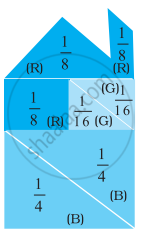
By observing the given shape, answer the following questions:
- What percentage of total has been coloured?
- Red (R) = ______
- Blue (B) = ______
- Green (G) = ______
- Check that the sum of all the percentages calculated above should be 100.
- If we rearrange the same pieces to form some other shape, will the percentage of colours change?
Concept: undefined >> undefined
