Please select a subject first
Advertisements
Advertisements
Find the value of:
2 × 3 × 4 ÷ 20 × 30 × 40
Concept: undefined >> undefined
Find the value of:
(80 – 20) × (80 + 20)
Concept: undefined >> undefined
Advertisements
When a torch is pointed towards one of the vertical edges of a cube, you get a shadow of cube in the shape of ______.
Concept: undefined >> undefined
Which of the following 3-dimensional figures has the top, side and front as triangles?
Concept: undefined >> undefined
We can draw exactly one triangle whose angles are 70°, 30° and 80°.
Concept: undefined >> undefined
Triangle with length of sides as 5 cm, 6 cm and 11 cm can be constructed.
Concept: undefined >> undefined
Draw the top, side and front views of the solids given below in the figure:
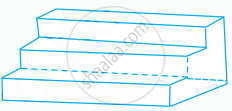
Concept: undefined >> undefined
Draw the top, side and front views of the solids given below in the figure:
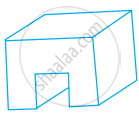
Concept: undefined >> undefined
Draw an isometric view of a cuboid 6 cm × 4 cm × 2 cm.
Concept: undefined >> undefined
Find the number of cubes in the following figure and give the top, front, left side and right side view (arrow indicating the front view).
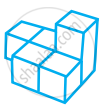
Concept: undefined >> undefined
Find the number of cubes in the following figure and give the top, front, left side and right side view (arrow indicating the front view).
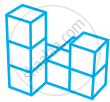
Concept: undefined >> undefined
Find the number of cubes in the following figure and give the top, front, left side and right side view (arrow indicating the front view).
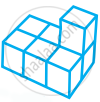
Concept: undefined >> undefined
Find the number of cubes in the following figure and give the top, front, left side and right side view (arrow indicating the front view).
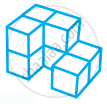
Concept: undefined >> undefined
Find the number of cubes in the following figure and give the top, front, left side and right side view (arrow indicating the front view).
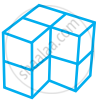
Concept: undefined >> undefined
Find the number of cubes in the following figure and give the top, front, left side and right side view (arrow indicating the front view).
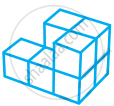
Concept: undefined >> undefined
Find the number of cubes in the following figure and give the top, front, left side and right side view (arrow indicating the front view).

Concept: undefined >> undefined
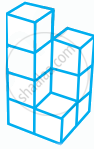
Find the number of cubes in the following figure and give the top, front, left side and right side view (arrow indicating the front view).
Concept: undefined >> undefined
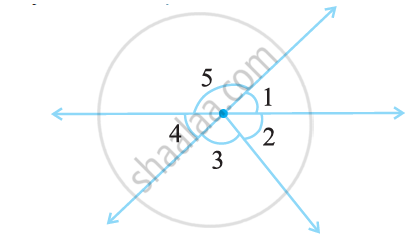
Indicate which pairs of angles are: Linear pairs.
Concept: undefined >> undefined
Fill in the blanks:
Two angles forming a linear pair are ______
Concept: undefined >> undefined
In the adjoining figure, name the following pairs of angles.
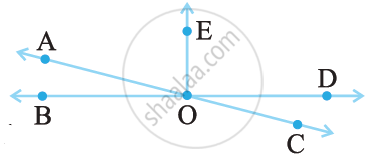
- Obtuse vertically opposite angles
- Adjacent complementary angles
- Equal supplementary angles
- Unequal supplementary angles
- Adjacent angles that do not form a linear pair
Concept: undefined >> undefined
