Please select a subject first
Advertisements
Advertisements
When Anandpur Sahib Resolution was passed?
Concept: undefined >> undefined
Which two states were created in 1966?
Concept: undefined >> undefined
Advertisements
What was another name of the Rajiv Gandhi-Longowal Accord?
Concept: undefined >> undefined
Master Tara Singh was a leader of:
Concept: undefined >> undefined
In which year was Janata Dal formed?
Concept: undefined >> undefined
Study the following diagram and answer accordingly.

What event officially marked the end of communism in the Soviet Union?
Concept: undefined >> undefined
Study the following diagram and answer accordingly.
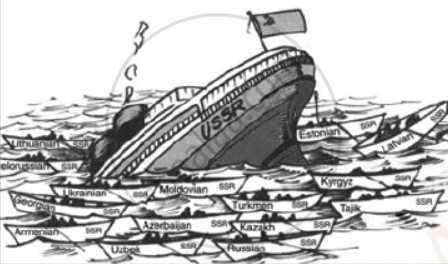
How was the collapse of the USSR seen by the West?
Concept: undefined >> undefined
In the mid–1970s, there was a renewal of the women’s movement in India which was called the second phase of the Indian women’s movement. There was the growth of what is termed as the autonomous women’s movements.
How can these movements be called autonomous?
Concept: undefined >> undefined
‘In recent years India has paid adequate attention to ASEAN’. Give two points to justify the statement.
Concept: undefined >> undefined
Name the leader who led a peoples’ march to Parliament in 1975 and state as to what was unique about this march.
Concept: undefined >> undefined
Compare the European Union with ASEAN.
Concept: undefined >> undefined
In the mid–1970s, there was a renewal of the women’s movement in India which was called the second phase of the Indian women’s movement. There was the growth of what is termed as the autonomous women’s movements.
Write about any one ideological change that was noticed in the autonomous women’s movement.
Concept: undefined >> undefined
Name the Soviet leader who faced a coup in the year 1991.
Concept: undefined >> undefined
Select one of the most appropriate statements for the ‘ASEAN WAY’ - ______
Concept: undefined >> undefined
Evaluate the balance of power as a significant component of traditional security policy.
Concept: undefined >> undefined
How far did the Rajiv Gandhi-Longowal Accord succeed in bringing normalcy to Punjab?
Concept: undefined >> undefined
Read the passage given below and answer the questions that follow:
| After the end of the bipolar structure of world politics in the early 1990s, it became clear that alternative centres of political and economic power could limit America’s dominance. Thus, European Union and ASEAN emerged as forces to reckon with. BRICS has also emerged as a new centre of power on the world stage. The term BRICS refers to Brazil, Russia, India, and South Africa. The key objectives of BRICS are primarily to cooperate and distribute mutual economic benefits among its members besides non-interference in the internal policies of each nation and mutual equality. The 11th Conference of BRICS concluded in Brazil in 2019. |
- Name the political leader who chaired the 11th Conference of BRICS.
- Leonid Brezhnev
- Jair Bolsonaro
- Deodoro da Fonseca
- Jacob Zuma
- Which of the following statements about BRICS is correct?
- BRICS was founded to promote the welfare of the people of South Asia and to improve their quality of life.
- BRICS countries respect mutual equality.
- BRICS was established to create a free Trade Agreement (FTA) for investment, labour and services.
- The headquarters of the BRICS are in Kathmandu (Nepal).
- BRIC turned into BRICS after the inclusion of South Africa in its first meeting in the year ______.
- 2019
- 2009
- 2010
- 2011
- BRICS was founded in 2006 in ______.
- Brazil
- India
- Russia
- China
Concept: undefined >> undefined
Give an analysis of the cultural and political consequences of globalization.
Concept: undefined >> undefined
Explain the term 'ASEAN WAY'.
Concept: undefined >> undefined
The objective of ASEAN is not restricted only to accelerating economic growth. Explain the statement.
Concept: undefined >> undefined
