Advertisements
Advertisements
Indicate the steps in the preparation of KMnO4 from pyrolusite ore.
Concept: undefined >> undefined
The hexaquo manganese(II) ion contains five unpaired electrons, while the hexacyanoion contains only one unpaired electron. Explain using Crystal Field Theory.
Concept: undefined >> undefined
Advertisements
Draw figure to show the splitting of d orbitals in an octahedral crystal field.
Concept: undefined >> undefined
How does the magnitude of Δo decide the actual configuration of d orbitals in a coordination entity?
Concept: undefined >> undefined
What are the monomeric repeating units of Nylon-6 and Nylon-6, 6?
Concept: undefined >> undefined
What is a biodegradable polymer? Give an example of a biodegradable aliphatic polyester.
Concept: undefined >> undefined
The melting points and solubility in water of amino acids are generally higher than those of the corresponding halo acids. Explain.
Concept: undefined >> undefined
What are non-essential amino acids? Give two examples.
Concept: undefined >> undefined
Account for the following:
Although the amino group is o, p-directing in aromatic electrophilic substitution reactions, aniline on nitration gives a substantial amount of m-nitroaniline.
Concept: undefined >> undefined
Give the IUPAC name of the following compound:
PhCH2CH2COOH
Concept: undefined >> undefined
Give the IUPAC name of the following compound:
(CH3)2C=CHCOOH
Concept: undefined >> undefined
Give the IUPAC name of the following compound:

Concept: undefined >> undefined
Give the IUPAC name of the following compound:
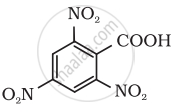
Concept: undefined >> undefined
How the following conversion can be carried out?
Benzene to 4-bromonitrobenzene
Concept: undefined >> undefined
Complete the following reactions: C2H4 + O2 →
Concept: undefined >> undefined
Complete the following reactions: 4Al + 3O2 →
Concept: undefined >> undefined
Why is dioxygen a gas but sulphur a solid?
Concept: undefined >> undefined
Why do noble gases have comparatively large atomic sizes?
Concept: undefined >> undefined
Write the formula of an oxo-anion of Manganese (Mn) in which it shows the oxidation state equal to its group number.
Concept: undefined >> undefined
