Advertisements
Advertisements
Assertion (A): Human capital is not traded in the market; however its services are traded.
Reason (R): Human capital is intangible in nature.
Concept: Human Capital and Human Development
Benefits of physical capital accrue only to private entities, whereas human capital provides private as well as ______ benefits.
Concept: Sources of Human Capital
"Serious concerns over the climate change is taking over the attention of the world."
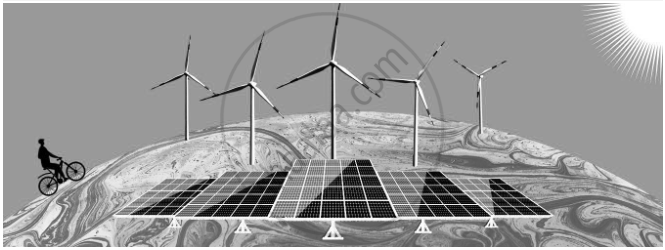
In the light of the above statement and image, discuss any two strategies to tackle this global concern of Environmental degradation.
Concept: Strategies for Sustainable Development
"Active Government intervention is essential in education and health sectors in India."
Do you agree with the given statement? Give reasons in support of your answer.
Concept: Human Capital and Human Development
"Expenditure on On-the-job training is an important means of human capital formation in an economy."
Give valid reasons to justify the given statement.
Concept: Sources of Human Capital
“Organic Farming is the need of the hour to promote sustainable development but, has its own limitations.”
Elaborate any two advantages and limitations each of organic farming in the light of the above statement.
Concept: Sustainable Development and Organic Farming
‘Kavya works on her family farm and is neither paid in cash nor in the form of grains.’
Can she be categorized as a worker? Give valid reasons in support of your answer.
Concept: Self-employed and Hired Workers
Define Worker Population Ratio. Discuss its usefulness.
Concept: Participation of People in Employment
“In the late 1990's India experienced a widening gap between the growth of GDP and employment generation”. Discuss.
Concept: Growth and Changing Structure of Employment
‘Mr. Rishi, after completing his education, has joined his family business but his marginal productivity is zero.'
Comment upon the employment status of Mr. Rishi. Give valid reasons in support of your answer.
Concept: Employment in Firms, Factories and Offices
‘Money is an asset which can be stored for use in future.
In the light of given statement, identify the function of money.
Concept: Functions of Money
______ is the apex institution which plans and evaluates policies related to rural credit needs.
Concept: Credit and Marketing in Rural Areas
Identify, which of the following are associated with the problem of human capital formation in India?
- Brain drain
- Low academic standards
- Rising population
- Changes in social outlook
Concept: Sources of Human Capital
Identify, which of the following is the correct formula for calculating ‘Worker-Population Ratio’?
Concept: Participation of People in Employment
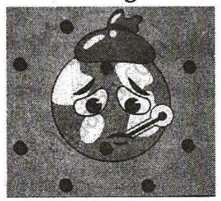
Interpret the situation of earth as depicted in the given picture, with reference to current environmental challenges:
Concept: State of India’s Environment
State with valid reason whether the following statement is true or false:
“Higher productivity and production are the outcome of investment in human resources.”
Concept: Sources of Human Capital
State the meaning of organic farming. Discuss how does it help in promoting sustainable development.
Concept: Sustainable Development and Organic Farming
State with valid reason whether the following statement is true or false:
Rising population is not the cause for quality of human capital formation.
Concept: State of Human Capital Formation in India
Explain the concepts of Opportunity Cost and Marginal Rate of Transformation using a production possibility schedule based on the assumption that no resource is equally efficient in production of all goods.
Concept: Opportunity Cost
When the Average Product (AP) is maximum, the Marginal Product (MP) is: (Choose the correct alternative)
(a) Equal to AP
(b) Less than AP
(c) More than AP
(d) Can be any one of the above
Concept: Average and Marginal Physical Products
