Advertisements
Advertisements
Question
You know that many poems have rhyming words or rhymes at the end of the lines in each stanza. The pattern of rhyming is usually shown with the help of small letters such as ‘a’, ‘b’, ‘c’, etc. This pattern of rhyme is known as the rhyme scheme. The rhyme scheme of each stanza in this poem is aabb. Verify.
Advertisements
Solution
The rhyme pattern for each stanza in this poem is 'aabb', as the beginning and last lines end with words that rhyme. They are:
Stanza 1 = light - night, free - sea
Stanza 2 = call - all, drives - lives
Stanza 3 = grove - love, glee - sea
APPEARS IN
RELATED QUESTIONS
How many stanzas are there in the poem?
List the rhyming words in each stanza.
Write as many words as you can, related to the following. You should have at least twenty words. You may refer to your geography textbook or other sources for that purpose. Then try to find English words/items for the ones you have written.
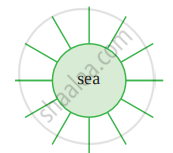
Guess the meaning of wakening skies.
Guess the meaning of catamarans.
Prepare a bilingual glossary for this topic.
wind
Prepare a bilingual glossary for this topic.
Sky
Arrange the glossary in way:
According to the alphabetical order of letters in your mother tongue.
In what way can a bilingual glossary be useful?
As the seagull flies away calling, it appears as though he is showing the way- What does the way lead to?
Arrange the glossary in ways:
According to the alphabetical order ‘a-z’.
What do the following expression refer to? Write in a word or phrase.
leaping wealth of the tide
What do the following expression refer to? Write in a word or phrase.
The edge of the verge
Find and write the line in the poem that refer to -
early morning
Find and write the line in the poem that refer to -
Evening
Write the lines that show that the fishermen are not afraid of the sea or of drowning.
In the last stanza, two lines refer to landscapes, and two lines refer to a ‘seascape’. Which are they? Copy them from the poem correctly.
| Landscape | Seascape |
Using the internet, find photographs/pictures of landscapes/seascapes to illustrate the images used in the poem.
Select a few lines from your favourite nature poem in your mother tongue and translate them into English.
- What time do you get up in the morning?
- What time do you go to bed?
- Where do you spend your holidays ?
- What adventures do you like - boating, trekking, scuba diving, mountaineering or something else ?
- After you finish your education, would you like to work close to nature? What would you like to do?
