Advertisements
Advertisements
Question
Why is zona pellucid retained around the egg till it reaches the uterus?
Advertisements
Solution
Zona pellucida prevents the implantation of the blastocyst at an abnormal site such as a fallopian tube and it keeps trophoblast cells unexposed till it reaches the uterus. Hence, zona pellucida is retained around the egg until it reaches the uterus.
APPEARS IN
RELATED QUESTIONS
Choose the correct answer:
Cervix is a part of ________________
Give Technical Term:
What term is used for the arrest of reproductive capacity in females?
______ pollen mother cells should undergo meiotic division to produce 64 pollen grains.
Identify the distal narrow part of the duct opening into the uterus.
To produce 400 seeds, the number of meiotic divisions required will be ______
To answer the question, study the graphs below for Subjects 1 and 2 showing different levels of certain hormones.
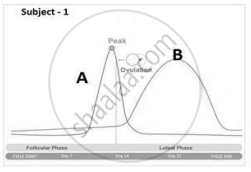
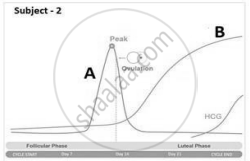
For subject 2 it is observed that the peak for hormone B has reached the plateau stage. After approximately how much time will the curve for hormone B descend?
Mother gives birth to a baby but the baby has characters of both parents. How is this possible?
Give reason:
Uterine lining becomes thick and spongy after fertilisation.
The vaginal orifice is covered by a fold of membrane called hymen ______.
The ______ is also called the womb.
