Advertisements
Advertisements
Question
AI. Who said to whom
(i) "Is he going to live, sir?"
(ii) "______ the struggle is too hard at the end ______.”
The doctor said to himself, "If my word can save his life, he shall not die.
The will be damned." He called, "Gopal, listen." This was the first time he was going to do a piece of acting before a patient, simulate a feeling and conceal his Judgement. He stooped over the patient and said, with deliberate emphasis, "Don't worry about the will now. You are going to live. Your heart is absolutely sound."
A new glow suffused the patient's face as he heard it. Be asked in a tone of relief,
"Do you say so? If it comes from your lips it must be true............ . "
The doctor said, "Quite right. You are improving ever second. Sleep in peace. You must not exert yourself on any account. You must sleep very soundly.
I will see you in the morning." The patient looked at him gratefully for a moment and then closed his eyes. The doctor picked up his bag and went out, shutting the door softly behind him.
On his way home he stopped for a moment at his hospital, called out his assistant and said, "That Lawley Extension case. You might expect the collapse any second now. Go there with a tube of .....................................'in hand, and give it in case the struggle is too hard at the end. Hurry up.”
Next morning he was back at Lawley Extension at ten. From his car he made a dash for the sick bed. The patient was awake and looked very well. The assistant reported satisfactory pulse. The doctor put his tube to his heart, listened for a while and told the sick man's wife, "Don't look so unhappy, lady. Your husband will live to be a ninety.’’ When they were going back to the hospital, the assistant sitting beside him in the car asked, "Is he going to live, sir?"
"I will bet on it. He will live to be ninety. He has turned at corner. How he has survived this attack will be a puzzle to me all my life," replied the doctor.
A2. Web
Complete the web:

A3. Personal Response
What is your opinion about the doctor and his behaviour?
Advertisements
Solution
A1.
(i) The following question was asked by the assistant to the doctor.
(ii) The doctor said the following words to his assistant.
A2.

A3. The doctor was kind hearted and extremely dedicated to his profession. He was willing to go out of his way to aid his patients. He was supportive and gave Gopal a reason to hope for the better. His patients relied on his word on account of his dedication and hard work.
APPEARS IN
RELATED QUESTIONS
Q1 Read the following passage and answer the questions that follow:
1. Too many parents these days can't say no, As a result, they find themselves raising 'children' who respond greedily to the advertisements aimed right at them. Even getting what they want doesn't satisfy some kids; they only want more. Now, a growing number of psychologists, educators, and parents think it's time to stop the madness and start teaching kids about what's really important: values like hard work, contentment, honesty, and compassion. The struggle to set limits has never been tougher ‒ and the stakes have never been higher. One recent study of adults who were overindulged as children paints a discouraging picture of their future: when given too much too soon, they grow up to be adults who have difficulty coping with life's disappointments. They also have a distorted sense of entitlement that gets in the way of success in the workplace and in relationships.
2. Psychologists say that parents who overindulge their kids set them up to be more vulnerable to future anxiety and depression. Today's parents themselves raised on values of thrift and self-sacrifice, grew up in a culture where no was a household word. Today's kids want much more, partly because there is so much more to want. The oldest members of this generation were born in the late 1980s, just as PCs and video games were making their assault on the family room. They think of MP3 players and flat-screen TV as essential utilities, and they have developed strategies to get them. One survey of teenagers found that when they crave something new, most expect to ask nine times before their parents give in. By every measure, parents are shelling out record amounts. In the heat of this buying blitz, even parents who desperately need to say no find themselves reaching for their credit cards.
3. Today's parents aren't equipped to deal with the problem. Many of them, raised in the 1960s and '70s, swore they'd act differently from their parents and have closer relationships with their own children. Many even wear the same designer clothes as their kids and listen to the same music. And they work more hours; at the end of a long week, it's tempting to buy peace with 'yes' and not mar precious family time with conflict. Anxiety about the future is another factor. How do well-intentioned parents say no to all the sports gear and arts and language lessons they believe will help their kids thrive in an increasingly competitive world? Experts agree: too much love won't spoil a child. Too few limits will.
4. What parents need to find, is a balance between the advantages of an affluent society and the critical life lessons that come from waiting, saving, and working hard to achieve goals. That search for balance has to start early. Children need limits on their behaviour because they feel better and more secure when they live within a secure structure. Older children learn self-control by watching how others, especially parents act. Learning how to overcome challenges is essential to becoming a successful adult. Few parents ask kids to do chores. They think their kids are already overburdened by social and academic pressures. Every individual can be of service to others, and life has meaning beyond one's own immediate happiness. That means parents eager to teach values have to take a long, hard look at their own.
(a) Answer the following:
- What values do parents and teachers want children to learn?
- What are the results of giving the children too much too soon?
- Why do today's children want more?
- What is the balance which the parents need to have in today's world?
- What is the necessity to set limits for children?
(b) Pick out words from the passage that mean the same as the following:
- a feeling of satisfaction (para 1)
- valuable (para 3)
- important (para 4)
Read the passage given below :
1. When you grow up in a place where it rains five months a year, wise elders help you to get acquainted with the rain early. They teach you that it is ignorant to think that it is the same rain falling every day. Oh no, the rain is always doing different things at different times. There is rain that is gentle, and there is also rain that falls too hard and damages the crops. Hence, the prayer for the sweet rain that helps the crops to grow.
2. The monsoon in the Naga hills goes by the native name, khuthotei (which means the rice-growing season). It lasts from May to early or mid-October. The local residents firmly believe that Durga Puja in October announces the end of rain. After that, one might expect a couple of short winter showers, and the spring showers in March and April. Finally, comes the "big rain" in May; proper rainstorms accompanied by heart-stopping lightning and ear-splitting thunder. I have stood out in storms looking at lightning are across dark skies, a light-and-sound show that can go on for hours.
3. This is the season when people use the word sezuo or süzu to refer to the week-long rains, when clothes don't dry and smell of mould, when fungus forms on the floor and when you can't see the moon or the stars because of the rainclouds. But you learn not to complain. Rain, after all, is the farmer's friend and brings food to the table. Rituals and festivals centre around the agricultural rhythm of life, which is the occupation of about 70 percent of the population.
4. The wise learn to understand its ways. I grew up hearing my grandfather say. "It's very windy this year. We'll get good rain." If the windy season was short and weak, he worried there might not be enough rain for the crops. I learned the interconnectedness of the seasons from childhood, and marvelled at how the wind could bring rain. Another evening, many rainy seasons ago, my paternal aunt observed the new moon and worried, "Its legs are in the air, we're in for some heavy rain." She was right. That week, a storm cut off power lines and brought down trees and bamboos.
5. Eskimos boast of having a hundred names for snow. Norwegians in the north can describe all kinds of snow by an equal amount of names : pudder, powder snow, wet snow, slaps, extra wet snow, tight snowfall, dry snow, and at least 95 more categories of snow. Likewise, in India we have names and names for rain. Some are common, some are passing into history.
6. The rains are also called after flowering plants and people believe that the blossoming of those plants draws out rain. Once the monsoons set in, field work is carried out in earnest and the work of uprooting and transplanting paddy in flooded terrace fields is done. The months of hard labour are June, July and August. In August, as the phrogü plant begins to bloom, a rain will fall. this August rain, also called phrogü, is a sign that the time for cultivation is over. If any new grain seeds are sown, they may not sprout; even if they do sprout, they are not likely to bear grain. The rain acts as a kind of farmer's almanac.
7. The urban population of school-goers and office-goers naturally dislikes the monsoon and its accompanying problems of landslides, muddy streets and periodic infections. For non-farmers, the month of September can be depressing, when the rainfall is incessant and the awareness persists that the monsoons will last out till October. One needs to have the heart of a farmer to remain grateful for the watery days, and be able to observe – from what seems to the inexperienced as a continuous downpour – the many kinds of rain. Some of the commonly known rain-weeks are named after the plants that alternately bloom in August and September. The native belief is that the flowers draw out the rain.
8. Each rain period has a job to fulfil : October rain helps garlic bulbs to form, while kümünyo rain helps the rice bear grain. Without it, the ears of rice cannot form properly. End October is the most beautiful month in the Naga hills, as the fields turn gold and wild sunflowers bloom over the slopes, all heralding the harvest. Prayers go up for protecting the fields from storms, and the rains to retreat because the grain needs to stand in the sun and ripen. The cycle nears completion a few weeks before the harvest, and the rain does retreat so thoroughly from the reaped furrows that the earth quickly turns hard. The months of rain become a distant memory until it starts all over again.
On the basis of your understanding of the above passage, complete the statements given below with the help of options that follow:
a) The rains are called after flowering plants because
(ii) flowers grow in the rainy season.
(iii) it is believed that the plants bring the rain.
(iv) flowers grow all the year round.
b) The rain is like a calendar for farmers because
(ii) it tells them the birthdays of their children.
(iii) each month has a time for plantation.
(iv) different kinds of rain tell different things.
c) People who live in cities don't like rain because
(ii) they are not bothered about the farmers.
(iii) they don't like the plants that grow during the rain.
(iv) going shopping becomes difficult.
d) People pray asking the rain the retreat because
(ii) children don't get a chance to play.
(iii) the crops need the sun and heat to ripen.
(iv) they like to pray.
Answer the following questions briefly:
e) Why do the elders want you to understand the rains in the Naga hills?
f) What does Durga Puja mean to the farmers of the Naga hills?
g) What kind of rain is called sezuo?
h) What is the occupation of more than half the population of the Naga hills?
i) How is the heart of the farmer different from that of the city person?
j) When does rain becomes a memory in the minds of the of the Naga hills?
k) Find words from the passage which mean the same as the following:
(ii) nonstop (para 7)
Read the passage given below:
People tend to amass possessions, sometimes without being aware of doing so. They can have a delightful surprise when they find something useful which they did not know they owned. Those who never have to change house become indiscriminate collectors of what can only be described as clutter. They leave unwanted objects in drawers, cupboards, and attics for years in the belief that they may one day need them. Old people also accumulate belongings for two other reasons, lack of physical and mental energy, and sentiment. Things owned for a long time are full of associations with the past, perhaps with the relatives who are dead, and so they gradually acquire a sentimental value.
Some things are collected deliberately in an attempt to avoid wastage. Among these are string and brown paper, kept by thrifty people when a parcel has been opened. Collecting small items can be mania. A lady cuts out from newspaper sketches of model clothes that she would like to buy if she had money. As she is not rich, the chances are that she will never be able to afford such purchases. It is a harmless habit, but it litters up her desk.
Collecting as a serious hobby is quite different and has many advantages. It provides relaxation for leisure hours, as just looking at one’s treasure is always a joy. One doesn’t have to go out for amusement as the collection is housed at home. Whatever it consists of - stamps, records, first editions of books, china – there is always something to do in connection with it, from finding the right place for the latest addition to verifying facts in reference books. This hobby educates one not only in the chosen subject but also in general matters which have some bearing on it.
There are other benefits also. One gets to meet like-minded collectors to get advice, compare notes, exchange articles, to show off one’s latest find. So one’s circle of friends grows. Soon the hobby leads to traveling, perhaps a meeting in another town, possibly a trip abroad in search of a rare specimen, for collectors are not confined to one country. Over the years one may well become an authority on one’s hobby and will probably be asked to give informal talks to little gatherings and then, if successful, to larger audiences.
(a) On the basis of your understanding of the above passage make notes on it using headings and sub-headings. Use recognizable abbreviations (wherever necessary-minimum four) and a format you consider suitable. Also, supply an appropriate title to it.
(b) Write a summary of the passage in about 80 words.
Read the following extract and answer the questions given below.
| A | B |
| (i) valedictorian | (a) feeling of annoyance |
| (ii) frustration | (b) dunce |
| (c) school topper | |
|
(d) validity
|
Read the passage given below and answer the questions that follow:
| 1. | A fisherman, enfeebled with age, could no longer go out to sea so he began fishing in the river. Every morning he would go down to the river and sit there fishing the whole day long. In the evening he would sell whatever he had caught, buy food for himself and go home. It was a hard life for an old man. One hot afternoon while he was trying to keep awake and bemoaning his fate, a large bird with silvery feathers alighted on a rock near him. It was Kaha, the heavenly bird. “Have you no one to care for you, grandpa?” asked the bird. “Not a soul.” “You should not be doing such work at your age,” said the bird. “From now on I will bring you a big fish every evening. You can sell it and live in comfort.” True to her word, the bird began to drop a large fish at his doorstep every evening. All that the fisherman had to do was take it to the market and sell it. As big fish were in great demand, he was soon rolling in money. He bought a cottage near the sea, with a garden around it and engaged a servant to cook for him. His wife had died some years earlier. He had decided to marry again and began to look for a suitable woman. |
| 2. | One day he heard the royal courtier make an announcement. Our king has news of a great bird called Kaha,” said the courtier. “Whoever can give information about this bird and help catch it, will be rewarded with half the gold in the royal treasury and half the kingdom!” The fisherman was sorely tempted by the reward. Half the kingdom would make him a prince! |
| 3. | “Why does the king want the bird,” he asked. “He has lost his sight,” explained the courtier. “A wise man has advised him to bathe his eyes with the blood of Kaha. Do you know where she can be found?” “No…I mean …no, no…” Torn between greed and his sense of gratitude to the bird, the fisherman could not give a coherent reply. The courtier, sensing that he knew something about the bird, informed the king. The king had him brought to the palace. |
| 4. | “If you have information about the bird, tell me”, urged the king. “I will reward you handsomely and if you help catch her, I will personally crown you king of half my domain.” “I will get the bird for you,” cried the fisherman, suddenly making up his mind. “But Kaha is strong. I will need help. The king sent a dozen soldiers with him. That evening when the bird came with the fish, the fisherman called out to her to wait. “You drop the fish and go and I never get a chance to thank you for all that you‘ve done for me," he said. “Today I have laid out a feast for you inside. Please alight and come in. Kaha was reluctant to accept the invitation but the fisherman pleaded so earnestly that she finally gave in, and alighted. The moment she was on the ground, the fisherman grabbed one of her legs and shouted to the soldiers hiding in his house to come out. They rushed to his aid but their combined effort could not keep Kaha down. |
| 5. | She rose into the air with the fisherman still clinging to her leg. By the time he realised he was being carried away, the fisherman was too high in the air to let go. He hung on grimly, and neither he nor Kaha was ever seen again. |
Based on your understanding of the above passage, answer the questions.
- Why did the fisherman start fishing in the river?
- How did the fisherman spend the day before he met Kaha?
- How did the fisherman betray Kaha?
- Why was the fisherman doubtful about revealing information about Kaha to the courtier?
Read the passage given below:
|
- Infer one reason for the following based on information in paragraph 1. (1)
The 'blackout' phase is significant ______. - Choose the appropriate option to fill in the blank. (1)
From paragraph 1 & 2, we can infer that there will be ______.
1. no communication with the people.
2. blackout phase.
3. satellite will get no communication.
4. the moon will block the earth.
5. the communication break will be for 15 days.- 1, 2 & 3
- 1, 3 & 4
- 2, 3 & 5
- 3, 4 & 5
- The communication with the satellite will break for approximately ______ days. (1)
- 10
- 15
- 20
- 25
- Complete the following analogy correctly with a word/phrase from paragraph 2: (1)
aroma : cooking : : ______ : space research
(Clue - just like aroma is integral to cooking, similarly __ is/are integral to space research.) - According to ISRO official till 8th July, when Sun will block Mars, ______ signal/signals per day will be sent to the spacecraft. (1)
- no
- considerable
- indefinite
- only for few
- Select the correct option to complete the following sentence: (1)
The ISRO officials are ______ about their control over the spacecraft after the blackout phase.
- doubtful
- apprehensive
- confident
- jittery
- The spacecraft's life was extended by six months because of ______. (1)
- extra fuel
- incomplete work
- lack of communication amongst ISRO officials
- technical problems in its landing
- Read the following sentences: (1)
(A) The blackout was a sudden development.
(B) Because of this, the officials are very nervous about the success of the spacecraft.
- Both (A) & (B) are true.
- Both (A) & (B) are false.
- (A) is true and (B) is false.
- (A) is false and (B) is true.
- Substitute the word 'nonpareil' with one word similar in meaning in the following sentence from paragraph 5. (1)
India managed to get into the nonpareil club of Mars spacecraft in orbit. - The word 'fascination' in the opening sentence means the same as: (1)
- enchantment
- boredom
- disinterest
- ugliness
Read the passage given below and answer the questions that follow:
| 1. | The man with the white face entered the carriage at Rugby. He moved slowly in spite of the urgency of his porter, and even while he was still on the platform I noted how ill he seemed. He dropped into the corner over against me with a sigh, made an incomplete attempt to arrange his travelling shawl and became motionless, with his eyes staring vacantly. Presently he was moved by a sense of my observation, looked up at me, and put out a spiritless hand for his newspaper. Then he glanced again in my direction. I feigned to read. I feared I had unwittingly embarrassed him, and in a moment I was surprised to find him speaking. |
| 2. | "I beg your pardon?" said I. "That book," he repeated, pointing a lean finger, "is about dreams." "Obviously," I answered, for it was Fortnum Roscoe's Dream States, and the title was on the cover. He hung silent for a space as if he sought words. "Yes," he said at last, "but they tell you nothing." I did not catch his meaning for a second. "They don't know," he added. I looked a little more attentively at his face. "There are dreams," he said, "and dreams." That sort of proposition I never dispute. "I suppose--" he hesitated. "Do you ever dream? I mean vividly." "I dream very little," I answered. "I doubt if I have three vivid dreams in a year." "Ah!" he said and seemed for a moment to collect his thoughts. "Your dreams don't mix with your memories?" he asked abruptly. "You don't find yourself in doubt; did this happen or did it not?" "Hardly ever. Except just for a momentary hesitation now and then. I suppose few people do." "Does he say--?" He indicated the book. "Says it happens at times and gives the usual explanation about intensity of impression and the like to account for its not happening as a rule. I suppose you know something of these theories--" "Very little--except that they are wrong." |
| 3. | His emaciated hand played with the strap of the window for a time. I prepared to resume reading, and that seemed to precipitate his next remark. He leant forward almost as though he would touch me. "Isn't there something called consecutive dreaming--that goes on night after night?" "I believe there is. There are cases given in most books on mental trouble." "Mental trouble! Yes. I daresay there are. It's the right place for them. But what I mean--" He looked at his bony knuckles. "Is that sort of thing always dreaming? Is it dreaming? Or is it something else? Mightn't it be something else?" |
| 4. | I should have snubbed his persistent conversation but for the drawn anxiety of his face. I remember now the look of his faded eyes and the lids red stained--perhaps you know that look. "I'm not just arguing about a matter of opinion," he said. "The thing's killing me." "Dreams?" "If you call them dreams. Night after night. Vivid!—so vivid . . . this--" (he indicated the landscape that went streaming by the window) "seems unreal in comparison! I can scarcely remember who I am, what business I am on . . . ."He paused. "Even now--" "The dream is always the same--do you mean?" I asked. "It's over." "You mean?" "I died." "Died?" |
| 5. | "Smashed and killed, and now, so much of me as that dream was, is dead. Dead forever. I dreamt I was another man, you know, living in a different part of the world and in a different time. I dreamt that night after night. Night after night I woke into that other life. Fresh scenes and fresh happenings--until I came upon the last--" "When you died?" "When I died." "And since then--" "No," he said. "Thank God! That was the end of the dream.. . " |
| 6. | It was clear I was in for this dream. And after all, I had an hour before me, the light was fading fast, and Fortnum Roscoe has a dreary way with him. "Living in a different time," I said: "do you mean in some different age?" "Yes." "Past?" "No, to come--to come." "The year three thousand, for example?" "I don't know what year it was. I did when I was asleep, when I was dreaming, that is, but not now--not now that I am awake. There's a lot of things I have forgotten since I woke out of these dreams, though I knew them at the time when I was--I suppose it was dreaming. They called the year differently from our way of calling the year . . . What did they call it?" He put his hand to his forehead. "No," said he, "I forget." He sat smiling weakly. For a moment I feared he did not mean to tell me his dream. As a rule, I hate people who tell their dreams, but this struck me differently. I proffered assistance even. "It began--" I suggested. |
| 7. | "It was vivid from the first. I seemed to wake up in it suddenly. And it's curious that in these dreams I am speaking of I never remembered this life I am living now. It seemed as if the dream life was enough while it lasted. Perhaps--But I will tell you how I find myself when I do my best to recall it all. I don't remember anything clearly until I found myself sitting in a sort of loggia looking out over the sea. I had been dozing, and suddenly I woke up--fresh and vivid--not a bit dreamlike—because the girl had stopped fanning me." |
On the basis of your reading of the above excerpt, choose the correct option to answer the following questions:
- How did the man with the white face behave as he entered the carriage? (1)
- Excited and enthusiastic
- Scared
- Excited and nervous
- showed no enthusiasm
- What was the name of the book which the narrator was reading? (1)
- Fortnum Roscoe's Dream States
- Dream States
- Dreams of the States
- State of the Dream
- What was the man’s opinion about the theory of dreams given in the narrator’s book? (1)
- He felt that it was all correct.
- He felt the book painted a wrong picture.
- He felt that the book explained nothing.
- He felt that the book was confusing.
- Statement 1: The narrator couldn’t snub the man’s conversation.
Statement 2: The man with the white face looked anxious. (1)
- Both 1 & 2 are correct and 2 is the reason for 1.
- Both 1 & 2 are correct and 2 is not the reason for 1.
- 1 is correct and 2 is incorrect.
- Both 1 & 2 are incorrect.
- What is NOT the reason for narrator being interested in listening to the man’s description of his last dream? (1)
- The man’s dream was about an alien.
- It was getting dark.
- The narrator had still an hour’s journey left.
- His book was getting boring.
- What did the man NOT say about the last dream which he had? (1)
- It was a dream which wasn’t clear.
- He was sitting in the loggia.
- His last dream was very clear.
- He would wake up in these dreams suddenly.
- Which of the following is NOT true for the Man with the white face? (1)
- He moved around slowly.
- He looked sickly.
- He didn’t want to talk about his dream.
- He didn’t believe in theories of Fortnum Roscoe's Dream States.
- "I dream very little," I answered. "I doubt if I have three vivid dreams in a year. This line highlights that the narrator did not – (1)
- Have normal dreams.
- Good sleep pattern.
- Give much importance to the science behind dreams.
- like talking to the man with the white face.
- How does the use of vivid and descriptive language in the passage enhance the reader's understanding of the man's experience? (1)
- Complete the sentence appropriately. (1)
It is fair to say that the man's experience of consecutive dreaming is similar with being lost in a maze because ______. - Choose the right answer which explains the phrase: (1)
He hung silent for a space as if he sought words.
- he was at a loss of words.
- he was indecisive.
- he was left hanging because of his indecisiveness.
- he stayed silent for some time as if he searched for words.
- State whether the following opinion is TRUE or FALSE. (1)
The author implies that memory and consciousness are not objective, but rather are shaped by our subjective experiences and perceptions. - What does the man with the white face, most likely mean by "there are dreams, and dreams"? (Reference - paragraph 2) (1)
- What do the man's "vacant" stare and "spiritless" hand suggest about his condition? (1)
- In paragraph 2, the narrator says, “I did not catch his meaning for a second.”
Which of the following expressions correctly display the usage of “catch”? (1)- catch a glimpse
- catch a hunger
- catch an anger
- catch a skill
Read the following report and answer the questions by choosing the correct/most appropriate option:
 |
|
| (1) |
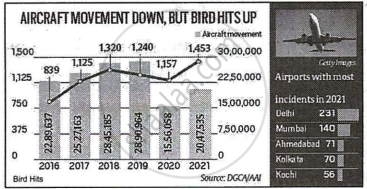
How bird hits happen, why they are a concern? New Delhi June 20 At least two bird strike incidents happened on Sunday. Both aircrafts returned to their airports of origin and were grounded for maintenance. An ABC aircraft, which took off from Guwahati towards Delhi, suffered damage to its left engine following a bird hit at 1600 feet. The pilots returned to Guwahati. The other strike happened on another flight from Patna to Delhi. The pilots of the aircraft suspected a bird strike during the take-off roll but continued to climb. Following the take-off rotation, they were informed by the cabin crew of sparks emanating from the left engine. Subsequently, the pilots were also informed by air traffic control of smoke coming out of one of the engines. The pilots declared an emergency and returned to Patna. |
| (2) |
Why are bird strikes a concern? Bird strikes are among the most common threats to aircraft safety, and they typically occur during take-off or landing. Dozens of bird-strikes happen each day but some can be more dangerous than others. Typically, when birds collide with an aircraft's airframe, it is unlikely to cause significant problems for the pilots flying. But there are instances when the aircraft engine ingests the birds. This can lead to a loss of thrust for the engine and cause manoeuvrability problems for the crew. In these cases, where a jet engine ingests a bird, procedures would generally call for pilots to land the plane at the closest airport. While most airframe bird strikes are not considered critical to air safety, if a collision cracks a window or a wind screen, pilots will look to land as early as possible. |
| (3) |
How critical are bird strikes to air safety? Smaller planes would generally be more susceptible to the dangers of bird strikes than larger ones. However, given that bird strikes mostly happen during take-off and landing, these incidents could distract the pilots during what are highly critical phases of flights that demand the complete attention of the crew. |
| (4) |
What causes bird-strikes? The presence of birds around an aircraft increases the chances of a bird strike. In the monsoon, as water puddles emerge on open grounds attracting insects to breed, the presence of birds increases. In some cases, bird hits also happen at higher altitudes when a plane is cruising. These are more dangerous than the low-altitude hits, given that they can cause rapid depressurization of cabins. Other reasons for bird activity around the airfield could be presence of landfills or waste disposal sites that can attract a large number of birds. |
- Does the following statement agree with the information given in paragraph 1? (1)
When an airplane is hit by a bird or is suspected to have been hit, the passengers must be asked to get down at once.
Select from the following:
True: If the statement agrees with the information.
False: If the statement contradicts the information.
Not Given: If there is no information on this. - Select the option that displays the most likely reason for bird hits. (1)
- when the aircraft is overloaded
- at the time of landing or taking off
- when the crew become negligent
- when the passengers become panicky
- Complete the sentence appropriately with one word. (1)
Smaller planes are generally more ______ than larger ones. - Complete the sentence by selecting the most appropriate option: (1)
When the window or the windscreen of the airplane is cracked due to a bird hit ______.- the crew must rush to the cockpit
- the pilot must land at the earliest airport
- the pilot must inform the maintenance engineer
- the pilot must get instructions from the aviation wing on what should do in emergency
- Based on the reading of the text, state a point to further the statement. (1)
Dozens of bird hits take place every day ______.
- but only a few are dangerous
- all of them are fatal
- but after every bird hit it is imperative to land the aircraft
- the pilot should ignore them
- Complete the sentence based on the following statement: (1)
Complete attention of the crew is demanded during take-off and landing.
We can say this because ______. - Complete the sentence appropriately with one/two words. (1)
In cases where the aircraft engine infests the bird, it leads to the loss of thrust and causes problems in ______. - Which are the areas more prone to bird hits? (1)
- Based on the reading of the text, state a point to challenge the given statement: (1)
The area around air fields should be clear of any waste disposal sites. - Look at the graph. It shows that between 2016 and 2021, whereas air flights have come down, the bird-hits have gone up. This implies that the incidence of bird hits has: (1)
- decreased
- increased
- remained constant
- been alarming
Read the passage given below:
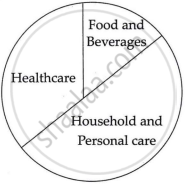
| (1) | Fast-Moving Consumer Goods (FMCG) are products that sell quickly at relatively low cost. FMCG is the fourth-largest sector in the Indian economy. There are three main segments in the sector – food and beverages, which accounts for 19% of the sector; healthcare, which accounts for 31% of the share; and household and personal care, which accounts for the remaining 50% share. The urban segment contributes to about 55% of the revenue share, while the rural segment accounts for 45%. Rise in rural consumption will drive the FMCG market. The Indian processed food market is projected to expand to US\[\$\] 470 billion by 2025, up from US\[\$\] 263 billion in 2019-20. |
| (2) | The Indian FMCG industry grew by 16% in 2021, a 9-year high, despite nationwide lockdowns, supported by consumption-led growth and value expansion from higher product prices, particularly for staples. Real household spending is projected to increase 9.1% after 2021, after a decrease of 9.3% in 2020 due to the economic impact of the pandemic. Price increases across product categories will offset the impact of rising raw material prices, along with volume growth and a resurgence of demand for discretionary items. |
| (3) | The FMCG sector has received good investments and support from the Government in the recent past. The sector witnessed healthy FDI inflows from April 2000-March 2022. Furthermore, as per the Union Budget 2022-23, a substantial amount has been allocated to the Department of Consumer Affairs, and an increased amount has been allocated to the Department of Food and Public Distribution. In 2021-22, the Government approved the Production-Linked Incentive Scheme for the Food Processing Industry (PLISFPI) with an outlay of a larger amount to help Indian brands of food products in the international markets. |
| (4) | The Government's Production-Linked Incentive (PLI) Scheme gives companies a major opportunity to boost exports. The future outlook of the FMCG rural sector looks on track now. Rural consumption has increased, led by a combination of increasing income and higher aspiration levels. There is an increased demand for branded products in rural India. The growth of the organised sector in FMCG is expected to rise with an increased level of brand consciousness, augmented by the growth in modem retail. |
 |
|
| Table. FMCG Products | |
| 1. Processed foods: | Cheese products, cereals |
| 2. Prepared meals: | Ready-to-eat meals |
| 3. Beverages: | Bottled water, aerated drinks, and juices |
| 4. Baked goods: | Biscuits, bread |
| 5. Fresh foods, frozen foods, and dry goods: | Fruits, vegetables, milk, butter, frozen food, and nuts |
| 6. Medicines: | Aspirin, pain relievers, and over-the-counter medication that can be purchased without a prescription |
| 7. Cleaning products: | Baking soda, washing powder |
| 8. Cosmetics and toiletries: | Beauty products, soaps, toothpaste |
| 9. Office supplies: | Pens, pencils |
Based on your understanding of the passage, answer the questions given below:
- Does the following statement agree with the information given in para 1? (1)
Food and beverages segment dominates the Global FMCG market and is expected to retain its dominance.
Select from the following:- True - If the statement agrees with the information.
- False - If the statement contradicts the information.
- Not Given - If there is no information on this.
- What do you think gives opportunities to boost exports? (1)
- Select the option that displays the most likely reason for FMCG rural sector being on track. (1)
- FMCG sector has been unable to get investments from the government.
- PLI schemes don't reach the rural sector.
- Gross Merchandise Value (GMV) of the online grocery segment in India is expected to double in the next five years.
- There is a desire to buy branded products in the villages too.
- Complete the sentence based on the following statement: (1)
The Indian FMCG industry grew by 16% in 2021, a 9-year high, despite nationwide lockdowns because ______. - From the given pie chart, which segment of FMCG accounts for the maximum percentage of the sector? (1)
- Complete the given sentence by selecting the most appropriate option: (1)
The combination of increasing income and higher aspiration levels in the rural areas has led to ______.- the Government taking a direct interest
- the demand for branded products
- price increases across product categories
- the fall of supply in urban areas
- How is the Government trying to help Indian brands of food products in the international markets? (1)
- Complete the given sentence by selecting the most appropriate option: (1)
The concluding paragraph of the passage makes a clear case ______.- that the rural people also want branded products
- that the FMCG industry will not focus on brand consciousness
- for the role of data analytics in the FMCG industry
- for the Government's role by providing incentives
- What will be the impact of the increased level of brand consciousness? (1)
- Based on the reading of the passage, correct the following statement: (1)
The urban segment contributes to about 45% of the revenue share, while the rural segment accounts for 55%.
