Advertisements
Advertisements
Question
Which object is vibrating when the following sounds are produced?
(i) The sound of a sitar
(ii) The sound of a tabla
(iii) The sound of a tuning fork
(iv) The buzzing of a bee or mosquito
(v) The sound of a flute
Advertisements
Solution
Sound is produced by the following objects:
(i) Vibrating stretched strings of sitar.
(ii) Vibrating stretched membranes of tabla.
(iii) Vibrating prongs of a tuning fork.
(iv) Vibrating wings of mosquito.
(v) Vibrating air columns in flute.
APPEARS IN
RELATED QUESTIONS
Select the correct alternative :
Sound travels the fastest in
Explain why you can predict the arrival of a train by placing your ear on the rails without seeing it.
What minimum distance is required between the source of sound and the reflecting surface to hear an echo ? Give reason.
A person is listening to a tone of 500 Hz sitting at a distance of 450 m from the source of the sound. What is the time interval between successive compressions from the source?
Which of the following cannot transmit sound? Water, Vacuum, Aluminium, Oxygen gas
Describe a simple experiment to show that the prongs of a sound producing tuning fork are vibrating.
Draw the sketches of two waves A and B such that wave A has twice the wavelength and half the amplitude of wave B.
In the sound wave produced by a vibrating turning fork shown in the diagram, half the wavelength is represented by :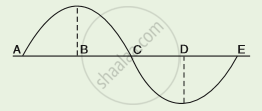
Figure X shows a trace of a sound wave produced by a particular tuning fork :
(a) On the graph paper given in Figure Y, draw a trace of the sound wave which has a higher frequency than that shown in figure X.
(b) On the graph paper show in Figure Z, draw a trace of the sound wave which has a larger amplitude than that shown in Figure X.
The region in a sound wave, with higher pressure and density, is called ______ and that with low pressure and density is called ______.
