Advertisements
Advertisements
Question
What policies did Akbar follow to transform the Islamic state into a secular one and unite the diverse races in the country into a single nation based on equality?
Advertisements
Solution
Akbar took the following steps to transform the Islamic state into a secular one and unite the diverse races in the country into a single nation based on equality:
- He abolished the Jizya tax, which was imposed by earlier Muslim rulers on all non-Muslim subjects and the pilgrim tax imposed on Hindus visiting places of pilgrimage.
- He allowed Hindus to build temples, celebrate festivals, and worship freely. He even allowed his Hindu wives to celebrate festivals like Holi and Diwali.
- He gave high posts to talented and competent Hindus in his court; examples are Todar Mai, Birbal, and Raja Bhagwan Das.
- He married Rajput princesses and allowed them freedom of worship.
- He granted land to all individuals irrespective of their religious faith.
RELATED QUESTIONS
Important Words:
The wazir or the diwan
What were the main sources of revenue for the Mughal government? How did Akbar improve the collection of revenue?
Picture study: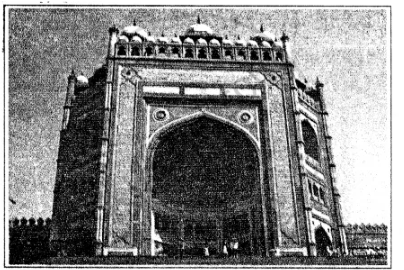
Name this building.
Picture study:
Why and when was it built?
The land revenue system introduced by Akbar was known as the ______.
Choose the correct answer:
Akbar founded a new religious order which he called_______.
State whether the following is true or false:
Akbar held regular meetings with the senior officers in the Diwan-i-Khas.
State whether the following is true or false:
Akbar was illiterate but he had a passion for books.
Answer the following question in one or two words/ sentences:
What is the significance of the Second Battle of Panipat (1556 ce)?
Answer the following question in one or two words/ sentences:
Why did Akbar encourage the study of secular subjects?
