Advertisements
Advertisements
Question
What do you mean by Atomic number
Advertisements
Solution
Atomic number is the number of protons present in the nucleus. As number of protons is equal to the number of electrons so atomic number also gives the number of electrons in an atom.
APPEARS IN
RELATED QUESTIONS
State the energy conversion taking place in a cathode ray tube
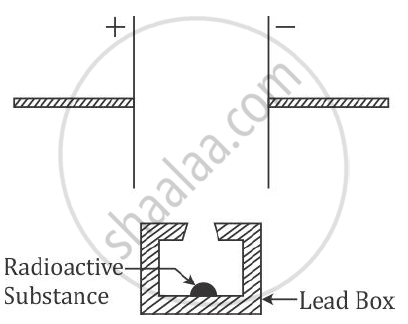
Complete the diagram as given above by drawing the deflection of radioactive radiations in an electric field
Give one example of isobars.
What do you mean by Mass number.
Define the term radioactivity.
Name two radioactive substances.
How is a zinc sulphide screen affected when a cathode ray beam strikes it?
State one use of radio-isotopes.
Two radioactive sources A and B of half lives of 1 hour and 2 hours, respectively, initially contain the same number of radioactive atoms. At the end of two hours, their rates of disintegration are in the ratio of ______.
Which statement about gamma decay is correct?
