Advertisements
Advertisements
Question
Visit an electric shop. Request an electrician to show you the various types of fuses and MCB and to explain how they work.
Advertisements
Solution
Types of Fuses:
-
Rewirable Fuses:
- Usage: Household applications.
- Working: The fuse wire melts when the current is too high, breaking the circuit.
-
Cartridge Fuses:
- Usage: Electrical appliances and vehicles.
- Working: A thin wire inside melts with excess current, stopping the flow.
-
Dropout Fuses:
- Usage: Outdoor power distribution.
- Working: The fuse element melts and the holder drops out, indicating a blown fuse.
-
HRC Fuses:
- Usage: Industrial applications.
- Working: The fuse wire melts and an arc-quenching medium extinguishes the arc, safely interrupting the circuit.
Types of MCBs:
-
Type B MCBs:
- Usage: Residential and light commercial.
- Working: Trips at 3-5 times the load current; reacts to overloads and short circuits.
-
Type C MCBs:
- Usage: Commercial and industrial.
- Working: Trips at 5-10 times the load current; handles higher inrush currents.
-
Type D MCBs:
- Usage: High inrush currents (e.g., motors).
- Working: Trips at 10-20 times the load current; suited for very high starting currents.
Working:
- Fuses:
- Function: Protect circuits by melting the wire when the current is too high.
- MCBs:
- Function: Protect circuits by automatically switching off the electrical supply during a fault using thermal and magnetic mechanisms.
APPEARS IN
RELATED QUESTIONS
Figure shows four cells fixed on a board. Draw lines to indicate how you will connect their terminals with wires to make a battery of four cells.

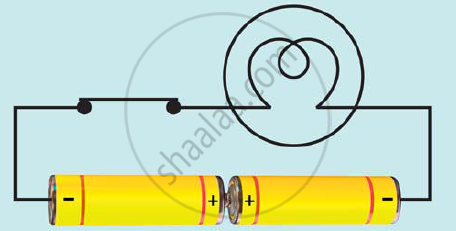
The bulb in the circuit shown in Figure does not glow. Can you identify the problem? Make necessary changes in the circuit to make the bulb glow.
Longer line in the symbol for cell represents its ______ terminal.
In which of the following case the bulb will glow :
State the function of each of the following in an electric circuit and draw its symbolic representation: (1) Switch and (2) Cell.
Draw a circuit diagram for a bulb connected to a cell with a switch. Mark arrow in the diagram to indicate the direction of flow of current.
How many electrons are passing per second in a circuit in which there is a current of 5 A?
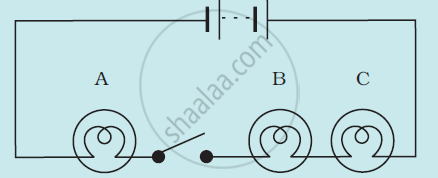
In the circuit shown in figure, what will be the order in which the bulbs A, B and C will glow when the switch is moved to the ‘ON’ position?
______ is an instrument used in electric circuits to find the quantity of current flowing through the circuit.
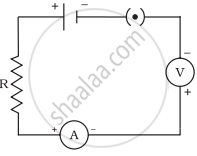
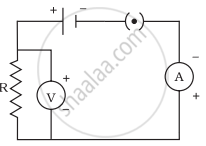
Identify the circuit in which the electrical components have been properly connected.
 |
 |
 |
 |
| (i) | (ii) | (iii) | (iv) |
